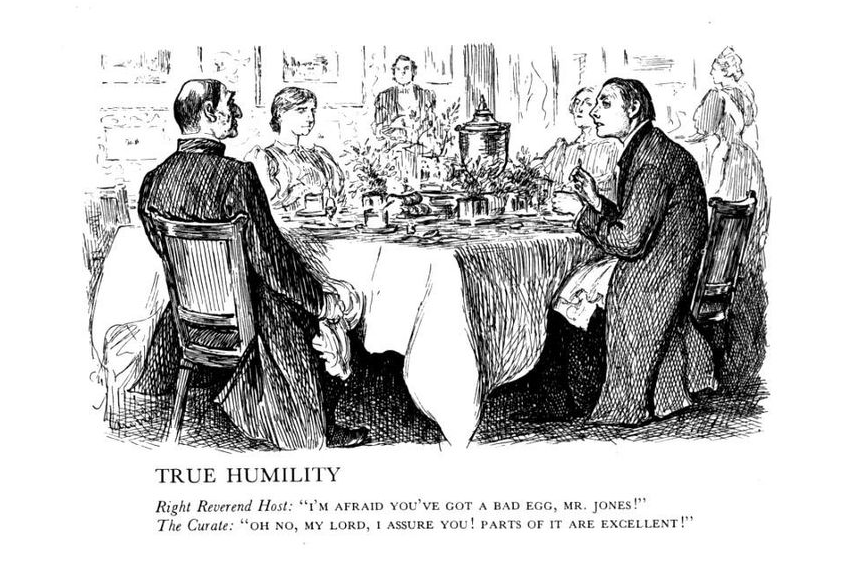
We all remember the old joke about the curate’s egg – “good in parts”. That was my reaction on reading the speech on Brexit which Mrs. May delivered at Lancaster House on Tuesday. By far the greater part of it was indeed good; it is good to know that we will be exiting the EU with complete control over our borders, laws and money and with the right to enter into trade agreements with other countries. Or so it appears, there being those commentators who suggest that these “red lines” are merely the opening bid in the negotiations and will be compromised before we get to the end. We shall see.
Nevertheless, so far so good. But I began to wonder if I’d found a bad bit of the egg when I read these words: “we are a European country, and proud of our shared European heritage, but we are also a country that has always looked beyond Europe to the wider world. That is why we are one of the most racially diverse countries in Europe, one of the most multicultural members of the European Union, and why – whether we are talking about India, Pakistan, Bangladesh, America, Australia, Canada, New Zealand, countries in Africa or those that are closer to home in Europe – so many of us have close friends and relatives from across the world.”
The first sentence is perfectly true. But while it is true that we have been looking across the oceans, rather than to Europe, ever since John Cabot set sail for North America in the reign of Henry the Seventh – arguably the foundation event of the British Empire – it is also true that the ethnic consequences of the Empire here in Britain were practically zero until it was in the process of dissolution. The number of non-white people in Britain according to the census of 1931 was just 7,000. Large scale immigration did not begin until after Indian independence in 1947, so the multi-racial, multi-cultural society was in no sense an inevitable consequence of Empire; on the contrary, it happened because it was willed by those with the power to make it happen. And it happened, in the words of the great Enoch “against the will and without the consent of the British People”. Thus the racial and cultural diversity which Mrs. May appears to welcome lacks all democratic legitimacy. On the very first occasion that the British people were offered a direct vote on a matter profoundly affected by immigration we voted against it and the result was the merciful deliverance of Brexit.
You will notice that in the same sentence in which Mrs. May extols the racial and cultural diversity of our country she also refers to those places overseas where so many of us have friends and family. But she places India, Pakistan and Bangladesh ahead of Australia, Canada and New Zealand, even though the last three are countries which, for now, are still predominantly white and with a substantial element of British descent in their populations. The order in which she has placed those countries may be purely random, but if so it betrays a lack of awareness of the role which Australia, Canada and New Zealand once had as homes for the British people overseas, as being in a sense extensions of Britain herself – and that role was not wished upon them by the UK, it was how they saw themselves.
An ocean spanning “Greater Britain” embracing the four countries was an ideal which enjoyed immense popular support in the late 19th century and the first half of the 20th, and was propounded by such great ones as Cecil Rhodes, Rudyard Kipling and Joseph Chamberlain. But all hopes for the realization of this ideal were finally destroyed in 1973 when Britain entered the trap which became the European Union, a trap purposely engineered to melt all of its member countries into one new country, a United States of Europe. We have now sprung the trap, but sadly all four, formerly British, countries have changed dramatically in the past forty four years, not least through the mass non-white immigration which has transformed them all and continues to do so at an accelerating rate. So is there anything that can be retrieved from the past?
Mrs. May, like many others is a civic patriot. She sees the nation as identical with the state, the state being a defined territory governed by certain institutions, the nation being all those who lawfully reside within that territory regardless of race or national origin. In other words her vision is very different from our vision of the nation as an entity of the blood, originating perhaps in a particular territory but now world wide. For us, Britain is not merely the United Kingdom but extends to include all those world wide who share our blood, irrelevances such as citizenship notwithstanding. A nationalist foreign policy and a nationalist immigration policy should reflect those realities.
By Frederick Dixon © 2017
# # # #
JOIN WESTERN SPRING
Western Spring is not just a website. We are a community of people dedicated to achieving the Six Prerequisites and thereby acquiring the wherewithal needed to win political power and through that secure the future survival, proliferation and advancement of the British people and other White peoples of European descent, wherever they may live. Please join us:
# # # #
Stefan
- Edit
Never listen to what a politician says, observe what they actually do.
John Beattie
- Edit
Agreed. Wherever we are, we are united by our British Blood.
Albert.
- Edit
Theresa May has had a Cultural Marxist education, brainwashed like the majority of her age group,
Already she has caved in regarding Trump’s refugee ban, afraid to upset the Muslims here.
Michael Woodbridge
- Edit
During my lifetime we’ve become so used to negative news that there’s a danger we’ll fail to notice or take advantage of positive changes when they occur and thus fail to take full advantage of recent changes brought to our race and nation. Brexit was the first step in the right direction, Trump’s victory was the second, the pressure on the Conservative leadership and the House of Commons to enact full Brexit was the third step in the right direction. If we start thinking like winners, one small step at a time, if we don’t expect to run before we can walk, we might yet surprise ourselves. Let me see, what other small steps along the way to White salvation might we look forward to in 2,017?