By John Salisbury:
There are two important elections taking place in the near future and, for the first time, I find myself participating in discussions with other nationalists about which party it is best to vote for and whether it is actually worthwhile to vote at all. I believe that these questions deserve addressing in some detail because they are important ones; voting is one of the few ways in which British nationalists can influence the politics of our country, and given the severity of our nation’s condition, we ought to exert as much influence as we possibly can. I therefore present my views about the best voting strategy and the arguments in favour of them.
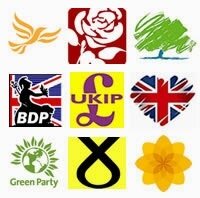
The views and arguments I present here may seem controversial to many nationalists. I ask that readers approach them with an open mind and remember that I am on the same side as any good nationalist, striving to achieve the same objectives albeit by different means.
The Current State of Nationalist Political Parties
For many British nationalists, the question of who to vote for used to have an obvious answer: the British National Party. The BNP had thousands of members and activists, was growing, had an Internet presence which was arguably superior to that of any of the other parties, was able to field candidates in elections up and down the country and had a reasonable chance of winning seats in local government elections and eventually European Parliament elections. No other party ideologically acceptable to nationalists was capable of coming anywhere near the BNP’s success and therefore it could generally be considered pointless to vote for any other nationalist party.
However, all of that has changed in recent years. The BNP is a shadow of its former self; several thousand of its members have left, leaving it with a depleted activist base and a reduced income, one of the two MEPs it secured in the June of 2009 has defected and the other is almost certain to lose his seat in this year’s elections, most of its councillors have lost their seats and it has proven unable to garner anything even approaching an impressive share of the vote in recent by-elections. The party’s chairman, Nick Griffin, with whom so many nationalists have become utterly disillusioned, looks unlikely to ever be replaced. In other words, the BNP is a spent force.
In case that the BNP does manage to continue fielding candidates, I would like to immediately rule out voting for any of them on the basis that doing so would breathe further life into the party and prolong the agony of its inevitable demise. Consider that the BNP continues to collect precious funds from members and donors and takes up valuable activist time in pointlessly contesting elections it has little chance of winning. Furthermore, it remains the most publicly visible nationalist party and is therefore both a colossal embarrassment to the movement and a magnet for would-be nationalists who might otherwise engage in a more worthwhile political activity.
No party has yet been able to replace the BNP as the unchallenged premier nationalist party in Britain, and nor is any party even close to doing so. It seems very likely that the May 2014 European Parliament elections, the May 2015 general election and following local government elections, as well as any forthcoming Parliamentary by-elections, will be totally devoid of any nationalist candidates with a realistic chance of being elected. Therefore, voting for a nationalist party, while it may sound like the obviously best option to nationalists, will likely turn out to be a pointless exercise or even an impossible one for the majority of people in our movement.
In any case, since voting is one of the few ways in which we can exert any influence, we should aim to use it as effectively as possible and I therefore believe that it is important to be frank about what has actually been accomplished by voting for nationalist political parties in the past, what might be accomplished by doing so in the future, and additionally – but perhaps most controversially – what might be achievable by exploring the possibility of voting for other parties. I would argue that, emotional considerations aside, there is no good reason to vote for a nationalist party if it does not further the nationalist cause, or if voting for a different party would be of greater benefit.
What has been Achieved by Voting for Nationalist Parties?
The highest level of nationalist electoral success in the recent history of this country undoubtedly occurred in 2009, when the British National Party won two seats in the European Parliament elections. At this time, the party had nearly fifteen thousand members and over a hundred council seats (but no MPs) and enjoyed the publicity (such as it was) of regular television appearances. It could be argued that the later decline of the party was avoidable or caused deliberately by external or internal forces, and that the party would therefore have reached greater heights, but nonetheless the fact remains that this was the peak of the success of nationalist political parties in Britain.
To put this peak into context, let us compare its height with the heights reached by parties which are in a position to form governments. The least successful of these parties by any measure is the Liberal Democrats, but even so it currently has a membership of just over forty thousand people and holds fifty-six seats in the House of Commons, ninety-nine seats in the House of Lords, two seats on the London Assembly, twelve of the UK’s seats in the European Parliament and more than two and a half thousand seats in local government. The success of the Liberal Democrats, even at a time when they are routinely beaten by UKIP in opinion polls, dwarfs that of the BNP as its height.
Despite that, the Liberal Democrats are not even routinely in government, but its coalition partner the Conservative Party is – and that party has more than one hundred and thirty thousand members and more than eight and a half thousand local government seats, making the BNP’s limited successes look even more trivial than they already did and highlighting the need for a large membership and local government base if a party is going to aim to be in power. Such a large base has never been built in nationalism and so it is hardly a surprise that no nationalist parties have managed to come to power. This brings me to my next question: could it happen in the future?
What Could be Achieved by Voting for Nationalist Parties in the Future?
In my mind, there are three valid reasons to promote and vote for a nationalist political party: either because you believe that it will one day be able to win a general election and take over the reigns of government, or because you would like there to be a strong nationalist party already in place to pick up the pieces after an economic collapse or revolution, or because you expect the rise of a nationalist party to intimidate the political establishment into enacting policies you would like enacted or becoming nationalists themselves in order to survive. I say ‘valid’ reasons because a nationalist party should, I think, exist in order to achieve something rather than for its own sake.
I find fantastical the idea that a nationalist party using electioneering alone could one day win a general election under the current system. Despite decades of electioneering during mass immigration, cultural and moral decline and more than one recession, we have failed to win a single Parliamentary seat even in so-called strongholds, but more than three hundred seats are needed to form a majority. Winning this many seats would almost certainly entail taking seats off all three main parties which would require their support to have collapsed across the country. Unfortunately, it is simply not plausible that this could happen within the space of a few general elections.
There are at least three huge obstacles in place for any nationalist party striving for a general election victory. The greatest of these is simple demographics: with every passing year, the ethnic make-up of our country changes in such a way as to make it less and less easy for an apparently racist candidate to be elected. The greatest support for nationalist candidates is often in areas which have already been heavily impacted by multiculturalism and mass immigration (or ‘enriched’ as nationalists often like to say) – but ironically these areas are also the least electorally favourable for a nationalist candidate because of the very factors which created the support in the first place.
The second obstacle is that any moderately successful nationalist party is likely to just be banned as soon as it begins to threaten to win a few seats, particularly if it is the kind of party which appeals to the hardcore of nationalism by refusing to tone down its rhetoric on race, history and Jews. Recovering from the banning of a political party is not as simple as just registering a new one and carrying on as normal: a proportion of members of the old party may fail to join the new one, party funds may be confiscated or made otherwise inaccessible, and the respected and recognised brand that was the old party’s name is lost and a new one must be built almost from the ground up.
The third obstacle, and one which applies not just to nationalist parties but to all forms of nationalist organisations, is that the vast majority of the establishment-supporting mass media coverage of nationalists is designed to discredit and vilify us as soon as it becomes impossible to ignore us. The establishment is holding all the cards where propaganda is concerned; the establishment parties have been courting public opinion successfully for far longer than we have and they are proven experts at it. We stand little chance of competing with them without the same resources – for example, enormous amounts of funding and highly-trained spin doctors and speech-writers.
For these reasons I think that to vote for a nationalist party in the expectation that it will one day win a general election is to be extremely unrealistic. The idea that it is important to have a strong nationalist party in case of a collapse has slightly more credibility, but the prospect of a collapse actually occurring is by no means guaranteed (it is certainly not in the interests of the political elite for one to take place if they are succeeding perfectly well without one, and if their enemies are banking on one) and it would be foolish to invest further millions of pounds and decades of hard work into a party on the assumption that it will pay off after a hypothetical future event.
In my view, the most realistic outcome from voting for a nationalist party is the exertion of pressure on the political establishment to make concessions such as a reduction in immigration or a referendum on membership of the European Union. While, as I have said, it is in their power to simply ban a rising nationalist party, making concessions is a far more useful option for them because it removes some of the grievances which lead people to support nationalist parties in the first place rather than creating sympathy for nationalists and making a rod for their own backs in admitting that their respect for democracy is conditional on the right views being expressed.
This brings me back to an earlier point. If the only realistic and useful purpose in voting for a nationalist party at this point in time is to put pressure on the establishment, then imagine that there is another party – not necessarily a nationalist one – which is currently in a much better position to create that pressure. In that case, perhaps a sensible option would be to think somewhat outside the box; instead of considering which nationalist party to vote for, we might consider voting for this other party so that we might have a better chance of actually furthering our objectives. One party which I believe fits the criteria is the United Kingdom Independence Party, or UKIP.
The UKIP Pressure Valve
The debate in nationalist circles over the role of the UK Independence Party, or UKIP, has intensified in recent times. Nick Griffin and the British National Party had conclusively decided that UKIP was an establishment-sponsored ‘safety valve’ which was being presented as an acceptable alternative to the BNP to members of the electorate who were disillusioned with mainstream politicians and their doctrines of multiculturalism, globalism and mass immigration. Under this view, there was no need to consider supporting UKIP at all: the BNP was the real nationalist party offering the only real solutions, and moreover it seemed successful.
Maybe UKIP did function as a safety valve – perhaps, had it not existed, the BNP would have risen to greater heights on the back of a larger share of anti-establishment votes and support than it did in fact receive. In any case, that speculation is not useful to us. With the BNP all but out of the picture, I tend to view UKIP more as a valve to ramp up the pressure on establishment parties than one to alleviate it. This is chiefly because UKIP threatens to split the Conservative Party’s vote, potentially costing it seats, but despite the popular conception that it exclusively harms the Conservatives, it also threatens the Labour party who now seem quite concerned about it.[1,2,3]
The EU Referendum and a Conservative Majority Government
UKIP is often labelled a ‘single-issue party’ and while I do not agree with the accuracy of that label, it is true that bringing about a referendum on British membership of the European Union is one of its core objectives. Britain exiting the European Union is likewise a core objective for most nationalists for reasons which are obvious and need not be explained here. Furthermore, it is conceivable that if a government actually held a referendum, UKIP’s support would almost completely dissipate, removing any threat it posed. Therefore, UKIP is an ideal party to use to put pressure on the establishment parties in aid of accomplishing this key nationalist goal.
This is likely to already be the intention of much of UKIP’s existing support base albeit for non-nationalistic reasons; some may genuinely believe that UKIP can form a government, but I would consider people with that aspiration to be as deluded as those who think the same about the BNP. We as nationalists can assist by voting for UKIP in any coming Parliamentary by-elections, local government elections and, of course, the European Parliament elections which they already look likely to top. Some wards elect councillors on the basis of a few hundred votes and a few dozen can make the difference between one candidate winning and another, so we can have an impact.
At the general election, I believe that wherever possible, we should vote in a way which increases the chance of the Conservative Party forming a majority government. By ‘wherever possible’ I mean that there is no point attempting this in a safe Labour seat, for example, and it is also unnecessary to do so in a safe Conservative seat; in those seats, it would be better to vote for UKIP or for another ‘protest party’, or for whichever nationalist party seems most worthy of a vote, in order to send a message – but in seats where the Conservatives came a close second at the last election or where they might lose a currently-held seat, my strategy requires voting Tory.
The reason for this is that the leader of the Conservative Party, David Cameron, has promised a referendum on the European Union in 2017 if his party wins a majority of the seats in Parliament and forms a majority government. The Labour leader Ed Miliband has expressly rejected the possibility of a referendum unless further powers are to be transferred to the EU and Nick Clegg of the Liberal Democrats has described his party as ‘the party of in’. Therefore a Conservative victory represents our best and only chance at having a referendum and therefore our best and only chance at getting the United Kingdom out of the European Union; any other outcome would be worse.
It is true that David Cameron has already broken one promise to hold a referendum on the European Union, but this alone does not condemn my strategy. First of all, his party did not win a majority in the last general election – it had to enter a coalition with the extremely pro-EU Liberal Democrats in order to govern, and that almost certainly is the reason no referendum was held. Secondly, if he breaks his promise again, it will damage the credibility of the Conservative Party on this issue to such an extent that UKIP’s support is likely to surge even higher and threaten the party to an even greater extent. It is not likely for the promise to be broken, and if it is, it will damage our enemies.
Some people have told me that even if we are given a referendum on Europe, and even if the electorate votes to leave, we will not be allowed to leave. Again, I must accept that this is a realistic possibility, but the results of it would not be entirely negative; if the political elite put an important question about the future of our country to a vote and then ignore the outcome, it will generate a wave of public dissatisfaction so high that it may sweep that establishment away for good. Our enemy is not all-powerful and cannot make good of any situation; it is genuinely possible to force their hand if we try hard enough, and we must try hard if we are to win control of our country.
Many nationalists will understandably have apprehensions about voting for the Conservative Party, not just because of the fact that it is a multicultural establishment party, but because of the legacy of Thatcher and the damage that it wrought on our country. Consider, however, that the chances of a party we would actually like to see in government being elected in 2015 are precisely zero. That means that whichever party is elected will be an establishment party in favour of mass immigration, multiculturalism and the destruction of our nation. If we have to choose between the three of them, or simply do nothing and let one of them win anyway, let us choose one which may benefit us.
The Long-Term
If the Conservatives do not win a majority in 2015 then it is likely that no EU referendum will be on offer again for at least one more Parliament and probably much longer, or even ever – but whatever outcome the election has, we are practically guaranteed to have Labour governments, Tory governments and perhaps even Lib Dem governments for a great many decades to come. In the scheme of things, then, a Conservative majority existing in Parliament for an additional five years will make no discernible difference at all. That is why I believe that this is a chance worth taking however unpalatable we might find it to vote for a party which is essentially our enemy.
While nationalist parties do not yet stand a chance of winning, they will one day be needed, and so I would further advocate that in the long-term, nationalists follow the path set out by the articles on Western Spring written by Max Musson. Western Spring’s publications are consistently excellent, but most pertinent to this discussion is an article called ‘The Great White Hope’ which sets out six prerequisites for a nationalist political party to have a good chance of winning a general election. We should consider short-term voting strategies only to buy us time so that in the long term, Western Spring’s fledgling Movement of National Salvation can triumph.
By John Salisbury © 2014
# # # #
frederickdixon
- Edit
I could stomach voting Tory only if the candidate was on the Eurosceptic, anti-immigration, right. Sadly my MP not only has a huge majority but is in the wet centre of the Party, so I will certainly vote UKIP at the general election. I’ve not yet finally decided what to do at the Euros as the BNP will be standing a full slate of candidates – so cast my vote where my head tell me to cast it (UKIP)? or where my heart is (BNP)?
By the way, because of what is said in the above article about the BNP, I think that we need to emphasise that Western Spring supports the BNP and ALL racial nationalist movements without distinction
Max Musson
- Edit
Hi Frederick, I don’t think it would be true to say that we ‘support … ALL racial nationalist movements without distinction’, because that would be to suggest we have faith in the efficacy of all or any one or more of such organisations as vehicles for national salvation, and that we see any one of them as potentially the ‘answer’ to our people’s woes. This is obviously not the case.
.
Instead, we seek good relations and co-operation with all racial nationalist groups and organisations, and do not shun or proscribe them. We do this for two reasons, in order to promote joint activity and joint projects, through which we can move towards a state of increasing nationalist unity, and secondly, in order to maintain dialogue through which we can influence other nationalist groups and parties to follow the strategies that we have identified, which will lead to the salvation of our people.
.
John Salisbury has expressed his recommendations regarding tactical voting and his views have some merit, but my own view is that however we vote in the up-coming elections will be of little or no consequence as far as our people are concerned in the long-term. Voting BNP or UKIP etc. may make people feel less politically impotent, but in the both the short-term and the long-term, more political power will be exercised by nationalists through our policy of entryism than through all the electioneering that may be conducted in support of brave souls standing as overtly ‘nationalist’ candidates.
.
Discussion of tactical voting is all very interesting and in certain special circumstances may have some merit, but our message to nationalists must be that any expense or effort expended in support of electoral candidates of the nationalist micro-parties (and I include the BNP in this group), is a fatuous waste of time and money. They might as well light a bonfire in their back gardens and stand next to it throwing their money into the flames, for all the good it will do.
.
If anyone reading this wants to make a difference, then they should email me, [email protected] giving their contact details, and I will be in touch.
Brin of the family Jenkins
- Edit
After leaving BNP for several years, I have rejoined them. I felt that being a Nationalist without any home was wrong for me, however I feel little urge to DONATE since suffering from the trickster JD.
Voting seems a waste of time now, democracy has been perverted by politics and all elections are pre ordained. Not only are elections fixed but even who will go forward as a candidate, those who calls the tune on candidate selection are also controlled by Common Purpose. This organisation based on the Frankfurt Schools ideas from 1926 will not be stopped by voting.
Please show me that I am wrong?
Max Musson
- Edit
Hi Brin, your assessment of the control exercised over candidate selection and electoral gerrymandering etc. by the establishment parties is fairly accurate and I would suggest that if you wish to belong to an organisation so that you can do something constructive about this, then you should email me, [email protected] so that you can become part of our Movement of National Salvation.
Observer
- Edit
Make no mistake, the eyes of the western world will be monitoring and keenly awaiting the outcome of the post convergent election results of the upcoming EU elections and Britain’s 2015 General election. For what’s at stake here is the future of western civilisation, for this battle is no less than a war for world supremacy. Global forces versus the forces of nationalism.
British and European (possibly American too) politics will never be the same after Britain’s 2015 election – for by then, the die will have been caste and the way ahead signposted for what it all portends.
Nationalism is drinking in the last chance saloon, this is our last chance to make a difference, the once in a lifetime convergence of events around the world have provided nationalism with chance to survive and fight another day. UKIP are on a roll, riding a groundswell of support that is growing by the day. A desperately disillusioned electorate is snowballing all over Europe in support of nationalism, in Britain, support for UKIP is growing almost exponentially despite unprecedented evil attempts by their opponents to vilify, smear and physically attack UKIP support, above all, the effects of our opponents wicked racist taunt has peaked and is losing its potency.
It would take a tome (and yes someday historians will chronicle these times) to disentangle the ends of this one off convergence that is miraculously presenting itself at this most vital moment in our history.
UKIP has been appointed by fate to act as the agent of change in the coming epic struggle, the mantle has been foisted on them whether they like it or not, or even if they are not from the nationalist stable, history has decreed UKIP’s role as pivotal.
It is no use trying to second guess where all this is taking us, suffice to say UKIP is our standard bearer in this moment of struggle and common sense tells us that a nationalist vote for any other than UKIP is a no brainer.,
Ana Tomy-White
- Edit
Hope for the Future – BNP Youth Fight Back https://www.youtube.com/watch?v=oczj6thd4CY
Cry Havoc!
- Edit
An excellent and well written article – thank you. I had already decided to vote UKIP in the European elections rather than the BNP, if a BNP candidate were standing, because I believe that the BNP are finished now and because UKIP stand a far greater chance of frightening the establishment. I realise that UKIP are not a nationalist party, but they do have policies closer to our aims than any other party.
In the General Election I will hold my nose and vote Conservative, rather than help split the vote and allow Labour in. The Conservatives are far preferable than the Labour Party, and Cameron cannot, surely, renege on his promise of a referendum again.
For nationalists all this voting for non-nationalist parties now, and in the future, is like pissing into the wind, but if it helps to force the government along the right lines it’s something.
John Salisbury
- Edit
Thank you for your kind words about my article. Yes, UKIP has a better chance of frightening the establishment because it threatens majorities in marginal seats. The idea that the BNP is worrying the establishment (as is sometimes insinuated by articles and comments on the party’s official website) is sadly nothing more than an unfunny joke.
.
You have done well in recognizing that voting is not an expression of support for a party or an endorsement of its policies. Tactical voting is just a means to get what you want. It should not be considered wrong to vote for a party you dislike if it helps to get you what you want.
.
Cameron can in fact renege on his promise again, but the damage that would to do his party and the establishment as a whole would be huge. Either way, we win.
Valhalla Valkyrie
- Edit
Even if you were able to get 10’s of thousands to vote as a block the overall effect would be marginal as people are spread out over the country.
On the individual level it does not matter too much whether you vote BNP or UKIP.
A 2015 conservative government would be bad as Nationalism always does better when it is against the marxist left. Fire against fire. The demographic change is pretty much the same under the conservatives than under labour. ‘Promises’ are negligible in politics.
John Salisbury
- Edit
I agree that the effect of what I propose would be small. However I wrote this article because people had been asking which party it would be best to vote for – so I answered them. I never said that this would achieve victory or anything close to it.
.
Maybe it does not matter electorally whether one votes BNP or UKIP, but breathing further life into a dying BNP would not, as many people would agree, be good for nationalism, whereas UKIP is probably going to reach greater heights regardless of whether we support them in a few votes.
.
You say that a Conservative government in 2015 would be bad for nationalism, as nationalism always does better against the left. Fine, I can agree with that as well. However, we will not do so much better against the left as to grant us victory – the benefits will again be marginal. By asking for a leftist government, we would be sacrificing the opportunity to get out of the EU for the sake of a tiny advantage in elections which frankly we aren’t going to win anyway.
.
I also agree that the demographic changes would be much the same under each party. However, leaving the EU provides a means by which to slow those demographic changes by stripping politicians of the excuse that they cannot control migration because the EU has taken over those powers.
.
Promises are often broken in politics but that does not make them negligible. I accept that Cameron may well simply break his promise or conveniently prove ‘unable’ to keep it. However, this is not necessarily bad for nationalism; it will provide yet another piece of sturdy evidence that the mainstream politicians never keep their word and make people even more angry at the establishment. Broken promises do have a cost in popularity.
.
In other words, whether Cameron keeps his promise or not, we might have something to gain from a majority Conservative government being formed in 2015.
BritishActivism
- Edit
I had been wondering for a while as to whether an article like this could be written for Western Spring – and lo and behold, I visit the site today to find that there is is one, and not only that, but it is a very sober and well written piece.
.
So, thanks John, for making the matter a little bit more easier to decide upon. It was better than I had envisaged, and certainly better (and clearer) than I could ever write.
.
I do have some slight differences though – one for personal and selfish reasons as against that of the national strategy, and a further doubt about what would happen if we ever did leave the EU, but they are not too important for the immediate term.
.
On the personal and selfish reason, we have a both a BNP and UKIP candidate to choose from in the local election next week. The BNP candidate has worked the ward for many years, has experience, tends to get normal council-type things sorted out for people (new pathways, lighting issues, cleaning up areas, road surfacing etc) – well, where allowed by the rest of the people he has to work along side of. For this reason, I think he may deserve the vote locally.
.
In addition, for selfish reasons, this immediate area is one of the last strongholds of a white demographic – and the “change” is creeping in. The creep seemed to accelerate after the BNP lost the seats in previous years, perhaps giving a signal to the ethnic minorities (in this case, Pakistanis) that it was a little more safer for them to come to this locality.
.
It may be nonsense anyway, but if it was partly true, would it be wrong of me to vote for the local BNP ward candidate for the purposes of sending out this smoke signal that “we are still here”, if only for the vague hope that it keeps a tide at a slower flow?.
.
I may have to give this some more thought. For the European elections, I had planned on giving it to UKIP – precisely as part of the move described in the article above.
.
Regarding referendums and leaving the EU, it seems to me that many people (including those who are genuinely supporting UKIP) are under the impression that leaving the EU will change what is transpiring in this country. I do not believe it would; and nor do I think the country would ever be made fully prepared for it by the established order, thus forcing a notion of risk upon us against leaving.
.
I would suspect that if we ever left, the mainstream parties and political hegemony of this ruling class will simply continue with the thoughts, actions, policies that still push towards the ambitions of the “Marxist” left and the EU / Globalist project itself. They will just not be able to blame the EU, whilst actually still mirroring the general travel of “progressive” world views it represents.
.
Anyway, that is a different matter to what is being discussed. Knowing what we should all be doing in the upcoming elections is the important thing for now. As I say, I am torn on the matter of my local candidate for a small ward in a town. Other than that, I think this was a pretty persuading article and I look forward to reading other comments about it.
Max Musson
- Edit
In view of what you say I would vote BNP in the local elections and UKIP in the Euros, but John may have different recommendations.
John Salisbury
- Edit
BritishActivism: thank you for describing my article as well-written. I am happy that you found my contribution to this debate useful and you are very welcome. I fully understand what you say about a particular candidate deserving the vote despite the fact that the impact of voting UKIP might be better overall. I can sympathize with your view on that and I would be tempted to vote for him as well.
.
What you say about sending out a ‘smoke signal’ to indicate that our presence as nationalists has not completely dwindled away is interesting. However since the BNP’s total vote in the election is likely to be derisory anyway, I don’t think it will make any difference – it will still be obvious to everyone that it has completely failed. A few more votes won’t make it any less derisory or pitiful or any more impressive.
.
You are probably right in saying that leaving the EU won’t really fix our problems. What it will do though is strip our politicians of all excuses that they are not in charge – we will be able to hold them fully responsible in the eyes of the public.
Observer
- Edit
I think it is widely understood by the elite political class UKIP has seamlessly slipped into the vacuum left by the BNP.
Although Farage and UKIP would vehemently deny it, UKIP is now perceived by the people of Britain as the new improved acceptable face of nationalism.
Anti immigration sentiment is the new British Nationalism dressed up as UKIP, people are flocking to the flag.
The culture wars of the 60’s was the precursor to a coming race war.
It has reached fruition, it has begun in the guise of Globalism.
Who are you voting for.
Ana Tomy-White
- Edit
The British National Party – Immigration and the EU’s Dirty Secret https://www.youtube.com/watch?v=w_-RuHGEESo
PharmaPhil
- Edit
I’m holding my nose & voting UKIP, despite the fact they wouldn’t want me as a member anyway.
If they prove to be a stepping stone for the general public to move away from the LibLabCon, then that would be something good.
Maybe then they might consider alternative politics.
Phil
- Edit
reigns of government is a freudian slip. Reins, surely.
John Salisbury
- Edit
It is, as you say, a Freudian slip. Unfortunately I have no way to correct the typo now but well done for noticing it.
Steven
- Edit
I live in one of the safest Tory seats in Britain. It is about the 30th odd safest. Unfortunately, the MP (as is so often the case in very safe Tory strongholds) is fairly liberally-inclined and would want us to stay in the EU. As there is no danger of him losing next year, then I needn’t vote Tory and I find his political views not to my liking anyway. I don’t really wish to vote for UKIP either as they are ultra-Thatcherite Tories and hence economic globalists. However, if UKIP do poll well next year yet still obtain no seats in the House of Commons whilst the Lib Dems do then that will strengthen the case for a referendum to to be held on REAL electoral reform ie on a system of proportional representation which the AV referendum in 2011 wasn’t. So, I might well vote for them on that basis.
As a nationalist, my heart says I should vote BNP at the Euro elections instead of UKIP but as the BNP is fatally flawed (as is UKIP) and isn’t going to revive even if Nick Griffin were replaced as leader so why vote for it to keep it in intensive care? It would be better if the BNP died a death and therefore opened the way for a new moderate nationalist party that didn’t repeat the BNP’s glaring mistakes and woeful presentation (its website nowdays is frankly completely amateurish and is nowhere near as good as it used to be in 2009/2010)
As the author states, getting out of the EU is at least one nationalist objective achieved.
John Salisbury
- Edit
Thank you for your comment, Steven. In truth, I hadn’t even considered the possibility that an increased share of the vote for UKIP in 2015 without them winning any seats in the House of Commons would be a good argument for Proportional Representation. I’m not sure we’re likely to get a vote on that though, firstly as it will be recognized that many of the votes for UKIP are not really for UKIP but against the main three, and secondly because the top two parties could stand to lose a lot of their influence under PR making it very, very unlikely to be put to a vote.
.
The fact of what UKIP really is and that we as nationalists wouldn’t support them as our ideal party is neither here nor there. A lot of people will be voting for UKIP who wouldn’t really want UKIP in power – as I said, it’s likely that a lot of people are voting against the establishment instead of for UKIP – and we are perfectly allowed to do the same, if it helps achieve one of our key goals. Voting for a party is not an expression of support for its candidates or belief in its ideas, but simply a means of getting what you want – so if voting UKIP gets us what we want, and voting BNP doesn’t, the best choice is clear.
.
It would be better for the BNP to simply fade away. When you consider the millions of pounds spent and thousands of hours worked to advance the BNP, and then consider the fact that soon it will probably have as many seats as when it started, the amount of wasted money and effort is astonishing and could have been put to far better use. The BNP’s net contribution to nationalism at that point won’t just be small or non-existent, it will be negative as it will have drained resources from more worthwhile endeavours.
Steven
- Edit
It is so sad what has happened to the BNP. If it had been properly reformed (in certain social aspects of policy) but kept its hardline immigration, law and order, and EU policies and also promoted its nationalist and anti-globalist economic policies it could have gone places. This Nick Griffin failed to do and so we genuine nationalists are left without a credible political home and the public vote for UKIP – a fatally flawed Thatcherite Tory Party.
Max Musson
- Edit
What happened to the BNP was inevitable Steven. Nick Griffin was the active agent of it’s unravelling, but as I have stated on many occasions the socio-political conditions under which we struggle make it inevitable that every so often nationalist political parties will self-destruct. This is why Western Spring is not a political party and therefore not subject to the same negative organisational dynamics that afflict nationalist political parties. Nick Griffin was the instrument of the BNPs unravelling, but he was simply a symptom of a more fundamental malaise and if he had not come along, eventually someone else just like him would have. Please read my ‘Great White Hope’ series of articles: https://www.westernspring.co.uk/the-great-white-hope/
Steven
- Edit
One of my fears if UKIP do exceptionally well in the elections is it might encourage some people in Scotland to vote Yes on September the 18th. I want them to vote No and keep Great Britain united. I don’t think there is a particularly huge gulf in attitudes towards EU membership in Scotland and England as some people make out but there is some and if Scotland votes Yes on September the 18th then the United Kingdom will be effectively destroyed and there will be no point in having a United Kingdom Independence Party then.
Steven
- Edit
I’m in the Eastern Region for the Euro elections. In my local government ward the Tories normally come first with UKIP second, Lib Dems third (although they used to come first a few years ago or at least second) and Labour fourth.
Last year, the UKIP candidate came within 10% of toppling my local Tory councillor for the County Council elections and I think that most of UKIP’s votes must have come from my district council ward (County Council divisions are composed of SEVERAL district council wards) because yesterday evening the local Tory councillor (we have 3 out of 3 Tory councillors in this ward) along with a helper was putting polling cards through our letterboxes and I don’t remember them ever doing this before. They were also PERSONALLY ADDRESSED to the three voters in my household. Also, my ward has at least 7 odd ‘Vote Conservative’ placards in farmer’s fields (they normally only do this for general elections). I can only conclude then that the local Tories are afraid of losing this ward to UKIP on Thursday. There is no doubt they are panicking at the results of the elections.
Steven
- Edit
The Tory councillor for my ward was assigned to telling duties today and I voted at around 9.15 PM. I’ve only seen a Conservative Party councillor do this in the daytime before. They must be very worried about my ward. I think David Cameron will be having panic attacks by Sunday and his party will have wished they had elected David Davies to be their leader instead of the ‘Eton Mess’ https://en.wikiedia.org/wiki/Eton_mess.