By Max Musson:
Yesterday I wrote about some of the shortcomings of our political system here in the UK and in doing so, I referred to “the inadequacies of our electoral system, … the mendacity of our media moguls and the corruption of our politicians”, and today I would like to focus attention on the ‘inadequacies’, or perhaps I should have said the ‘iniquities’ of our electoral system.
Political pundits will often blame anomalies within our ‘first-past-the-post’ electoral system for disparities that so often are a feature of our general election results. For example, the fact that in 2005, the Labour Party under Tony Blair won a general election with an overall Commons majority of 33 MPs in an election in which only 21% of the public actually voted Labour. While the ‘first-past-the-post’ system is to some extent to blame for such anomalies, there are other issues that need to be addressed.
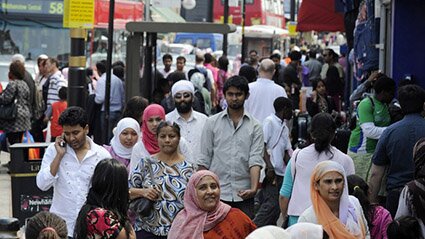
One such iniquity is that providing migrants to Britain hold British, Irish or Commonwealth citizenship or have been granted ‘leave to remain’ under our immigration system, they are given the right to vote in our elections immediately they set foot on British soil!
When one considers that according to Labour Party insider, Andrew Neather, in an article in the Evening Standard in October 2009, a conspiracy existed within the Labour Party during the early 2000s to deliberately flood Britain with immigrants in order to irrevocably change the racial and ethnic composition of the British people and to create a permanent pro-Labour majority among the electorate, this aspect of the Representation of the People Act needs to be urgently reformed.
Without such reform, pro-multiracial parties when will continue to debase our electoral system in this way. The fact that Labour’s machinations have not yet progressed to the point at which their aims have been achieved, does not alter the fact that the self-determination of the indigenous British people has been permanently compromised by the policies of the Labour Party. Furthermore, it is worth noting that immigration under the recent Conservative Party led coalition has continued at the same high levels we experienced under Labour and the debasement of our electoral system through uncontrolled immigration continues, this situation becoming worse with every passing month.
The tragic irony of this situation will perhaps become fully apparent should at some future date, ‘hot-head’ British patriots take matters into their own hands in frustration at this continual cynical debasement of our electoral system, and in protest at the deliberate creation of an immigrant block vote preventing we indigenous British from ever regaining our national self-determination. I can foresee a po-faced future government spokesperson following some heinous act of terrorism, spewing forth a sickeningly hypocritical denunciation of those responsible for such an ‘atrocity’, declaring disingenuously that ‘by showing no regard for our electoral system, they have put themselves outside the law’. This would of course be technically correct, but in moral terms, we cannot expect others to respect the electoral system if we continually debase it so scandalously.
As the final results of the current general election are recorded, it is evident that the Conservatives have been very successful and so too have the Scottish National Party (SNP). The success of the Conservatives can be attributed to many factors, not the least of which however has been the bourgeoning support for the SNP north of the boarder. The Conservatives have been able to coerce the English public into voting for them, using fear of an SNP ‘tail’, wagging a Labour ‘dog’ if the electorate did not vote to ensure an overall Conservative majority.
The success of the SNP and the great impact of their popularity in Scotland upon British politics as a whole has its roots in a long-standing ploy by past Conservative and Labour governments to gerrymander our electoral system by making Scottish, Welsh and Northern Irish constituencies much smaller in terms of the number of electors within each constituency. With the support of relatively few electors in these relatively sparsely inhabited parts of the British Isles, it has been possible for successive Conservative and Labour governments to gain disproportionately large Commons majorities relative to their support amongst the electorate.
Up until the late 1980s for example, the Conservatives held twenty constituencies in Scotland and held on to ten of these until 1997, eventually losing them to the LibDems and the SNP. Similarly Labour held many seats in Scotland, right up until this latest general election following which there has been an SNP landslide.
If we look at the number of seats won so far by both the Conservative Party and the Labour Party (as of 12:00 Midday 08/05/15), we find that between them, they have won a total of 554 seats, based upon the electoral support of 20,399,431 electors – i.e. it takes on average the support of 36,822 electors for them to win each parliamentary seat. If we compare this with the SNP however, operating in constituencies deliberately contrived, as I have said, by former Conservative and Labour administrations when it suited them, to provide a disproportionately large number of parliamentary seats, we find that with the electoral support of just 1,454,436 electors, they have secured 56 parliamentary seats, an average of just 25,972 electors per seat.
Furthermore, if we compare the Green Party with the SNP we see the Greens attracting the support of almost as many electors nationally, 1,138,445 as opposed to 1,454,436, but the Greens have only secured the election of one MP, compared to 56 for the SNP!
Even worse, UKIP have secured the electoral support of 3,830,029 voters and yet only have one MP elected, and Nigel Farage was quite correct when he spoke about the election results this morning, there needs to be an urgent review of our electoral system. The ‘first-past-the-post’ system needs to be replaced by a system of proportional representation and there also needs to be constituency boundary changes made so that each constituency is composed of roughly the same number of electors as any other. It is outrageous that the SNP will be sending 56 MPs to Westminster while UKIP, with more than twice the electoral support will have just one!
Lastly, there needs to be an urgent review of political party funding. If we look at the General Election of 2010, the Conservatives spent approximately £17million on their general election campaign; Labour – £8million; the LibDems – £5million; and everyone else put together, just £2million. There can be little wonder therefore that the Conservative managed to get the largest number of MPs elected.
If we compare 2010 with the General election before that, we find that in 2005: the Conservatives spent approximately £18million, which was matched by Labour, who also spent £18million. The LibDems spent just over £4million and everyone else put together, just £2million again. In this election, Labour, who were that time the biggest spenders, won the election. There is therefore, a clear correlation between campaign spending and success at the polls and it is not just ‘honours’ that wealthy donors are buying when they donate large sums to our political parties. The cash for questions scandal and the cash for influence scandals of recent times have demonstrated that establishment political parties are only too ready to trade privileged information and privileged influence in return for cash or campaign funding.

If our elections are to be fair, we need a way of ensuring that the amounts political parties have to spend are not based upon the degree to which they are prepared to prostitute themselves before wealthy donors, and we cannot continue with a system that allows wealthy donors to ‘buy’ the general election result that suits them.
The answer is a form of public funding and yet it is noticeable that whenever the subject of public funding is suggested, the political parties currently in government and who have profited from the tainted largesse of wealthy donors, do not seem to be able to agree on something that should be quite simple to arrange, and in doing so, they perpetuate the system that so benefits them and their paymasters.
There is an old adage, that ‘he who pays the piper, calls the tune’, and if we are to have government that benefits the broad mass of our people, the political parties who vie for government must be ‘paid’ by the broad mass of our people, and in a manner that is proportionate to the support they have amongst the public.
It would be a simple matter for a small part of the income tax or the state benefits or tax credits that we are individually due, to be applied to political party funding, and a system could be easily created in which individuals are allowed to make an election as to which political party should receive their support.
The funding received by political parties under such a system could be, say, £5 per person, per annum, and based upon an electorate of 45million, this would provide political parties with £225million per annum in total to cover all of their operational and campaign costs. A political party commanding the support of 5million electors would therefore receive £25million per annum to fund their operational and campaign costs, whereas a party that can only command the support of 1 million electors would only get one fifth of that figure. This would provide a strong incentive, as is only right, for political parties to tailor their policies in order to benefit the majority of the electorate, rather than tailor their policies to suit the needs of wealthy vested interest groups, as happens at present.
Lastly, the integrity our electoral system is shot full of holes, in terms of the mechanics by which it operates.
Ballot papers are printed in books of numbered ballot papers, in much the same way that numbered cheques are printed in cheque books, and just as with cheque books, each ballot paper is attached to a correspondingly numbered counterfoil stub that forms the spine of each book.
When electors go to vote, they are given a numbered ballot paper, which is torn from the correspondingly numbered counterfoil stub and the elector’s electoral number is recorded on the counterfoil stub and retained by the staff of the polling station in question. Clearly therefore, it is possible for the electoral authorities to cross reference ballot papers with the retained counterfoil stubs in order to ascertain after the count how every individual has voted. This makes a nonsense of the supposed ‘secret ballot’ and it is the means by which people with much to lose, often are deterred from voting for minority, ‘dissident’ parties, and intimidated into voting for establishment parties instead. This is an abuse of the fundamental rights and protections afforded under the Representation of the People Act and the system employed needs reform.
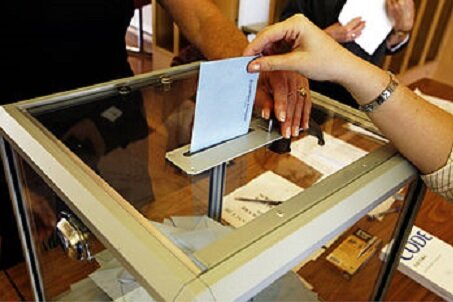
Also, once marked, ballot papers should be placed in sealed ballot boxes so that it is not possible for anyone to tamper with the ballot papers once votes are cast. However, my experience is that most ballot boxes are not sealed. That is, they do not bear the marked and numbered seals of the political parties involved, in the way that was originally intended and so that the integrity of the process can be demonstrated.
Just before polling stations open, the polling agents of the various candidates participating in the election should be afforded the opportunity to examine the ballot boxes used to ensure that they are empty at the beginning of polling. Once checked, the ballot boxes should be sealed by the polling station staff and the polling agents of the candidates should be allowed to attach their own distinctively marked and numbered seals to ensure that polling station staff are not subsequently able to open the boxes in an unauthorised manner. My experience again however, is that polling agents are not always offered the opportunity to check and seal the boxes in the way I have described. I have seen staff at polling stations leave ballot boxes unsealed and periodically open the boxes on the pretext of spreading out and compressing the ballot papers in order to make more room in the box. While such violations of the rules may have been committed innocently, such occurrences could just as easily allow ballot papers to be illegally interfered with.
At the close of polling, the ballot boxes should be transported to the count in a manner that prevents them from being interfered with. In the past, ballot boxes were always transported by police car, in the days when the police were not politicised as they are today.
Today, ballot boxes are taken to the count by individual members of the polling station staff (local authority employees) in the boots of their private cars. Unless these cars are followed by polling agents for the various candidates no checks are possible to prevent the ballot boxes being interfered with or indeed switched en route.
Furthermore, ballot boxes when delivered to the count should not be opened until the candidates or the agents are present and have had the opportunity to check that the seals on the boxes have not been broken. My experience however, is that this rule is rarely complied with and when candidates and their agents arrive at the count, they are presented with a whole mass ballot boxes already opened and no sign of the seals that may have previously been attached.
The checking that ballot boxes are empty at the beginning of the day; the attachment of individual political party seals; the secure transport of ballot boxes from the polling stations to the count; and the checking of seals on the still sealed ballot boxes before they are opened, are all measures designed to ensure and demonstrate the integrity of our polling system and the lack of enforcement of the rules is a flagrant disregard of the protections afforded candidates under the Representation of the People Act.
The lack of adherence to the rules creates the potential for marked ballot papers to be fraudulently placed in ballot boxes at the beginning of the day; creates the potential for ballot boxes to be opened and interfered with, and/or stuffed with fraudulently completed ballot papers during polling; creates the potential for ballot boxes to be opened and interfered with or switched for a substitute ballot box stuffed with fraudulently completed ballot papers en route to the count; and it creates the potential for the contents of the boxes to be interfered with at the count and prior to the admission of candidates and their agents.
There is tremendous scope for ballot boxes and ballot papers to be interfered with under the system as currently, sloppily operated, especially when ballot papers and boxes are stored overnight, ostensibly ‘securely’, as often happens with local council elections that coincide with general elections. Postal voting provides even greater scope for electoral fraud to take place and there have in recent years been a number of instances of electoral fraud being exposed and this via a system that is as I have said earlier, ‘shot full of holes’.
The rules exist because all of these abuses have been committed at some time in the past and in order to prevent them happening again. The fact that these rules are frequently, one might say routinely flouted nowadays by polling administrators, suggests that those currently in power have an interest in operating a system that is open to abuse.
There needs to be a route and branch review of the security of the electoral procedures upon which our government is predicated. There needs to be a number of reforms to ensure that our electoral system is conducted fairly and not gerrymandered or corrupted. Without such reforms, we cannot have confidence in the integrity of our electoral system.
Furthermore, and most importantly, if we are to have respect for the democratic process itself and continue to accept the legitimacy of the electoral process, governments must take urgent steps to halt and reverse the debasement of our electorate through the creation of an immigrant block vote deliberately designed to deny us, the indigenous British people, the right of self-determination.
However, as reform requires the co-operation and consent of governments that have profited and secured election under this flawed and corrupted system, I don’t expect reforms to be introduced anytime soon!
By Max Musson © 2015
# # # #
heechee
- Edit
I think it worth remembering that when the ConDems, supported by Labour. offered us their referendum on electoral voting change they cynically omitted the option of PR. Obviously because it is the only option that would result in fair representation.
I also spotted that despite national falls Labour gained seats in immigrant rich London. Obviously their immigrant floods had the desired effect.
Stefan
- Edit
I also thought the AV idea was a con designed to kick PR into the long grass.
UKIP got more votes than the SNP, which is similar to when the BNP got as many votes but nothing in MP’s.
UKIP should now push for PR.
Michael
- Edit
UKIP should form alliances with others (yes, that does include the Green Party whose voters were also effectively disenfranchised by the system on Thursday along with 430,000 Scottish Tories) to fight for a fairer and much more representative voting system. I, would go much further, and lodge an official complaint about the British government to the United Nations and or the EU. Simply put, so long as the British electoral system effectively throws away the votes of MILLIONS of British citizens we can’t be in any real sense a democratic country and action needs to be taken to ensure the British government respects the human rights of its citizens.
Max Musson
- Edit
I applaud your sentiments Michael, but you are assuming the United Nations care as much about democracy a you do.
Stefan
- Edit
I would agree that the mainstream doesn’t want to fix something that favours them!
frederickdixon
- Edit
The Tories are in with an overall majority, so sadly any demands for PR are just whistling in the wind – it ain’t gonna happen!
heechee
- Edit
That should not mean we fail to back causes that raise the levels of discontent with the Governing of our nation. Help this cause to grow and that refusal, by our ruling elite,
will hopefully benefit our cause and we have nothing to lose by signing a petition.
Michael
- Edit
As the Conservative Party is SUPPOSED TO BE a Unionist party I would think even they should start to support calls for real electoral reform. How sensible is it to effectively want to disenfranchise 430,000 odd Scottish Tories when other Scots have voted for a blatantly separatist party in huge numbers? Does Cameron really want to go down as the last PM (and even more embarrasingly the last Tory PM) of the United Kingdom of Great Britain and Northern Ireland?
Max Musson
- Edit
The key word here is ‘SUPPOSED’. The modern Conservative Party is very different in character to the Conservative Party of old and very different to the image they like to project to the unsuspecting British public.
Michael
- Edit
I afree. I think Cameron is actually a closet Scottish separatist which is why he deliberately stirred-up as many fears as he could during the election campaign over the possible consequences of a hung parliament with the SNP playing a powerful role in it.
Yeah, real unionist Tories of the past wouldn’t be so utterly irresponsible as he has been. Even the former Tory Secretary of State, Michael Forsyth, warned him about the long-term damage he has inflicted.
I think a lot of ‘modern’ (meaning PC globalist) Tories want Scotland to leave the United Kingdom and people like Michael Forysth are beginning to suspect the truth.
Linc's Patriot
- Edit
Whilst listening the election coverage on Radio Humberside – between about 12.30 and 12.45am, the commentators mentioned that 7 ballot boxes had just arrived at the count 2- 3 hours after the polls had closed! They even joked that they must have been driving around Grimsby, for it to have taken so long – bizarre!
Michael Woodbridge
- Edit
Proportional representation may, like voting Ukip give us a short term advantage if it allows a genuine racial loyalist party to slip through the net. However, it’s a delusion to imagine that P.R. would be a fairer system in the long run so long as the media were able to make or break any genuine challenge to the vested interests of international finance. In fact, a longer term solution would be in the opposite direction. It would take the the power away from party machines and the mass-media and restore responsibility at local level. What we need is an organic peoples community, or commonwealth, that works from the grass roots upwards.
TiglathUK
- Edit
UKIP, in this FPTP voting system, failed to focus their campaigning in a dozen target constituencies. The SNP did nothing south of the border.
UKIP also ‘shot themselves in the foot’ by banning all ex-BNP & NF veterans from even joining UKIP –in a foolish attempt to appease the Marxist MSM & BBC. As a result, their candidates were relatively inexperienced and lacked the knowledge, passion, grit, hatred of our enemies, and vision for a reformed money system, that racial nationalists generally have. I hope Farage is replaced by a proper patriot.
Stefan
- Edit
That confirms what I have heard in the past, playing straight into the hands of the mainstream powers that be.
John Beattie
- Edit
Bottom line: the election results will not stop the African/Asian invasion one iota.
Stefan
- Edit
& it is not meant to!
JOHNNY LEECH
- Edit
Max has produced some fine articles over the past week and this one is no different. The Polls for weeks were giving the electorate false information despite that UKIP’s Patriotic vote amassed nearly 4 million votes. How many were bamboozled and hoodwinked into thinking a Labour Government was on the horizon?
I do not see the Zionist elite handing out ‘Proportional Representation’ as a constitutional change, I think there is more chance of ‘Paddy Ashdown’ eating his hat: literally!
Under this new Tory Government, there will be more Immigration, more wars in the Middle East and more EU laws.
On the positive side, Labour will probable elect it’s first Black Leader and there will be battles amongst their rank and file to do so. The only place Labour excelled in this Election was where demographic change was obvious for example Central London.
The issue of Race and Nation is still not the number one topic in the rhetoric and policy of UKIP however it is an absolute fact most people who voted UKIP did so one way or another on those grounds. On the positive side when has a Nationalist movement in Britain received 4 million votes? There will be By Elections and a European Referendum. Cameron will be performing a three-card con trick in the short term and long term of this Government. The threat to the Zionist elite does not come from the SNP or Labour it comes from a more radical UKIP.
Albert
- Edit
Spot on Johnny!
Michael Woodbridge
- Edit
It’s most unfortunate that the one remaining Ukip M.P. is Douglas Carswell, who is about as far from being a genuine racial-nationalist as you can get within Ukip.
Rerevisionist
- Edit
There’s an interesting interview with an expellee of UKIP here
https://www.theoccidentalobserver.net/2015/05/interview-with-jack-sen-part-1/
Sen (? odd name?) seems to be fully aware of the jewish finance issues, and attributes that to his sudden ejection. UKIP seems to be just another unserious front party.
Personally I’m relieved Miliband failed. I watched the BBC’s election night swingometer and old guard programme (Mandelson trotted out, for example) with little pleasure. There’s a complete ban on discussion of (e.g.) immigration, immigrant voting patterns, wars and deaths, women in sexual slavery notably in Israel, and the financail system and Fed. But it was pleasing to see Peter Hain, of the orange visage, looking worried that the system is coming to an end. Hain was a fanatical anti-Apartheid campaigner, though I can’t help noticing he hasn’t moved to an African township.
TiglathUK
- Edit
Jack Sen has an Indian-Hindu grandparent, I believe. Mixed-race aspiring politicians like UKIP’s Mr Wolffe are generally allowed more freedom of speech than us unmixed Brits, as they can play the Race Card. Positive discrimination also kicks in.
Hindus are awake to the Muslim threat and don’t suffer from the popular Judahized-Christian heresy that God created all the races, everybody’s the same, God loves them all and wants them all ‘saved’ and we should all hold hands and sing Kum Ba Ya! (Christian Identity teaches in-context Biblical Christianity stripped of the Marxist Universalist corruption.)
Stuart
- Edit
Reading between the lines it seems that Max may suspect the possibility that results have been rigged?
It would explain the anomaly of that Exit Poll and ‘that’ Professor. Not one of the 50 or so polls over the last 6 weeks has put either Labour or the Tories outside the range of 260-285 seats, yet at 10pm on election night the BBC issues a shock Exit Poll which puts the Tories at 316 and Labour at 260?
I have just been looking through the pictures of the weekend’s London protests at what is perceived as a “bent” general election result. People everywhere are beginning to think this, remember the immortal words of Djugashvilli, that:-
“Voting changes nothing, it is those that count the votes that matter”.
How true. Especially in the US. But with our postal voting corruption and ballot box stuffing, how far are we behind the US on stolen elections?
If so what is the point of an EU Referendum? Remember the Republic of Ireland’s second referendum on the EU’s Lisbon Treaty? They previously rejected the treaty in a June 2008 referendum, by a margin of almost 7%. But the second result had an opposite result. And you will all know what happened when the Swiss had an referendum on their gold.
Just saying.
Max Musson
- Edit
I think that a lot of our elections are rigged. The principle of eliminating moral risk tells us that somewhere in the scheme of things, elections are being fiddled and the checks and balances in our electoral system have been so sloppily operated for so long, it is likely that fiddling the results is quite widespread.
.
There is another old truism from the Army, that ‘no-one respects what you don’t inspect’. The meaning of this being that if the standards of performance of a task are never inspected, eventually people will lose respect for the performance of the task and let those performance standards slip. Funnily enough, I don’t see anyone conducting spot checks intended to ascertain whether electoral staff are adhering to the performance standards they should.
John S.
- Edit
A database of instances of establishment vote rigging – https://eotp.org/tag/vote-rigging/