By Frederick Dixon:
“One of this country’s great unappreciated achievements is that through everything – industrial revolutions, millions of people living here – still today, you can go fifteen minutes outside any British town or city and be in glorious landscape. Britain still has the most reliably beautiful countryside of anywhere in the world. This is an intensely beautiful country that has been extremely well looked after for centuries.”
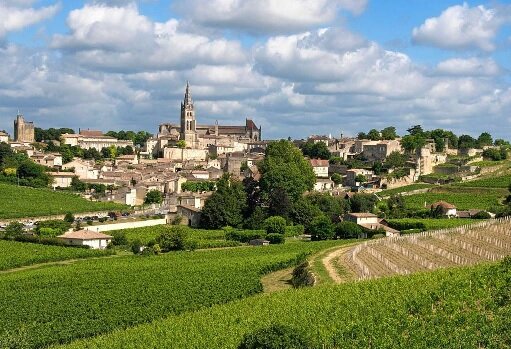
Perhaps it takes someone who isn’t quite English, and who can therefore look at us with the eye of an outsider, to fully appreciate the “unappreciated achievement” which is our countryside. That someone, and the author of those words, is Bill Bryson, the American author, English resident and immediate past president of the Campaign to Protect Rural England.
Our countryside, though, is not only a matter of beauty, it is also the unintended creation of our ancestors, who are also Bryson’s ancestors, and is their finest creation. Every inch of our land has been lived in and worked by our people for thousands of years, and every inch bears the marks of their labours for those who have eyes to see – the bumps and hollows in a field where a medieval village once stood, the barrows which contain all that remains of bronze age kings, the country lane which bends abruptly to follow the headlands of a common field, the ancient hollow oak pollarded in the old fashion, the village churchyard where for a thousand years our forefathers have been laid to rest. Even our place names speak of a rustic past which is still very much with us – Hampton (village in a meadow), Langley (long wood), Elmbridge (hill with elms), Elton (village where eels were caught), Fawler (the coloured floor – a Roman mosaic pavement has been found near the village).
As is the way of human nature, it was not until most of us no longer worked in the countryside that it began to be appreciated for its beauty, especially when compared with the crowded, insanitary cities and smoke stack industries of the industrial revolution. So it came to be celebrated in the 18th, 19th and 20th centuries by painters, writers and composers whose works are among the finest creations of the human mind; even such a writer as Kipling, not usually associated with the countryside – or even with England – produced in “Puck of Pooks Hill” a numinous fusion of history, antiquity, deep culture and love for the countryside, the very finest childrens’ book about England. In the works of J.R.R. Tolkien his “Middle Earth” is a calque on England and an expression of the author’s fears (and hopes) for his country. Artists such as Lancelot (“Capability”) Brown even went to work on the countryside itself, moulding landscapes to resemble the serene classical settings of a painting by Claude Lorrain.
Throughout the twentieth century, conservation movements such as the National Trust and the Campaign to Protect Rural England gathered force and their efforts bore fruit in successive statutes culminating in the Town and Country Planning Act 1947 which, at last, created the tools needed to give a measure of protection to the entire countryside.
It might have been hoped that the low birth rates of the past forty years would have moderated the demand for housing and thus the pressures for development. Immigration has overturned that prospect; the population of England increased from an almost all-white, all-British 42 million in 1951 to 53 million in 2011 – yet, of that 53 million, the white British component is still 42 million. So it is necessary to find housing for 11 million people whose presence in this country has come about – to quote Enoch Powell – “against the will and without the consent of the British people”. The presence of those people in our country helps to keep house prices high enough to deter our own young couples from buying homes and starting a family. Now we find the Conservatives’ Minister of Planning, Nick Boles, claiming that an area of countryside two and a half times the size of Greater London (!) must be sacrificed to provide housing largely for immigrants and their descendants; with their new National Planning Policy Framework they’ve made a fair start towards meeting Mr. Boles’ target.
The effect of immigration on our countryside is not confined to the erosion of green fields. We find that rural areas themselves are increasingly infiltrated. A recent report by the leftish think tank “Demos”, analysing the 2011 census at local level, found that 5, 000 of the 8,850 council wards in England and Wales (56% of the total) had populations which were wholly or almost wholly white British in 2001, but by 2011 – just ten years later – this number had dropped to 800 (9%). This development is described by Demos as “a welcome minority advance into areas previously only the preserve of the white majority.” Welcome to whom? We shouldn’t, though, regard ALL immigration as inimical to the countryside, after all Bill Bryson is an immigrant from the United States. Or is he? Surely the settlement in this country of white people of British descent should really be seen as homecoming, not as immigration, and although significant numbers of “overseas British” do settle here, they cause none of the problems associated with pressure on resources because they are outnumbered by the UK British going in the opposite direction.
We must remember that NOTHING is irreversible given the necessary will and drive to change. Once there was a settlement of English folk surrounded by their fields, woods and orchards. Now there is an inner city ward of racial aliens having nothing except its name in common with the settlement which was once there. In the time which is yet to come there will once again be a settlement on that spot of English folk surrounded by their fields, woods and orchards. All it needs is the will to make it happen.
By Frederick Dixon © 2013
# # # #
Steve
- Edit
In the museum of London there is a window onto a model of a probably stone age settlement which morphs into the present day using a lighting trick & a half silvered mirror, the present day is the runway at Heathrow!
Steve
- Edit
I was watching a TV programme about Iceland that served to remind us that our jet age has been unaffected by volcanoes so far but that can’t continue indefinitely.
One well placed volcano could change this country (& many others) very rapidly.
There could be prolonged showers of sulphuric acid & starvation will follow pretty quickly.
Max Musson
- Edit
I see you’re in a bright and cheery mood today, Steve? 😉
Steve
- Edit
Yes as ever, better informed than blissfully ignorant!
Mind you there is some mental attitude that has been discussed where people are aware how dreadful things are but just blot it out, hoping it will go away.
They just shut down because they can’t cope with it.
Anglo-Australian Alliance
- Edit
“…our jet age has been unaffected by volcanoes so far…”
.
Iceland volcano ash continues to ground aircraft: https://news.bbc.co.uk/1/hi/uk/8623806.stm
.
Mother Nature will always seek an equilibrium to counteract the excesses of Man (mass globalist, materialist, selfish society that apportions untold horrors upon her). Natural disasters are an exemplification of this: what is a volcano but Mother Earth’s menstruation, her purging of a disease, her cleansing of her body, her sublimation of her occupants? Yet from the travesty of a volcano erupting a new dawn is built upon the land she has granted.
.
A pagan perspective, granted, but one that is aligned to Nature and not the fantastical notions that proceeded from it.
Florian Geyer
- Edit
An excellent read. The current assault aimed at large swathes of our countryside for the sole purpose of housing drove after drove of immigrant families is nothing short of a crime. No thought has been given to the permanent damage done to the landscape or the loss of quality of life.
Steve
- Edit
I’ve often wondered about that & wonder if it’s deliberate, so as to set us up for disaster.
It also makes us less self sufficient in food production as well.
Then there is the building on the flood plains which could lead to disaster in established areas….
I think I’ll change my name to ray of sunshine.
Michael Woodbridge
- Edit
If a madman were running rampant with a gun he would be no less culpable for the resulting carnage even if by some chance he was unaware of the law. Deliberate or not, those politicians and planners who have spent their lives destroying this country should be tried and and punished according to the laws of high treason.
Michael Woodbridge
- Edit
It has been said that when the Saxons first came to this country they built settlements amid the native people and expanded outwards in a network until they achieved hegemony. It is in this way that if we’re to win our country back our own racially loyal folk must build communities based on an iron hard ideology of hope and patriotism.