It is now roughly three weeks since my first article on this subject the whole world it seems is still in the grip of the COVID-19 coronavirus pandemic. In the first countries to be infected, China and Italy there now appears to be some reduction in the rates of infection and in the numbers of deaths, but for the rest of the world the numbers are still rising steeply.
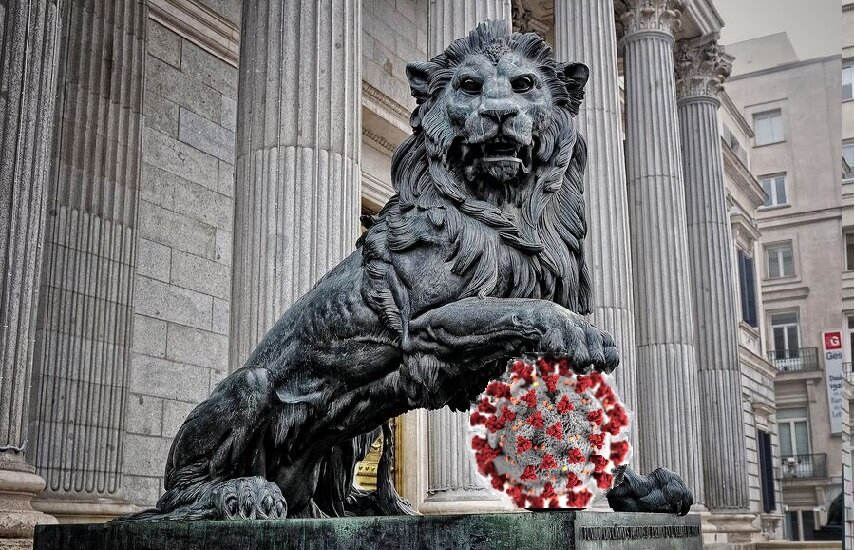
Here in the UK the Prime Minister Boris Johnson has performed a volte-face where ‘lockdown’ is concerned and we are all now, wherever possible, required to “stay at home”, in order to, “protect the NHS”, and thereby, “save lives”. He has championed the policy of compressing the ‘bell shaped’ impact curve, which makes sense, as this will give the government time to expand NHS resources and should thereby minimise the number of deaths that might occur as a result of the NHS being overwhelmed. However, he has also opted for a form of lockdown in which the majority of the British public are confined to our homes, and where possibly as much as half of our economy has been shut down. This is a state of affairs which is unsustainable in the long-term.
The Treasury Secretary Rishi Sunak, in addition to the £12bn plus of government spending promised in his first budget and intended to alleviate the effects of the coronavirus, has now promised during daily briefings, a further £320bn plus. This additional money is intended to alleviate the worst of the economic impact that will follow as a consequence of the government’s lock-down policy, but at great cost to tax revenues and the consequent increase in the national debt.
During a normal year the government would raise approximately £623bn in taxes and spend approximately £795bn maintaining the NHS, other public services and the armed forces etc. This means that in a normal year the government would need to borrow an additional £172bn to cover the shortfall, adding to our national debt, which currently stands at approximately £1,821bn.
If we assume that tax receipts halve during 2020, and Rishi Sunak spends the £332bn extra that he has promised, government spending will reach £1,127bn compared to tax receipts of just £311.5bn, thereby increasing government borrowing this year by £815.5bn and taking the national debt to an astronomical £2,636.5bn, an increase of almost 45%.
There was originally talk in government circles of attempting to develop what was unfortunately referred to as ‘herd immunity’, a poor choice of words, and as a consequence this policy went down like a lead balloon and has not in any seriousness been referred to again. I say ‘unfortunately’, because public perception of the principle was coloured by the use of the word, ‘herd’, suggestive of ‘livestock’ that might in the course of events be sacrificed in order to prevent the spread of disease in much that same way that millions of cattle were slaughtered to prevent the spread of BSE (Bovine Spongiform Encephalopathy).
In left-wing circles, talk of mounting debt, lost tax receipts and ‘herd immunity’ led to cries that ‘lives matter more than profits’, but such calls have missed the point, that if our economy collapses and the government are unable to borrow more money, then government spending on everything, including the NHS and the combatting of coronavirus will grind to a halt and the virus will spread throughout our entire population unchecked.
It is of course unthinkable that in order to sustain our economy we should recklessly go about our lives and simply accept the impact of the virus on the health of our nation. In such a situation, the death toll would be horrendous and could possibly reach approximately 1.5m.
Current government policy will slow the progress of the virus, but unless a vaccine is found within the next couple of months I fear that a prolonged lockdown will do long-term damage to our economy leaving us once the virus has run its course, impoverished and with possibly a decades long recession to add to our grief.
A solution must be found that will protect our most vulnerable, while at the same time keeping as many of our young and fit in work as is possible, thereby preventing: rising national debt; economic collapse; and a prolonged recession once the disease has run its course.
I believe a ‘twin track’ system could be introduced, in which everyone would be assigned to one of two ‘community groups’:
The Protected Group would be composed of anyone over the age of 65, plus anyone who belongs to one of the vulnerable groups who have compromised immunity and therefore compromised resistance to disease. Government would take steps to expand the capacity of Social Services so that the Protected Group would be supplied with the necessities they require (food etc.) to sustain life in voluntary isolation. Anyone who qualifies for inclusion within the Protected Group, but so chooses, will be allowed to remain within the Active Group.
The Active Group would primarily be composed of all those below the age of 65 who are fit and healthy – and they would be able to continue working and living as normal so that the economy continues to function and so that the vast majority of people, who have little to fear personally from the coronavirus, can continue to enjoy all the rights and freedoms that are considered normal in a democracy.
This plan would cost much less than current government policy. The government would no longer be paying large numbers of people to stay idly at home, as the people within the Protected Group would be composed almost entirely of people who already live on a pension or on state invalidity benefits.
Of course, the government would still need to ramp-up NHS capacity to cater for those who are already infected with the virus and who go on to suffer the more extreme life threatening symptoms, however for the rest, the virus as it spreads will cause mainly mild symptoms and after three months or so, the virus will have run its course, everyone within the Active Group will have experience a brief illness comparable to the flu and will in all probability thereafter be immune.
With a high level of natural immunity within the bulk of our population, the Active Group, the virus will die out and once this state of affairs has been achieved, the Protected Group can be released from their isolation and life can return to normal. Indeed, under this plan life would return to near normal:
1. Deaths will have been reduced to the minimum, both within the Protected Group and within the Active Group;
2. Immunity against the virus will have been established among the vast majority of the population thereby minimising the chance of the virus recurring;
3. The normal economic life of the nation will have been maintained as much as is possible, thereby minimising job losses, minimising the disruption to people’s lives, and minimising the disruption to businesses;
4. There will have not been the need for massive new borrowing on the part of government because tax revenues will have been maintained at near normal levels and there will have been no need to pay large numbers of people to remain idle at home, nor to subsidise large numbers of businesses to get them through a prolonged lockdown period.
Today on the Mail Online website Professor Graham Medley, the government’s chief pandemic modeller, warned that mounting unemployment, domestic violence and burgeoning mental health issues could be widespread if the normal functioning of society remains paralysed. Prof Medley said the only viable path through the health emergency would be to let people become infected so they are no longer vulnerable.
The plan that I have outlined above makes economic sense in that it involves much less government borrowing, and while it embodies the policy of exposing the majority of our population to infection so that group immunity can be established, it does not involve the wholesale exposure of the elderly and vulnerable groups in such a way as would cause large numbers of deaths. Lastly, it maintains the democratic principle of freedom and choice, in that the elderly and vulnerable whose lives might be made intolerable through lockdown are allowed to choose whether or not to lead a normal life and take their chances with the virus.
Some of our elderly may only have 18 months left to live in any event and it would be a cruel irony for them to spend their last 18 months of life confined to their homes, only to die of natural causes without ever having the pleasure of going shopping again; without ever having the pleasure of visiting our nations beauty spots again; without ever visiting a pub with friends or seeing a live stage performance, or seeing their children and grand-children ever again.
Similarly it would be a cruel irony if after 18 months of lockdown our elderly and infirm emerged to find our economy crippled by debt, and with mass unemployment leaving their children and grand-children poverty stricken for years or possibly decades to come.
So let us adopt a plan that avoids the pitfalls of current government policy. That affords our people the freedom to choose their fate and if they so choose, the dignity of facing the threat presented by coronavirus with courage and defiance, not cowering in our homes. The British people have a long affinity with the lion and many will echo the sentiments of Benito Mussolini; that it is “Better to live one day as a lion, than a lifetime as a sheep!”
frederick dixon
- Edit
All good sense Max. Let’s hope “they” all read Western Spring!
Lord Ruprt Everton
- Edit
“So let us adopt a plan that avoids the pitfalls of current government policy. That affords our people the freedom to choose their fate and if they so choose, the dignity of facing the threat presented by coronavirus with courage and defiance, not cowering in our homes. The British people have a long affinity with the lion and many will echo the sentiments of Benito Mussolini; that it is “Better to live one day as a lion, than a lifetime as a sheep!””
And then we can get back to normal.
Isaiah
- Edit
Steps up to a throne then appeared. The Lamb walked up those steps and sat on the Throne. When He sat down, He suddenly became a Lion with an everlasting crown upon His head. He sat and watched in great majesty as the revelation of the Blood of the Passover Lamb and of His resurrection life continued towards the ends of the earth.
Jake
- Edit
The statistic are dodgy. At this time, it is now well known that the infection death rate is tiny. In fact it is less than a normal flu.
Even so, it is highly infectious and dangerous to the elderly. The entire approach has been wrong. For a small fraction of the cost they could have focussed on providing gilt-edged protection in the nursing homes, retirement villages, the disabled, the elderly in their homes, and the sick, and let everyone else just go to work.
Monumental incompetence by politicians, public servants and some senior medical figures.