As the once designated ‘Brexit Day’ passes without our people regaining our freedom and self-determination, and we witness yet further chaos, vacillation, and political manoeuvring, many of our people will be despairing and wondering how and when this sorry tale of Brexit will end.
The dream of Britain’s exit from the European Union has lived in the hearts of British patriots ever since the day in 1973, when Prime Minister Edward Heath took us into what was then called the European Common Market. That dream burned brightly for a short period thereafter, during the referendum in 1975 on our continued membership of the Common Market, but the dream was all but extinguished by the result of that referendum supporting our continued membership.
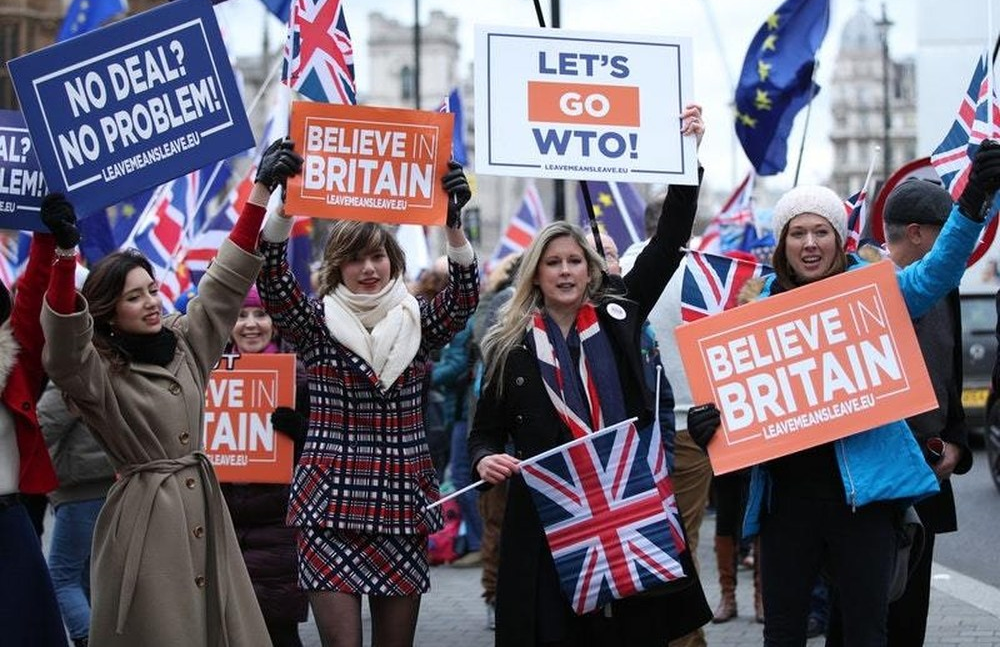
As with the 2016 Referendum, the 1975 Referendum was accompanied by blood-curdling warnings of dire consequences if the British electorate did not vote to support our continued membership and the benefits, in-so-far as there are any, were grossly over-exaggerated, thereby securing at that time a slim majority for the Remainers.
The dream of one day regaining our self-determination was not quite extinguished however, and groups of patriots across the UK fanned the glowing embers, keeping that dream alive, awaiting an opportunity when the calamity of Britain’s decision to remain within the bourgeoning European super-state would become apparent to the majority of our people.
Successive leaders of the EU have for more than six decades had the opportunity to create something truly great, to be the architects of a renaissance of the European peoples and of European civilisation. They could have promoted the idea of a European federation of independent nation states, each participating willingly in a great project that might have transformed the world.
The leaders of the EU could have created a truly democratic supra-national entity that truly promoted the wellbeing of the peoples of Europe and which worked to expand the reach and influence of Europe in the interests of our peoples. The EU could have concerned itself primarily with the wellbeing, proliferation and advancement of the European peoples and our civilisation and an idea such as this would have been irresistible, especially for our youth, firing their imaginations with almost boundless dreams of what the future might hold, and while this may have been the intention of some enthusiasts for the European idea, sadly those with their hands on the levers of power had other intentions.
The constitution of the EU should have been modelled on the constitution of one of the most successful and enduring democracies that are to be found: the constitution of the United States of America for example, or that of the United Kingdom, the ‘Mother of Parliaments’. Instead, the architects of the EU chose the constitution of the Soviet Union as their model – a ‘mistake’ that could not possibly have been made by accident – and a decision that almost certainly resulted from the plethora of post-war communists to be found within the European Movement.
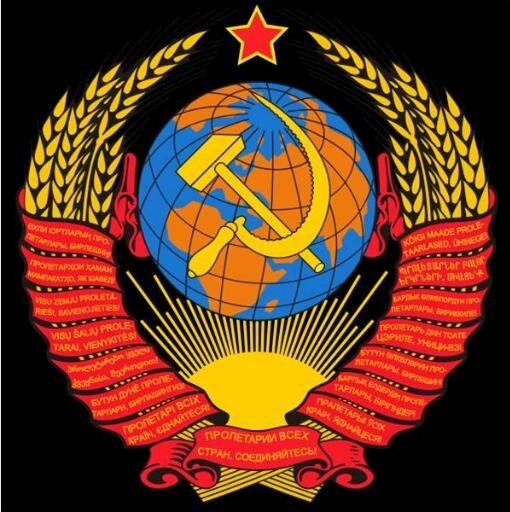
Right from the very beginning therefore, the intention was to create a pseudo-democracy of the kind the Soviet Union was, a bureaucratic tyranny dressed up as a democracy.
The constitution of the Soviet Union created three chambers: in which the top level strategy for the state was decided by the Central Committee of the Communist Party; then implementing that strategy was the Politburo, the body which proposed and drafted all legislation; and finally there was the Grand Soviet, an elected body which had no legislative powers of its own and which existed solely to rubber stamp legislation drafted by the Politburo.
Within the EU we have essentially the same three chambers: in which the top level strategy for the state is decided by the European Council, currently composed of the heads of state or heads of government of the member states of the European Union; then responsible for implementing the high level strategy is the European Commission, the body which like the Poliburo proposes and drafts all legislation; and finally there is the European Parliament, an elected body which has no legislative powers of its own at all and which exists solely to rubber stamp legislation drafted by the European Commission.
Do you see the similarity between the Soviet system and the European Union?
Ah, I hear someone say, but the heads of the member states comprising the European Council have all been democratically elected, so the European Union is essentially democratic after all, and this could be true if it were not for the fact that the European Council only decides upon the broad strategic direction of the EU leaving the business of drafting legislation in the hands of the European Commission. Furthermore, in addition to the heads of state of the members states of the EU, the European Council has two further members, elected from former heads of state; the President of the European Council; and the President of the European Commission, who even though they are non-voting, exercise great influence over the workings and the decision making of the European Council.
The current President of the European Council is Donald Tusk, who was formerly a Prime Minister of Poland, and the President of the European Commission is Jean-Claude Juncker, formerly the Prime Minister of Luxembourg.
In order to demonstrate just how influential Donald Tusk and Jean-Claude Juncker are in the European Council, I challenge you now to name as many of the other twenty-eight members of the Council as you can? Apart from naming Theresa May and Angela Merkel, most people would be completely stumped by this challenge and we only have to observe the Brexit negotiations to realise just how much the Presidents of the European Council and the European Commission dominate the affairs of the EU. It is worth bearing in mind also, that only 32% of the British electorate actually voted for Theresa May in the 2017 General Election and less than 25% of the German electorate voted for Angela Merkel. These are hardly resounding demonstrations of electoral support, especially when substantially more people voted for us to leave the EU in the 2016 Referendum than voted for Theresa May in the following general election.
The fact also remains that politicians of the governments of the individual member states, especially ex-ministers, know that if they have during their political careers complied with the wishes of those who are the behind-the-scenes driving force of the EU, they can when their domestic political careers are on the wane, look forward to being appointed as high level bureaucrats to the European Commission or some other such institution, and thereby avail themselves of the fat salaries, lavish benefits and generous pensions that are bestowed upon the faithful.
If we examine the founding of the EU it is clear that while many people believe the EU was conceived in the aftermath of World War by well intentioned idealists like Jean Monnet and Robert Schuman, the EU was in fact envisaged much earlier than that.
In 1923 the Pan-European Movement was started by the son of an Austrian aristocrat, Richard von Coudenhove-Kalergi, with the intention of creating a new order in Europe. Coudenhove-Kalergi was of mixed race and as a result developed a fetish around this issue. He also exhibited something of a fetish for Jews. His vision for Europe was that of a federal super-state populated by a mongrelised population that would have no sense of prior tradition and could be easily led and manipulated by a new, predominantly Jewish, cosmopolitan, intellectual and financial elite.
Coudenhove-Kalergi’s affinity with Jews began at an early age. His father used to storm out of church in protest whenever Jews were referred to disparagingly in the traditional Catholic liturgy, and by the age of twenty-one Richard Coudenhove-Kalergi was married to the famous Jewish Viennese actress Ida Roland, thirteen years his senior.
Coudenhove-Kalergi is recognized as the founder of the first popular movement for a united Europe. In 1922, he co-founded the Pan-European Union with Archduke Otto von Habsburg, and in 1923, he published a manifesto entitled ‘Pan-Europa’ with each copy containing a membership form which invited the reader to become a member of the Pan-Europa Movement.
According to his autobiography, at the beginning of 1924 his friend Baron Louis de Rothschild introduced him to the Jewish banker Max Warburg, who offered to finance his movement for the next three years by giving him 60,000 gold marks. Warburg remained sincerely interested in the movement for the remainder of his life and served as an intermediate for Coudenhove-Kalergi with influential Americans such as his brother, Paul Warburg and the Jewish American financier Bernard Baruch. In 1926, the first Congress of the Pan-European Union was held in Vienna and the 2,000 delegates elected Coudenhove-Kalergi as president of the Central Council, a position he held until his death in 1972.
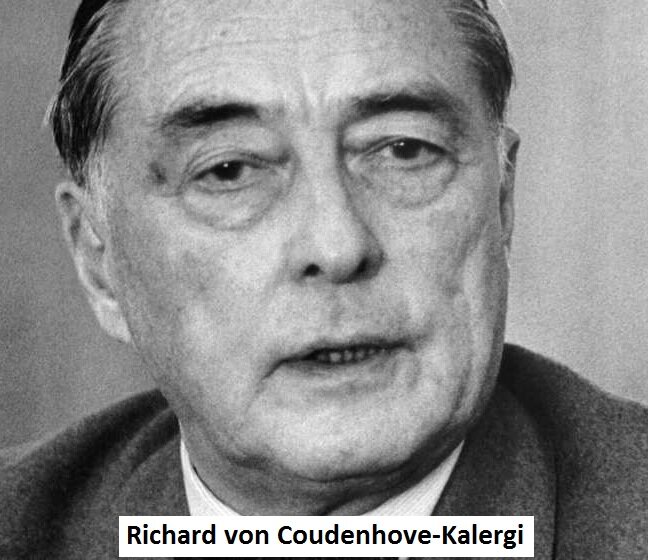
In his treatise, ‘Praktischer Idealismus’, Coudenhove-Kalergi wrote: “The man of the future will be of mixed race. The races and classes of today will gradually disappear due to the elimination of space, time, and prejudice. The Eurasian-negroid race of the future, similar in appearance to the Ancient Egyptians, will replace the diversity of peoples and the diversity of individuals … “
“Instead of destroying European Jewry, Europe has unintentionally, refined and educated this people, driving them to their future status as a leading nation through this artificial evolutionary process. It’s not surprising that the people that escaped from their ghetto-prison, became the spiritual nobility of Europe. Thus, the compassionate care given by Europe created a new breed of aristocrats. This happened when European feudal aristocracy declined and as a result of the emancipation of the Jews.”
Should anyone think that Richard Coudenhove-Kalergi was an obscure and irrelevant figure from the dim and distant past, that I have dredged up and whose influence I have exaggerated in order to unjustly smear the EU or the Jewish people as a whole, this is not true. Clearly however, Richard Coudenhove-Kalergi was sufficiently influential that some of the world’s wealthiest Jewish bankers and financiers were flattered by his racial theories and chose to finance and support his movement.
So influential was Richard Coudenhove-Kalergi in guiding the formation of the EU, that he is regarded as the father of the European Movement, he decided that Brussells would be the de facto capital of the EU and he personally chose Beethoven’s Ode to Joy as the anthem of the EU, and in 1950 he was the first person to be awarded the Charlemagne Prize for services to a united Europe.
Also, every two years the foundation created by Richard von Coudenhove-Kalergi and named in his honour, awards a prestigious prize to European leaders that are regarded as having made an outstanding contribution towards the realisation of Coudenhove-Kalergi’s vision. Helmut Kohl of Germany was awarded the prize in 1990 and six of the most recent winners of that prize are: Viara Vike Freiberga of Latvia (2006); Wladyslaw Bartoszewski of Poland (2008); Angela Merkel of Germany (2010); Herman Van Rompuy of Belgium (2012); Jean-Claude Junker of Luxembourg (2014); and Kenneth Clarke of Great Britain (2016).
All of this raises the question of whether mass immigration into and across Europe is therefore not something that has simply happened unplanned, by fluke of circumstance, but may have been deliberately contrived from the very beginning by certain European leaders in pursuit of Richard Coudenhove-Kalergi’s vision. Some people will respond to this by arguing that the Coudenhove-Kalergi Foundation of the 21st Century no longer advocates the ideas of Richard von Coudenhove-Kalergi, and this may be so, but why when the organisation was renamed in 2008 did it retain Coudenhove-Kalergi’s name? Why have they not moved to distance themselves from a man who advocated the genetic obliteration of the indigenous European peoples? Furthermore, why have certain European leaders, including some who are past winners of the Coudenhove-Kalergi prize, continued, seemingly inexplicably otherwise, to advocate and facilitate uncontrolled immigration into Europe from Africa and Asia?
Our desire to either remain in or to leave the EU should therefore not be primarily based upon issues of economics, for while various influential members of our current political establishment predict all manner of dire economic consequences in the event we should leave the EU, there can be found people of equal stature who will argue on the contrary that there need be no such dire consequences.
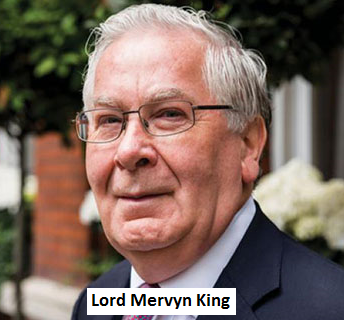
While Mark Carney, the current governor of the Bank of England, has continuously issued bleak warnings about the economic impact of Brexit, in a recent BBC interview, Mervin King his predecessor and now Lord King of Lothbury, has dismissed claims of economic doom as “scare stories”. He said: “The idea that voting to leave would be an economic disaster doesn’t match the facts.”
Lord King claimed that passion among Leave and Remain supporters was fuelled by politics rather than economics, he said: “It’s the issues of identity, culture and politics that are motivating people, which is why I think MPs have rather lost the plot …”
Our desire to either remain in or to leave the EU should therefore be based not upon economic matters, which are transitory, but upon the survival of the British people as a distinct people, with a distinct culture, with a shared identity and a common European genetic inheritance.
As I write this article, it is impossible to predict what the outcome of the political shambles at Westminster will be. It is possible that Theresa May’s government will be denied the opportunity to extend Article 50 any further and that on 12th April, the UK will leave the EU without a deal. More likely, the EU will grant an extension to Article 50, so that a general election can be held, leading to a second referendum in which EU leaders will hope for a decision for the UK to remain an EU member.
My belief is that the proceedings at Westminster have been made as chaotic as possible with the intention of making the British public despair and lose all confidence in our ability to govern ourselves. This is another aspect of this affair deliberately contrived so that the British electorate will eventually resign ourselves to rule from Brussels, should another referendum be held.
As I stated earlier in this article, the leaders of the European Union could have created a truly democratic supra-national entity that truly promotes the wellbeing of the peoples of Europe and which works to expand the reach and influence of Europe in the interests of our peoples. However, as I have demonstrated the autocratic, globalist, elite positioned at the heart of the EU are guided by the vision of Richard von Coudenhove-Kalergi and it is becoming increasingly apparent that their aim is in fact the elimination of the indigenous peoples of Europe as distinct nations and as distinct peoples and our replacement by a deracinated mulatto population through a combination of mass Third World immigration and the promotion of race mixing.
It matters very little therefore what the economic niceties of Britain’s membership of the EU may or may not be, and it matters little whether Brexit will involve some difficulties or some temporary economic hardship. Membership of the EU presents a very real and immediate existential threat to the integrity and future wellbeing of our people, as dire as if we were to be conquered people facing the prospect of deliberate genocide. The EU does not yet propose subduing the British people through armed might, but they are attempting to weaken us by demanding thirty-nine billion pounds in ‘reparations’, and they are attempting to subdue us by political and economic means, through blackmail and threats of tariffs and sanctions should we not fall into line and submit ourselves to their ‘tender mercies’.
It is the duty of every patriot therefore to make as many people aware of the above, to resist the urge to give in to despair and to continue campaigning with every fibre of our being for safe delivery from European Union hegemony, and why even if Brexit is eventually confounded and we remain within the EU for the foreseeable future, we must continue our struggle for the survival of our people and our sister nations of Europe.
By Max Musson © 2019
# # # #
JOIN WESTERN SPRING
Western Spring is not just a website. We are a community of people dedicated to achieving the Six Prerequisites and thereby acquiring the wherewithal needed to win political power and through that secure the future survival, proliferation and advancement of the British people and other White peoples of European descent, wherever they may live. Please join us:
[contact-form to=’[email protected]’ subject=’Membership Enquiry’][contact-field label=’Name’ type=’name’ required=’1’/][contact-field label=’Email’ type=’email’ required=’1’/][contact-field label=’Phone No.’ type=’name’ required=’1’/][contact-field label=’Postal Address’ type=’name’ required=’1’/][contact-field label=’Post Code’ type=’name’ required=’1’/][contact-field label=’Wish to become an Activist, Yes or No?’ type’Activist’ required=’1’/][/contact-form]
# # # #
SteveA
- Edit
Max, a well written article indeed, I further believe that the machinations of the EU are still being underestimated. I suggest that this is a globalist body, bought and paid for by the usual suspects, with the sole purpose of destroying any vestige of nationhood, Christianity and decency. The EU will try any, I repeat, any tactics to prevent a successful exit by Great Britain as they fear that this may be the domino which will bring the entire rotten edifice crashing down around their ears. Britain must be aware that these creatures will use any tactic at all to prevent a successful exit, up to and including suborning your parliamentarians, bought and paid for useful idiots like those in the mainstream media, blackmail and even threats to personal safety of oneself and one’s children. We’ve seen it happen here on the southern tip of Africa, once the globalists get their teeth into something they will not let go.
Max Musson
- Edit
I agree with you Steve. I’m sorry to have edited out the names you mentioned, but while we may instinctively know something is true, libel laws often mean that we often have to step back from naming certain specific individuals if we cannot prove an assertion beyond all reasonable doubt in a court of law.
SteveA
- Edit
Fully understand Max, would photographs of Mr S…s with his arm around both Mr dK and Mr M be classed as incontrovertible proof? If anyone can get an unbowdlerised cope of the Long Walk To Freedom they will find it quite disgusting and yet, when the author walked out of prison he was all milk and honey. The book was smuggled to a J**ish lawyer in New York for publication and then “edited” by the self-same lawyer so that it would not horrify Western readers. What a great pity that the ‘civilised” world turned it’s back on South Africa!
Max Musson
- Edit
Such a photograph would be proof of an association, but not proof of a funding arrangement. I have not read the Long Walk to Freedom, so perhaps that is something I should do as by the sound of it there are some interesting revelations.
It is as you say a great shame the way events have turned out in South Africa, although all is not lost. The Cape Province is still salvageable according to some, but it will require Whites in SA to find a way of encouraging more Whites to emigrate there to bolster their numbers.
John Stephens
- Edit
Anyone reading this article from a largely neutral, some might proffer, “normie” stance, may well regard the plethora of info and research, quite exhausting.
Many of us who are well read, and more experienced in the above article, will notice of course, the ever present Zionist or banker families, having the leading role in it all.
Thus, regarding a future planned renaissance as depicted by Western Spring, how are White Britons, fellow Europeans, and others in the wider Euro-centric communities, going to circumvent meddling, or worse, violent opposition, in attaining a “self-sufficient” White community, or resurgence on the national level?
Max Musson
- Edit
Thank you John, as they say, ‘there’s no gain without pain!’
The means by which the future planned renaissance of White Britain will evolve will be explained fully in articles that are yet to come. Please be patient.
frederick dixon
- Edit
Although of course I’m a Leaver, agreeing with President Trump that “a country which doesn’t control its borders isn’t a country”, don’t imagine that leaving will at once put an end to the genocidal policy of mass immigration. In fact the Tories proposed post-Brexit immigration policy – assuming that there is a post Brexit – is (to quote Migrationwatch) “to replace complete freedom of movement from the EU with almost complete freedom of movement from the whole world”; so expect fewer white immigrants and many, many more non white.
All of which is unsurprising because the Tories worship money and only money, and will always give business what it wants i.e. the cheapest possible labour without having to go to the trouble and expense of training our own people. And they’re frightened of being accused of “racism” (i.e. white British people first) by the Guardian and Channel Four. It is said that Mrs. May is the only member of the Cabinet who still wants to get immigration down to below 100,000 per annum – what a good job she’s made of that in the nine years she’s been in a position to do something about it!
A Corbyn government would be just as bad, if not worse, because he wants to re-open the only half closed flood gates to the third world.
So who or what can we vote for?
Max Musson
- Edit
You are right Frederick, Brexit will not stem the flow of non-White immigrants into the UK per se, but it should reduce the flow of immigrants of all colours and ethnicities from the EU.
As far as voting is concerned, this is not something that we should be overly concerned with at present unless or until something dramatic happens that will focus the attention of the British people at large on the need to urgently stop/reverse non-White immigration into Britain. We need to focus on building community organisations and I will supply more information on how this can be done quite soon.
John Stephens
- Edit
Another serious, and much used immigration con, is the so-called “Commonwealth”. As far as I know, the Falklands Islands are the only over-seas British territory/dependancy left.
Our worries seem to be like fighting a multi-front battle. I was wondering if a human rights aspect, based not only on national laws and ancient documents, but current UN and EU laws, might be useful in our plight.
Thoughts, Max/anyone?
Wolf of the Sun
- Edit
One point and one thought, John.
The point: there are fourteen UK or British Overseas Territories and three Crown Dependencies.
The thought: rights are (a) an outdated liberal concept which we should eschew as pan-European racial nationalists and (b) for the weak. When we have power we will have right. Meanwhile, we should not go grovelling for ‘rights’, especially since those from whom we would seek rights despise us and seek our destruction.
Alec Suchi
- Edit
A very informative article, Max. I would clarify that in the 1975 referendum the vote to remain within the European Economic Community (EEC) was 2-1 in favour , that is 66% of the vote to 33%, which was a resounding and not a slim majority as stated in the article.
To many “ordinary” people, the EU is perceived as a benign organisation which has been responsible for “keeping the peace” in Europe, and is viewed as beneficial culturally and economically.
It is clear from the above that the truth is quite the opposite. The EU is an organisation which constantly seeks to remove powers from individual sovereign countries through centralisation to such an extent that they would eventually become mere regions.
Notions of population replacements and the significance of the Coudenhove-Kalergi plan are unfamiliar to the general public but recent events precipitated by the refugee crisis of 2015 give pause for consideration.
It would be the ultimate irony should we meaningfully leave the EU that we permit as part of trade negotiations the free movement of the third world when from a racial perspective we would be served better by the controlled arrivals of the peoples of Poland, Czech Republic and the Baltic states.
However in the short term the delay to leaving, the terms of the ” May Deal”, and the shenanigans within parliament confirm that powerful vested interests are conspiring to prevent a meaningful exit from the EU.
Michael Woodbridge
- Edit
Whatever the short term success or failure of Brexit may be, the 2016 Referendum has done us all an immeasurable service in that it has now clearly identified for all to see that the entire political class is hostile to the British and European peoples.
Alec Suchi
- Edit
Gerald Batten, UKIP leader ,had recently in the European Parliament accused the Political Class of being traitors, quislings and collaborators who have all been conspiring to prevent a meaningful departure from the EU.
Whilst not a racial nationalist Mr Batten speaks well and coherently and is prepared to raise concerns regarding Islam and the impact of the grooming gangs which had been suppressed for so long, especially by Labour controlled councils.
Wolf of the Sun
- Edit
Indeed, Michael, the antics of our politicians (barring a few noble exceptions) have exposed quite brilliantly, to a degree which would otherwise have taken years, their utter corruption, cowardice, dishonesty, and moral and intellectual deficiency. Democracy, merely a mechanism for counting heads but which has been elevated by liberals to a value, is now seen as the sham that many of us always knew it to be. The legitimacy of our entire political system has been diminished irrevocably. But nature abhors a vacuum and now the way is partially cleared for new political forms and forces. In or out of the EU, the future is bright.
JH
- Edit
Brexit will be a fault line running through politics for a least a generation; future voters are more likely to identify in terms of Leave or Remain, rather than as Labour or Conservative.
The EU’s attitude to the UK is somewhat ambivalent. On the one hand it wants to punish us for daring to break away, and for cutting off our lavish subsidises to the EU budget. On the other hand, it is probably glad to see the back of the UK – we were always lukewarm about the EU – half-in & half-out – and never particularly enthusiastic about greater European integration. The UK is also seen as an increasingly disruptive force. With a bit of luck they may even force us out without a deal. That would be wonderful!
Greater European integration is what the EU is all about. If the UK remains within the EU it will be expected to go along with this – we will have to accept a federal United States of Europe, give up the pound for the euro, join the EU army, etc. There will be no more UK opt outs.
This is where the Remain ‘case’ comes unstuck. Most seem to think that the current half-in/half-out model will go on indefinitely, but once the referendum result is overturned there is no way the EU will allow this to continue. We will be sucked into the maelstrom and be powerless to prevent it. Some Remain voters would have been frightened by the scare stories, others probably thought leaving was impracticable or involved too much disruption. But I suspect only a small minority of Remain voters were in favour of greater EU integration, or fully understood what they were voting for.