Following the historic referendum decision by a majority of the British people for the UK to leave the European Union we have had several days now of alternately hysterical and/or petulant reaction on the part of Remain campaigners, many of whom were stunned by the result and are now in a state of denial, desperately calling for a second referendum in the hope that last Thursday’s decision can be reversed. However, not only have Remain campaigners been stunned by the result of the referendum, but many of the public who voted for Brexit have begun to feel somewhat anxious and to some extent unnerved as Britain has been plunged into a maelstrom of uncertainty following the resignation of the Prime Minister.
The consensus among economic pundits is that any period of uncertainty following the referendum outcome and leading up to our act of withdrawal from the EU should be as short as possible. The longer this period of uncertainty continues, and the greater the number of factors contributing to that uncertainty, so the greater will be the adverse impact on markets generally and the greater will be the damage, not just to the British economy, but to the economy of the EU as a whole. It is surprising therefore that the Prime Minister has resigned in the way that he has, leaving Britain rudderless for the next three months and postponing the beginning of the negotiations to establish the terms of our withdrawal.
Throughout the referendum campaign David Cameron assured the electorate that whichever way the referendum went, he would be the man to undertake the negotiations and to implement the “instructions of the British people”, and it was indeed logical that for there to be the maximum by way of continuity and the swiftest execution of our withdrawal, limiting any period of uncertainty, David Cameron should have been the man to take up the baton, to begin with at least, and lead the initial negotiations.
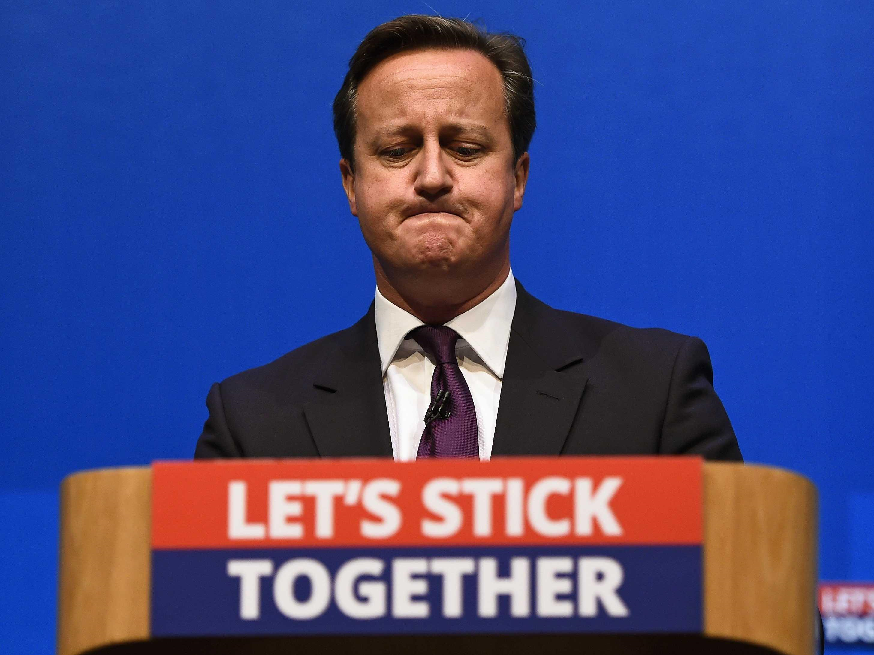
Of course David Cameron eliminated any possibility of him credibly leading our Brexit negotiations because of the highly partisan way in which he campaigned against withdrawal and the fact that he made himself appear ridiculous employing patently absurd scare stories in an attempt to frighten the public into voting to remain. He should have behaved rather differently if he had seriously intended to play the role of statesman, and had he really wanted to be the key negotiator irrespective of the result.
If David Cameron had seriously intended to be statesmanlike in the performance of his duties regarding the EU referendum, he would have spent time ahead of the referendum, not only negotiating the improved terms that he felt were needed order for us to want to remain, but also establishing the terms upon which we would exit the EU should the public vote to do so.
If David Cameron had done this, he could have adopted an Olympian approach, sat back and given the people of Britain an informed choice, allowing others to lead both the Remain and Leave campaigns and retaining for him authority and credibility regardless of the result.
One of the key objections to Brexit that the Remain campaigners raised time and time again, was the fact that by voting to leave the EU we would be taking a ‘leap into the unknown’. The Remain camp of course should have pointed to Article 50 of the Consolidated Treaties of the EU, and they should have explained that not only was there the degree of uncertainty that everyone expected would follow Brexit regarding our trading arrangements with the EU and the rest of the world, but that provision within the treaties regarding the terms upon which a member state would leave the Union was almost entirely absent — no adequate provision for such an eventuality had ever been made. The Remain campaign however, never mentioned Article 50, in fact it was not mentioned once in all the debates and was only mentioned for the first time in public on the morning after the referendum.
Article 50 in fact consists of just five scant paragraphs which without an immense amount of negotiation between the parties involved are completely inadequate, as follows:
Article 50 of the Consolidated Treaties of the European Union
1. Any Member State may decide to withdraw from the Union in accordance with its own constitutional requirements.
2. A Member State which decides to withdraw shall notify the European Council of its intention. In the light of the guidelines provided by the European Council, the Union shall negotiate and conclude an agreement with that State, setting out the arrangements for its withdrawal, taking account of the framework for its future relationship with the Union. That agreement shall be negotiated in accordance with Article 218(3) of the Treaty on the Functioning of the European Union. It shall be concluded by the Council, acting by a qualified majority, after obtaining the consent of the European Parliament.
3. The Treaties shall cease to apply to the State in question from the date of entry into force of the withdrawal agreement or, failing that, two years after the notification referred to in paragraph 2, unless the European Council, in agreement with the Member State concerned, unanimously decides to extend this period.
4. For the purposes of paragraphs 2 and 3, the member of the European Council or of the Council representing the withdrawing Member State shall not participate in the discussions of the European Council or Council or in decisions concerning it. A qualified majority shall be defined in accordance with Article 238(3)(b) of the Treaty on the Functioning of the European Union.
5. If a State which has withdrawn from the Union asks to rejoin, its request shall be subject to the procedure referred to in Article 49.
-o0o-
When one is cognisant of the plethora of regulation that normally accompanies any legislative measure by the European Union, the fact that Article 50 is so scant and inadequate stands out like a sore thumb. Evidently the architects of the EU never seriously contemplated that a member state would ever apply to withdraw from the EU, or they deliberately crafted Article 50 in the way they did in order to impress upon anyone contemplating such a thing that leaving the union would involve such perilous uncertainty that it should never be undertaken.
Furthermore, it is inconceivable that David Cameron would have been unaware of the inadequacy of Article 50. He has a team of senior civil servants advising him and among them would have been experts in EU constitutional affairs. Either David Cameron omitted to take advice from them regarding Article 50, or he ignored their advice. Perhaps David Cameron also felt that a vote to remain would be inconceivable if he omitted to flesh out the bare bones of Article 50 and this was a tactical ploy on his part.
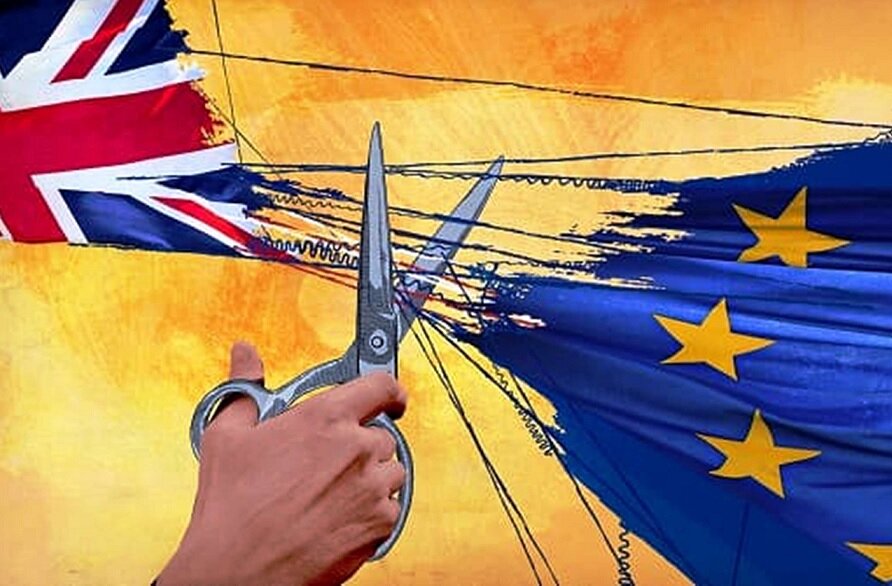
Not only has David Cameron led our country into a referendum, one option resulting from which contains an unprecedented level of economic and political uncertainty that few could have fully appreciated beforehand, he has since the referendum resigned and refused to participate in the subsequent urgently needed negotiations, thereby leaving Britain rudderless at a time of crisis in potentially the most damaging way possible.
I accept that David Cameron and others within the Remain campaign did warn that Brexit would be a ‘leap into the unknown’, but set amongst their other ludicrous warnings of dire political and economic consequences, the significance of such a warning was lost. Had David Cameron been honest, he would have pointed out that Brexit would be a leap into the unknown, because the architects of the EU have deliberately made it so, and because he and other EU leaders have deliberately done nothing to change that, and that ‘by the way’, should we vote for Brexit, he was going to resign and leave Britain rudderless for the next three months.
Despite the political and economic uncertainty that we will now have to endure for possibly more than two years, I still believe we were right to vote for Brexit on 23rd June, because the deliberate inadequacy of Article 50 demonstrates clearly the degree of duress that member states are under in order to force them to remain within the EU against the will of their people, and any aspiring super-state that is prepared to employ that level of duress is clearly a tyranny that we should distance ourselves from.
The irony in all this is that despite all of the threats and blackmail, we British voted to do the right thing and to their horror, EU leaders have discovered that the prolonged political and economic uncertainty created by Article 50 not only threatens to damage the economy of Britain, the state leaving the EU, that prolonged uncertainty also threatens to damage the economies of the member states that remain within the EU. Until the ‘divorce’ reaches ‘decree nisi’, or better still ‘decree absolute’, both the economies of the UK and the EU will be racked by economic uncertainty as is clear from the volatility of stock markets and currency markets both in the UK and on the European mainland. It seems the architects of the EU constitution have inadvertently made Article 50 mutually destructive.
The vote for Brexit does not demand that EU leaders and the representatives of the UK should be at daggers drawn or at each other’s throats. It is in all our interests for the process of British withdrawal to be accomplished as amicably as possible and for the interests of both sides to be safeguarded. It is in our mutual interests for investors and other stakeholders to be reassured that all can be accomplished without tears.
For forty-three years we have been trading partners and there has existed a mutually advantageous market between us with the free movement of EU nationals. There is no need for sudden or dramatic changes to any of this. While the UK is part of the single market, we are not a party to the Schengen Agreement and this allows us to exclude non-EU nationals from entering Britain and this also can continue unchanged.
While Brexit means that Britain will no longer be subject to laws made in Brussels, this does not mean that EU laws already incorporated into British law need necessarily be rescinded and therefore we can be confident that trade and co-operation between Britain and the rest of the EU can continue for some considerable time with little threat to the current equilibrium.

It will be in the interests of the remaining member states of the EU to make Brexit a gradual and piecemeal process, introducing change only when and if it becomes necessary and Article 50 does allow for the process of negotiated separation to take an period of longer than two years should there be unanimous agreement to permit this. Therefore an approach such as I propose should be adopted. This would reassure the peoples of all of the EU member states and it would minimise uncertainty and market volatility to everyone’s benefit.
We don’t like the constitutional framework of the EU, we wish to retain our sovereignty and to have a looser arrangement designed primarily to facilitate ease of trade. It is not necessary to impose a rigid political structure requiring ‘ever closer union’ and the creation of a totalitarian super-state in order to benefit from free trade. We love Europe and the peoples of Europe and if that affection is reciprocated, this whole mess can be sorted out without crisis.
It is evident that a majority of the peoples of many EU member states are equally unhappy with the constitutional framework of the EU and are now calling for referenda of their own. If current EU leaders are wise, they will take heed of the warning that Brexit has given them and they will take this opportunity to make the Brexit negotiations the basis for a new constitutional settlement for all of the member states, thereby arriving at a loose confederation of independent trading nations, working in harmony with their sovereignty intact. This would be a European union that we could all happily embrace.
By Max Musson © 2016
# # # #
JOIN WESTERN SPRING
Western Spring is not just a website. We are a community of people dedicated to achieving the Six Prerequisites and thereby acquiring the wherewithal needed to win political power and through that secure the future survival, proliferation and advancement of the British people and other White peoples of European descent, wherever they may live. Please join us:
# # # #
RichardJames
- Edit
Having read Article 50 it is my understanding that the two year period mentioned in Article 50 referes to the time window, immediately following from the date that the breakaway was initiated, wherein article 50 must be activated. At this point the other 27 member states then enter EU negotiations regarding the UK. Representatives from the UK Government are not privy to these discussions. Once the EU has decided between itself how they are to deal with the UK in terms of trade and immigration and other matters, then the EU meets with the representatives of the UK, where our uncompromising negotiators will reject any further influence from Brussels pertaining to UK domestic issues such as immigration. These discussions could last any length of time.
David Cameron leaves office in October and has said that he will not activate At 50. Boris Johnson has also said that he is no rush to activate Article 50, should he become Premiere.
Initially I was in favour of using the full two year period in which to activate A50, especially since Nicola Sturgeon seems intent on throwing a spanner into the works by agititing for another independence referendum for Scotland, from which, should the SNP emerge victorious, would then sell Scotland down the river shackled to the EU and giving England a land border wirh the EU to have to deal with. Sturgeon is no fool and she has played a decisive strategy right when England is busy with damage control. However the EU don’t seem to keen to have Scotland as a member, just yet.
In my opinion, Britain, ought to be represented at the EU terms discussions only by those who have worked for this outcome. I would prefer Nigel Farage to be at the terms discussions along with members of the Tory Leave campaign and skilled negotiators, and pigs might fly.
Shaun
- Edit
I’m glad we’re out the EU. I laughed when I walked out the polling booth and the day we got our independence was one of the happiest of my life. The only way I can describe its impact on me is using somebody else’s experience to illustrate my point. Nehru, the first Indian Prime Minister, described the Japanese victory over Russia in their 1905 War as the most important event in his life? Why? It was at that moment he realised a Western power can be beaten…..
Us nationalists now know we can win. Over half our people voted Brexit; this means: they voted against political correctness, the government, and immigration. They voted against the ruling ideas spewed out by the elites — this is an essential condition for political change. Gustuev Le Bon said that all political change is defined by the end of an idea.
We’re now in a great situation. We know, for the first time, a critical mass of our people agree with us at a fundamental level. Not everyone, sure!!!!! There are hordes of leftist brats who hate our guts, non-Whites who don’t agree; but the working classes, most of the older generation, and the brightest/best of our youth are all in our camp. This knowledge that the people are with us should provide the phchological foundations for activists to be much assertive with their aims.
I do believe we need the 6 Prerequisites. Look at the Out Campaign: It was supported by the Sun while the BBC (to my limited knowledge) supported Remain. This shows you can battle on even ground if you have at least some ability to match your enemies.
Every single one of the prerequites if they’re aquired will feed into each other.
At the moment I think we all need to get behind UKIP, Trump. Le Pen, Hofer, etc., and pray to the gods/Universe/whatever that they get in. This will help push the metapoltical currents our way; it will also help feed into the paradigm shift wee need where our people are ready to resist their genocide. This will happen suddenly.
I think we have 10 years — possibly 15 —- to ensure the survival of our race. After that, when we’re a minority, we will be in a very bad situation; but I do believe as Enoch Powell did that each race is born with an internal principle that ensures their survival when the time comes. I have no doubt we’ll survive what’s happening at the moment whatsoever. I mean that!
John Beattie
- Edit
A very refreshing comment Shaun.
James Albion
- Edit
Whether one is an IN or an OUT person one future event is for sure the European Federation will implode. I wish I could bet on it but I realise the odds would not be in my favour
Phillip Woodward
- Edit
Cameron was never a Statesman. A Statesman thinks of the next generation. Cameron is a Politician, they think of only the next election.
Keith Axon
- Edit
Cameron misjudged the mood of the public he was is arrogant to the extent of being a fool just like Blair who do the bidding of the NWO ,They he Cameron thought the operation immigrant vote would win him his day of glory but it failed him,as all political careers end in Failure and he along with Blair, as one man man failed his people and the other man failed his HM Armed forces and lied to his countrymen.
If Cameron had been the statesman he imagined he was he would have stayed aloof from the fray as PM and then he could have done the right thing as PM in any event, When the Brexit vote was in as victories he would have been able to carry on as PM with some dignity and led the brexit negotiations to leave the EU,But maybe he wanted to fail giving him an exit strategy ?
while the other Blair will be remembered as determined to go to war as I Will Be With You whatever George,making him a big king pin .with G w bush and co but it has left him holding the Baby that the Buck stops here and him looking like a lackey with the blood of the innocents on his hands that he can not wash of a man constantly looking over his shoulder waiting for the bang or the bullet that he maybe will not here a 24 hr hour bodyguard can not look after him 24hrs a day completely as he has to go to the bathroom on his own and he has to be lucky everyday for the rest of his miserable life and the assassin has to be lucky just once and that assassin could be a child.
Keith Axon
Tarpan
- Edit
Interesting Article.
Title should have been Brexit and Leggsit.
Tarpan
- Edit
Regarding the Cameron and Johnson disappearance that is.
James Albion
- Edit
“voting to leave the EU we would be taking a ‘leap into the unknown’. ”
So Heath took a leap from the known into the unknown and now we take a leap back into what once we knew………… er into the unknown ………………………..Beam me up Spotty