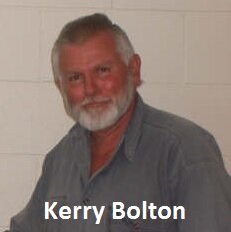
By Kerry Bolton:
At 57 I have been intensely interested in Yockey’s life and thought since first reading Imperium as an 18 years old and letting that wisdom percolate with decades of study and thinking since that time. Even down-under in New Zealand, Imperium found its way, imported from Noontide Press during the 1970s by a Chinese businessman thoroughly imbued with Spengler.
As in Yockey’s own day, he remains under-appreciated by those seeking a European revival. This rests on two grounds: (1) his view that the Jews had been overthrown in the USSR by Stalin; (2) his view that race is a metaphysical rather than a biological entity. He was therefore condemned by individuals such as Rockwell and Arnold Leese, while Colin Jordan’s A Fraudulent Conversion was likely a reaction to Yockey’s ideas on Russia. Ironically, Yockey’s ideas on “race” are probably closer to the German folkish movement springing from Fichte et al, than the views of most of the post-war National Socialists of the Anglosphere. As for the USSR, Yockey’s thoughts were part of a movement that appeared even among German conservatives after World War I who looked to an alliance with the USSR against plutocracies. I have dealt with the question of Stalin and Bolshevism in my book Stalin : the Enduring Legacy (London: Black House Publishing). (See: https://www.facebook.com/author.kerry.bolton).
While most of the American “Right,” from neo-Nazis to conservatives, fell into line with the Establishment in the Cold War, there were notable elements of the radical Right who did not; in particular, James Madole and the National Renaissance Party, and the newspaper Common Sense. The German veterans led by Maj. Gen. Otto Remer, a close contact for Yockey, were among the most avid advocates of an alliance with the USSR or at least a “neutralist” line, which caused much consternation to the USA. Yockey was part of that milieu.
There were even some important individuals in the “Right” who, while disagreeing with Yockey’s views on the USSR and on “race,” nonetheless never lost sight of the brilliance of Yockey and his seminal writings on “Cultural Vitalism.” Two of the most important were Professor Revilo P Oliver and Willis Carto. Although the two fell out quite bitterly, neither ever renounced their admiration for Yockey.
In 1998 I made an effort to write a biography of Yockey with the limited resources of the time, including some hitherto unpublished MSS and some newspaper articles of the period of Yockey’s capture and death. This was a year prior to the publication of Kevin Coogan’s Dreamer of the Day: Francis Parker Yockey and the Postwar Fascist International. Since that time there have been new, del lux editions of Imperium and Proclamation of London published by Wermod and Wermod, and I have had the honour of writing the introduction to the Wermod edition of Imperium. In the Summer of 2014 Counter-Currents is due to publish my collection of Yockey MSS along with introductory remarks for each.
Now I am embarking on the writing of a new Yockey biography. While Coogan’s biography is substantial, I think it lamentable that Yockey’s would-be biographer, Keith Stimely, died before being able to write the Yockey biography that he had long been researching, and the venture was left to someone who was antagonistic towards Yockey’s ideas.
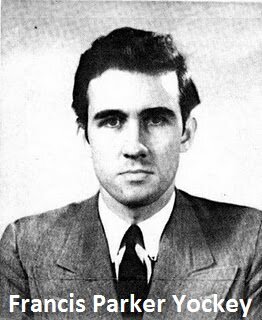
My intended biography of Yockey will be written as an unapologetic tribute. It is intended as a quite different volume to that of Mr. Coogan’s, and will also provide extended commentary on Yockey’s views on Russia, “race” and other issues in historical and philosophical context.
One major problem is that many original Yockeyans are now dead. I was in contact with Yockey’s primary American contact H. Keith Thompson, during the 1990s, and my biographical essay on him will be published soon by the web-journal Inconvenient History. However Keith was already in ill-health and I did not feel I could tax him with too many questions. Only recently, unknown to me, Peter Huxley-Blythe, one of the founder-members of Yockey’s European Liberation Front, died, and another source of information was lost. Huxley-Blythe had fallen out with Yockey at an early stage over the contentious matter of Russia, however by 2005 he was writing in an article for The Barnes Review that Yockey had been right.
Their are few Yockeyan veterans left. However, I have recently been fortunate in being able to contact a gentleman who was very active in keeping Yockey’s thoughts alive, and is already contributing his memories to my research.
It has been suggested to me that I put out a call for anyone who might have a special knowledge of Yockey or his associates or who has Yockey archives that might be of use to this new biography – this tribute. If you can assist with this project, your input would be a part of such a tribute.
Contact: [email protected]
By Kerry Bolton © 2014
# # # #
Bob
- Edit
I personally consider it unfortunate that Yockey and Oswald Mosley fell out, and that Yockey left Union Movement. Mosley didn’t agree with Yockey’s developing theory that the Soviet Union had become ‘anti-Jewish’, and OM maintained that there were still influential Jewish elements within the power structure of the USSR (Mosley’s UM had a slogan ‘Communism is Jewish’). Yockey published an essay in 1952 ‘What is Behind the Hanging of the Eleven Jews in Prague’, which argues his case that not only had Russia become anti-Zionist, but had increasingly been moving in an alleged ‘anti-Semitic’ direction as well.
Nevertheless, Yockey’s magnum opus ‘Imperium’ is excellent.
Amerikaner
- Edit
So…is this book ever going to actually come out? It’s been awhile since above article was written. And I’ve heard no recent interviews with Mr. Bolton anywhere.