Following Boris Johnson’s recent announcement of the temporary suspension of Parliament in the run up to a new Queen’s speech, and as the deadline for our exit from the European Union (EU) looms closer, there is much spoken about “the abuse of democracy” or “the death of democracy” by spokespeople for the liberal-left. Their calls for people to “take to the streets” have largely gone unheeded however, despite the best efforts of our mass media to inflame public opinion, and it is worth spending a little time examining why.
The word democracy comes from the Greek words ‘demos’ (people) and ‘kratia’ (power) and is meant to represent a form of government in which the ‘will of the people’ is translated into the legislation governing the way we live. So, how do democracies work?
In Britain we have what is ostensibly a constitutional parliamentary democracy:
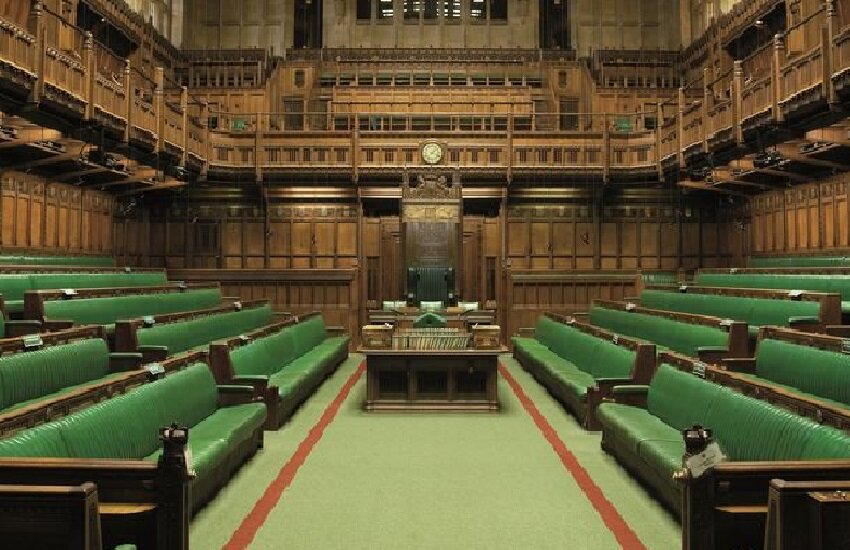
‘Constitutional’, in that while we are still a monarchy, the monarch performs a largely ceremonial role facilitating the government of this country by Parliament, albeit that she still theoretically has the power to restrain the powers exercised by government;
‘Parliamentary’, in that legislation is proposed, debated and passed or rejected by the 650 elected representatives of the people sitting in Parliament; and
‘Democratic’, in that every five years the Queen will ‘dissolve’ Parliament so that a new general election can take place, and following such a general election she will invite the leader of the largest political party represented at Westminster to form a new government. The government’s role will be to act as the executive arm of Parliament and to propose most, but not all, of the legislation to be considered in the parliamentary sessions that follow.
In practice, the members of Parliament (MPs), whilst elected by their constituents, are under no obligation to represent the views of their constituents and usually only do so to the extent needed to secure their re-election every five years. Beyond this, MPs act largely as their own consciences dictate and in practice ignore the wishes of their constituents until a new round of elections approaches. Furthermore, beyond their own consciences MPs are primarily concerned with political party affiliations. When in power, political parties are pre-occupied with the matter of getting the legislation demanded by their ‘constituents’ passed into law in order to have the popular support needed be re-elected, and when in opposition, political parties are pre-occupied with the matter of convincing their ‘constituents’ that they are more deserving of support than the current governing political party.
We can see from the above that the degree to which the will of the people is translated into legislation is very much dependent upon the consciences of the people chosen as candidates by the political parties, and the people regarded by each political party and their candidates once elected, as their ‘constituents’, i.e. the people most influential in getting them elected.
If political parties and elected MPs regard the common people as the group most likely to influence their re-election, there is a good chance that much of the will of the people will be translated into legislation. However if MPs and the political parties they represent regard the will of the people as of little consequence and instead regard the support of powerful vested interested groups as of paramount importance, then the electorate will be largely ignored.
For many decades now it has been understood by those active in politics that the way people vote in elections, particularly general elections, is largely determined by the way in which the political parties and their ideas are portrayed in the mass media. Furthermore, the way people and ideas are portrayed in the mass media is determined almost entirely by the interests of the relatively small number of people who exercise executive and/or proprietorial control over the mass media.
As a result of this state of affairs, which has evolved gradually over approximately the last 100 to 150 years, successive governments have increasingly ignored the will of the people and ordinary people have increasingly felt disaffected and alienated from politics. This was evident in falling voter turnout at elections and the falling memberships of the main political parties.
In 1973 the Conservative Prime Minister of the time, Edward Heath, took Britain into what was then described as simply the ‘Common Market’. This was described very much in the same way that the ‘Single Market’ is described today, as a barrier free market for the goods and services of the nine nations who were to participate in it. Many people warned that the Common Market would lead to the eventual loss of British sovereignty, but the government of the time led by Edward Heath deliberately lied, claiming that our sovereignty as a nation would be unaffected.
We can all see now how much of a lie Edward Heath told. Back in 1974 there were still enough honest politicians in Parliament that following the two general elections held that year the Labour Party devised a way the ‘settle the matter’ by holding a referendum, something that was alien to parliamentary democracy, but a ‘device’ our politicians had learned from politicians on the continent where plebiscites were commonly used to settle problematic constitutional issues.
A plebiscite or referendum is a more direct form of democracy than parliamentary democracy because it theoretically eliminates the possibility of elected politicians using their conscience, or spurious matters of ‘principle’, in order to justify them reneging on their promises to the electorate. In referenda and plebiscites the government promises that the ‘people’ will decide and that the government will carry out the people’s instructions.
In 1975 the British people were brow beaten into voting for continued membership of the Common Market, largely because the Heath government and Conservatives in opposition continued to lie, and because the mass media were entirely one-sided in supporting those lies. However the use of referenda had been incorporated into British politics and this development, welcomed at the time, would come back to bite the people who had introduced it.
As a result of our continued membership of the EU the dissatisfaction of the British people has grown, as has our dismay at our loss of independence and national sovereignty. The EU however planned throughout the decades leading up to the 2016 referendum, to use further referenda to bring about the break-up of the United Kingdom. The EU subdivided the UK into nine regional areas, each one of which was designed to create a sub-nation too small to exist without the EU and each one was to be given its own national/regional parliament thereby paving the way for the eventual abolition of the UK and our Parliament at Westminster. Once the Westminster parliament was moth-balled, it would thereafter be impossible for the UK or any part of the UK to withdraw from the EU constitutionally. Article 50 can only be triggered by the ‘national government’ of a member state, and if no ‘national government’ remains Article 50 cannot be triggered constitutionally. As a people, we would eventually be divested of our nationhood and be trapped, the hapless subjects of a federal super-state.
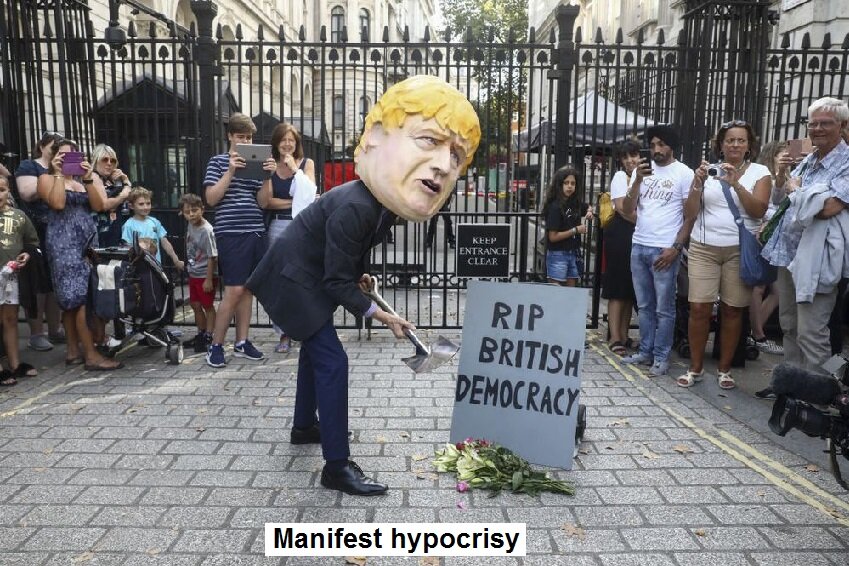
In 1997 the use of referenda was further reinforced when referenda were used to justify the creation of devolved parliaments for Scotland and Wales, two of the EU designated regions comprising the UK. Then in 2014 a further move to dismember and thereby weaken the UK was attempted in the referendum held on Scottish independence, a referendum that elicited the ‘wrong’ result from the EU’s perspective, in that the majority of Scots did not wish to be completely separated from the rest of our nation.
This train of events eventually led to the referendum on EU membership that took place in 2016, and as a result of a split within the perceived interests of those controlling our mass media, five major national newspapers and the Murdoch media empire decided to oppose continued membership of the EU, and this resulted in fairer, less one-sided, and less biased media coverage. For decades opinion polls had shown that a majority of the British public wanted us to leave the EU and for the first time in a long time the will of the people prevailed and we voted, providing a clear mandate, with a clear majority voting to leave the EU.
All that has happened since, with the resignation of David Cameron and the floundering of Theresa May’s government, has been a desperate attempt to renege on that mandate by contriving spurious pretext after spurious pretext to delay and frustrate its implementation. Those who wish us to remain within the EU have been content for the will of the people to be ignored on this and so many other subjects; from immigration, to the privatisation of our essential services and national assets; from the dismantling of the NHS, to the spread of political correctness. Their claim that by opposing our withdrawal from the EU, they are somehow serving democracy, is therefore exposed as an act of monumental hypocrisy!
I do not know what the government of Boris Johnson has planned for the UK. He vacillates between leaving with a deal and wanting the freedom of a ‘no deal’ Brexit. Sadly Boris Johnson is a liberal Tory and has no track record of support for nationalist ideas. He may plan to expose us to further immigration and exploitation by global capitalism once we are outside of the EU, but surely this can be no worse than our exposure to immigration and exploitation by global capitalism from within the EU. What cannot be denied however is that the unprecedented or otherwise tactical use of constitutional devices in order to implement the will of the people is perfectly justified in the face of a parliamentary majority that is hostile to the wishes of our people and their unprecedented tactical use of constitutional devices to keep us in the EU.
Leaving the EU will not be without it’s challenges, but outside of the EU, we British will at least retain our nationhood and some semblance of democracy and the prospects for the future rise of a nationalist government in this country will be greatly improved.
By Max Musson © 2019
# # # #
JOIN WESTERN SPRING
Western Spring is not just a website. We are a community of people dedicated to achieving the Six Prerequisites and thereby acquiring the wherewithal needed to win political power and through that secure the future survival, proliferation and advancement of the British people and other White peoples of European descent, wherever they may live. Please join us:
[contact-form-7 404 "Not Found"]# # # #
Albert
- Edit
Democracy has been eroded since the first Race Relations Act of 1965 , and further laws to stop people speaking out against forced Mass Immigration has been going till the present where they are now jailing people.
Today in Britain the indigenous people really are second class citizens in their own Country.
janet mills-rice
- Edit
Albert, no one could have said it better. thanx.
Stefan
- Edit
I am strangely relaxed about this overthrow of democracy as I didn’t think much of it anyway, the lie about one man & his vote.
It has been admitted that only about 15,000 votes actually count for anything in a election.
I was in London & saw the protesters ebbing away through Trafalgar Sq, mainly White liberals who do well out of the existing system, they had rather wimpy little signs.
I don’t see this being like the poll tax riots, I don’t think Joe Public are very worried by this turn of events.
They don’t see Jeremy Corbyn as their saviour.
There is no grass roots anger…yet.
Tony L
- Edit
Good article Max. You did, however, forget another referendum which also yielded the ‘wrong’ result. In 2004 Labour sought to attempt the breakup of the UK in the way you describe. The poorest part of England was to be tempted with EU (i.e. our) money to go regional. The north easterners told them to fuck off!
John Stephens
- Edit
If we do “leave” the EUSSR, there is the other, younger sibling we cut the cord with in the 18th Century.
The so-called American “Hawks”, mainly Zionist bankers and various functionaries, will have their pound of flesh, in terms of dragging us to quicker decisions on wars, more debt, and one-way business deals.
frederick dixon
- Edit
Interesting article Max. As a reflection on who gets to have their concerns enacted by Parliament, it’s worth reading David Goodhart’s book “The Road to Somewhere”. He believes that people fall into two broad categories: “Somewhere People” and “Anywhere People”. The former, who are more numerous, are much more attached than the latter to Place – a country, a neighbourhood, to their local community; while Anywhere people are more international in their affiliations – they will often have been to university abroad, own a house abroad, be married to a foreigner, believe in the value of international organisations.
Although a smaller proportion of the population, Anywheres are over-represented in politics, in the media, in the universities, in the quangocracy. Given that over-representation, it is no surprise that their concerns (which tend to be liberal – women’s rights, abortion, gay rights, anti-racism, prison reform) are, according to Goodhart, four times more likely to pass into law than the concerns of Somewheres, which tend to be conservative – immigration restriction, tough law and order.
I doubt if any of that comes as a surprise!
Alec Suchi
- Edit
The Legislature is attempting to take control of the Order Paper which organises the business of Parliament which is usually presented by the executive with the aim to prevent the UK leaving the EU without an agreement. Many members of parliament claim that they oppose a “no-deal Brexit”, but this is a convenient pretext, as they are opposed to leaving under any circumstances. For example, the sole Green Party MP Carolyn Lucas had stated that she wouldn’t accept the results of a second referendum or a misnamed “Peoples’s vote” if the majority voted to leave. Of course Lucas extols the virtues of democracy and how the EU is an exemplar of a democratic organisation, but she ignores the results of a democratic mandate if inconvenient to her distorted world view.
The political establishment has colluded at every turn to subvert the democratic process and it remains to be seen if the Prime Minister, Boris Johnson, will be able to negotiate the many obstacles which will confront him or if he is really committed to a clean separation. Boris certainly provides much entertainment and theatre at the Dispatch Box and raises the spirits in contrast to his underwhelming predecessor, but it remains to be seen whether he is able to invoke the spirit of “Dunkirk”.
LJP
- Edit
As Brexit seems to have been run into the ground, perhaps it is time to take stock of the state of this nation, if a nation is actually what it is.
Brexit – at a standstill, if not thwarted.
Education – LGBT education to be taught in primary schools after landslide vote by MPs. Green MP Caroline Lucas is quoted as saying ‘Historic Day for Sex and Relationships education.’ Why stop there Caroline? Why not follow Sweden’s example and allow primary school children choose their own sex, or not have one at all. If we are going to be progressive, then let’s be progressive. There is a lot more we can add.
Climate Change – it seems our leaders are taking their lead from 16 year old environmental genius Greta Thunberg. Well, at least it seems from the photos of our politicos staring goggle-eyed with admiration at this prodigious giant of science. Watch out Easyjet and Ryanair, soon you wont be flying, and neither will we.
Freedom of Expression – Well, there isn’t any, unless you want to end up in jail.
Democracy – Not sure what that is, or if it ever existed here. From what can be seen in Parliament the country is run by a group of sociopaths, or some other ‘paths.’ You name it.
I could go on but what’s the point, this country is a cross between Alexander Solzhenitsyn ‘Cancer Ward’ and Alexander Solzhenisyn’s ‘Gulag Archipelago.’ Cliches abound ‘Lunatics running the Asylum’ most apt.
I would like to play the ‘Long Game’ but frankly I won’t be around for the ‘Reconquista.’ Medical Science may have advanced but I can’t see it keeping me alive for 780 years.