By Max Musson:
The democratic process and the principle of ‘one man, one vote’, is one of the foundation stones of liberal democracy and is seen by liberals, Marxists and social democrats as an institutional reaffirmation of their ‘sacred’ principle of human equality.
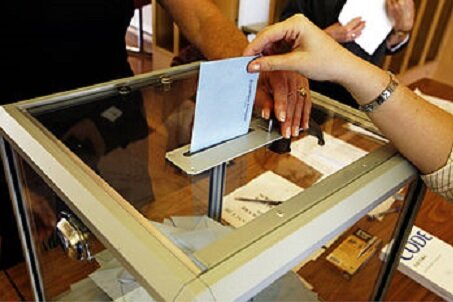
Even so, the implementation and the practice of democracy and the practice of one man, one vote, has throughout history, not been without its problems and without detractors.
Critics have pointed to the fact that half of any human population are by definition of below average intelligence and in an age of advanced technical, political and cultural sophistication, it seems absurd to allow a 50% input into any decision making process, from people who are of below average intelligence. This especially so, when the outcome of such a decision may be irreversible and frequently does have ramifications extending far into the future that will impact significantly upon the future well-being of our society, our nation, or our race.
The sole alternative to democracy is often portrayed as the extreme opposite, rule by dictator or rule by a small elite, however, the choice does not have to be one or the other of two polar extremes, and the belief that there is only this one stark choice is deliberately proffered by our liberal mass media, precisely in order to prevent proper debate of the matter. The media have an obvious vested interest in perpetuating a system whereby almost all key decisions within the Western world are disproportionately influenced by that segment of the population least able to engage in critical thinking and most likely to be swayed by the clever marketing ploys of their spin doctors.
Winston Churchill was divide on this subject, “the best argument against democracy is a five-minute conversation with the average voter” he once said, but on another occasion he cautioned, “Democracy is the worst form of government, except for all those other forms that have been tried from time to time.”
When One Man, One Vote Democracy Works Best
Democracy works best where the electorate involved, i.e. the body of people eligible to vote; have much in common and/or where the electorate is relatively small; in circumstances where the electorate have a good understanding of the issues at stake, where they are personally acquainted with each of the candidates involved, and where each candidate or vested interest group has equal access to the news and advertising media.
In a committee of say ten people, each member of the committee will have a good appreciation of the issues involved in any decision to be made, they will usually know each other well and will have an equal opportunity at committee meetings to make their views known to the other committee members. Furthermore, if these committee members are all enthusiasts for a particular cause or activity, they will generally share very similar views and so when decisions are made, there is a very high probability that the outcome of any vote will either be ideal, good or at least acceptable to the individual committee members. Because of these factors, committee members will normally have a significant faith and confidence in the democratic functioning of their committee and the decisions it makes.
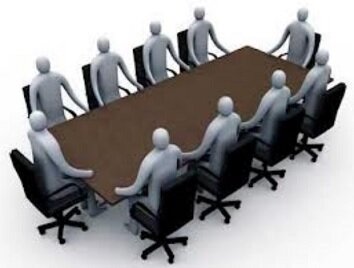
The individual members of the committee will in most instances embrace collective responsibility for and collective ownership of, the decisions made by the committee.
The further we move away from such an ideal situation, the worse democracy functions and the more likely we are to find ourselves in a situation where the democratic system becomes corrupted, loses the confidence of the electorate and in extreme cases, is reduced to a sham process in which shadowy and sinister vested interest groups actively conspire to pervert the course of politics.
Not everyone reading this article will support the principle of democracy and some will state that the average voter is not intelligent enough or sufficiently interested in politics to be capable of making the right decisions during elections.
I can see why some intelligent and well meaning people will be drawn to that belief, but we must first acknowledge that for most of us, our experience of democracy is with an electoral system that has already become too distorted, corrupted and perverted in the way I have described above, to allow us a truly objective viewpoint.
For most of us therefore, our experience of democracy during our lifetime will be one in which individual electors are rarely inclined to embrace collective responsibility for or collective ownership of, any of the decisions made by government.
The Problems of a Diverse Electorate
In a multi-racial or multi-cultural society, the electorate are clearly not like the committee discussed above where all voters share a common enthusiasm for a particular interest or cause. A multi-racial or multi-cultural society is by its very nature composed of people from disparate backgrounds with different cultural norms, different aims, wants needs and objectives.
Where a diverse electorate is concerned, especially where that diverse electorate has been created by recent events throwing together people who have never co-existed in close proximity before, the likelihood of their being broad support for the outcome of any decision is minimised.
Irrespective of the decision to be made, in a diverse society there will naturally be a strong divergence of opinions and vested interests and this means that any movement in one direction will be countered by an equally strong movement pulling the other way and this is why the typical outcome of government in such a society is all too often one of inertia and stagnation in which the government of the day, usually a coalition government, is seen to be unable to take effective action regarding any particular issue.

This is the best that we can hope for from democracy in a truly diverse, multi-racial/ multi-cultural society – governmental stagnation. No-one tends to get what they want from the electoral system; confidence in and respect for the electoral system and for democracy diminishes; electors are rarely inclined to embrace collective responsibility for or collective ownership of any of the decisions made by government, and the result all too often is that vested interest groups tend to take extra-parliamentary action in order to advance their interests, in an effort to bypass or force the hand of government.
This extra-parliamentary action can take the form of petitions at one end of the spectrum; while it can also take the form of boycotts; strikes by workplace unions; street demonstrations; the illegal occupation of buildings or open spaces; rioting leading to looting and street conflict; the destruction of property; and in extreme cases bloodshed and acts of terrorism.
In Britain today, we have drastically declining faith in and respect for law and order and our electoral system as our society becomes more and more multicultural and multiracial in composition.
The Problems Associated with Increasing Constituency Size
In theory, democracy in Britain today should functions best at the level of the Parish or Borough Council, where the ‘constituency’ involved is smallest, where there is the greatest likelihood that voters will understand the local issues involved and will have the greatest likelihood of being personally acquainted with each of the candidates. Furthermore, as such ‘constituencies’ are small and very numerous, they are usually not regarded by the mass media as being individually worthy of much attention and this creates a much more level playing field for the various candidates involved.
In practice, while elections at this level are still affected by political and media campaigning at a the national level, and are therefore a far from level playing field, they do still represent a far more equal contest than elections at national level and this is why less well established political parties and independent candidates are generally more successful at the local level.
Furthermore, it goes without saying that democracy also functions best in Parish and Borough Council wards where the electorate are most the homogenous in terms of ethnic and racial composition.
Once we move beyond Parish and Borough Council ward elections; there is a decreased likelihood that electors will understand the complex economic and or legalistic issues involved; there is a decreased likelihood that electors will have any personal knowledge of the candidates involved, and there is a decreasing likelihood that individual electors will have shared interests with those in other parts of the country.
Nimbyism begins to manifest, as does lobbying by powerful vested interest groups and by organised ethnic minorities, and the mass media, in the service of these groups begins to exercise an increasingly corrupting influence over the outcome of elections.
The outcome of elections decreasingly reflects a choice that electors feel happy with. Recent governments for example, have been elected with the support of less than a quarter of the electorate, and this means that all too often, more than three out of four people are left unhappy with the outcome of elections and do not feel committed to, or collective support for the government of the day.
The Influence of the Mass Media
If the outcome of an election is to command the maximum of support from the electorate, then the participants in that election must feel that the election was conducted in a free and fair manner, without undue influence being exerted by one group.
Social studies have shown that the opinions that people hold at any point in time are largely determined by the values and opinions broadcast by the mass media, primarily through the television networks. This therefore places an immense onus of responsibility upon the mass media to provide comprehensive, fair and unbiased coverage of each of the participants in elections if the outcome of those elections is to command widespread public support in the long-term.

In practice, we find that the mass media fail miserably in this respect, they routinely exclude certain political opinions and certain political parties from their programming and deny them access to party political broadcasts at election time.
Worse still, the media companies indulge in the blatant manipulation of attitudes and opinion through the storylines of the various soap operas that they broadcast, to such an extent that a deliberate aim of social engineering is clearly their motivation.
In times gone by, people would base their opinions on those of their friends, their neighbours, their relatives and workmates, and during the course of any day, people would be likely to interact with as many as 100 different people each day.
They would speak to their spouses and their children, they would walk to a local place of work and on the way meet their neighbours and work colleagues and would talk to them as they walked along.
At work, they would interact with many different individuals and then later in the day, they might socialise with neighbours, thereby gaining exposure to even more opinions.
Each of the people they would converse with would have an individual perspective on the issues concerning them and so each individual would form their own opinions based upon the collective wisdom of their community. No one person or group would exercise undue influence over the opinions of each individual elector.
Today, people often have to get up early and leave home in a hurry to beat the rush hour traffic, spending little time conversing with their spouse. They will drive to work and therefore in place of a conversation with their neighbour, they will listen to a radio programme the content of which will be determined by the people who have proprietorial control over the radio station involved.
At work, many jobs are no longer labour intensive as they were in the past and people all too often work alone at their designated workstation and therefore have little time to converse with their work colleagues.
Having returned home after beating the rush hour and in so doing listening to the radio again, people often sink into their settee in front of the TV and ‘veg-out’ with their spouse until its time to go to bed.

While watching television, they will absorb the subtle and often almost subliminal messages conveyed in the storylines of their favourite soap opera or other programme, messages determined by the person with proprietorial control over the television stations concerned.
As we can see, the people who have proprietorial control of the mass media companies can exercise much influence over the opinions of the average voter, and this would not be so bad if the electors were listening to locally owned and operated radio and television stations, or if there were a wide variety of proprietors of national media companies, with wide ranging opinions and areas of special interest, but this is clearly not the case.
I don’t intend to go into detail regarding the individuals concerned at this time, but it is now widely known within nationalist circles that powerful vested interest groups and in particular organised Jewry have achieved a situation throughout the Western world in which they own and/or control the bulk of the mass media. This ownership and control has enabled them to promote the values and beliefs that support their particular interests and to restrict the public debate on virtually any issue such that the outcome is favourable to them, irrespective of any adverse impact that might be felt by the public at large.
It is natural that there always will be tendency for certain more vigorous individuals to have a greater say in matters than others less vocal, but clearly, when probably less than one hundred individuals most of whom are of Jewish decent, control almost all of the mass media of the entire Western World and beyond, this influence can only be regarded as undesirable for the healthy functioning of democracy and the government of our nations.
Problems Associated with Human Inequality
Human inequality is a fact of life. Some people are strong, while others are weak; some people are intelligent, while others are stupid; some people are creative, while others are dull; some people are industrious while others are lazy; and so on.
Therefore, while it is important that everyone feels that they participate in the decision making processes of our society it is foolish to assume that each individual must enjoy participation equal to every other.
Someone who is lazy, mentally retarded and an habitual criminal, is of less value to society than someone who is an energetic, Nobel laureate, who has conducted vital work in discovering cures for the most dread diseases. Therefore it is only logical that the latter person should play a greater part in the decision making process within any healthy society than the former.
It is vital therefore that we reject the foolish Marxian notion that all people are equal, or even of equal value, and begin instead to shape our electoral systems to reflect the unequal contribution that individuals make.
Good Government and a Healthy Democracy
From the considerations discussed above, we can see that there is much work to be done if our current woefully lacking system of democracy and government is to perform properly and to not just represent the wishes of our people but to represent the best wishes of our people, i.e. the wishes of the best of our people.
As a matter of principle, democracy should always operate where practicable at the most local level so that the electorate are familiar with the issues involved and so that they are acquainted and familiar with any candidates involved. Local issues should be decided at a local level, regional issues at a regional level and only those matters which by their nature involve the whole of our nation should be decided at the national level.
Our society must be returned to a situation of greater homogeneity in terms of race, religion and ethnicity if we are to maximise the level of commitment in terms of collective responsibility assumed and collective support demonstrated for the decisions made by government. This is essential if we are to have a stable society governed by the rule of law and it means that we must immediately stop all non-White immigration into the UK and begin a programme of compulsory but humane repatriation of all ethnic minorities, back to their lands of ethnic origin.
We must break up the large mass media corporations and replace them with locally owned and controlled media companies that will more closely reflect the aims and wishes and the character of the people they inform. Most importantly we must remove control of our mass media from the hands of organised minorities.
Lastly, as a basic premise, while we should allow all of our compatriots, other than those currently serving prison sentences or resident in mental hospitals or who have lost mental capacity, at least one vote in all public elections, so that they feel that they ‘own’ the outcome, a system must be devised that grants additional votes to individuals whose qualities demonstrate that they are of greater value to society and who have performed outstanding acts which have contributed to the general welfare of our people.
The design of a healthy electoral system, one that is accepted by all and which allows the best of our people to give a strong lead, is therefore eminently achievable, but not within a political milieu which holds as its most sacred principle the flawed notion that all people are created equal and that as an affirmation of this, all people must have an equal say in government. This foolish notion is as we can see all around us, the cause of much misery.
By Max Musson © 2013
# # # #
Michael Woodbridge
- Edit
“We must immediately stop all non-White immigration into the UK and begin a programme of compulsory but humane repatriation of all ethnic minorities, back to their lands of ethnic origin.”
Just in passing Max, I’m delighted to see a reaffirmation on ‘Western Spring’ of our intention to repatriate all non-White immigrants. Our racial survival is too vital to be left to the democratic vagaries of a deracinated “melting pot”.
But back to your main theme…
I once asked the ex-leader of the ‘German National “Democratic” Party’, Gunther Deckert, why it was that German nationalists had chosen such a discredited concept as democracy’ by which to identify themselves. His reply was that their democracy was an ‘organic democracy’, “ein Volks Gemeinschaft”, a peoples community.
This, together with Max’s article brings to mind an idea I have long nurtured which is that our ideal community would be organic and hierarchical. Max explains how, at their best, such communities only work on a small scale, perhaps like the Greek city states where everyone knows everyone else.
If we were then to extend this principle we could start by granting a universal franchise to all our subjects at a Parish Council level but then beyond that only those elected to a Parish Council would be eligible to vote at County Council level. Following on from that only County Councillors would be eligible to vote at a Parliamentary level.
This system while retaining safeguards against tyranny would prevent the electorate from degenerating into a rabble; an ignorant rabble so easily manipulated by our racial enemies in the mass-media.
Franklin Ryckaert
- Edit
Excellent idea! Small communities know exactly what their direct interests are, so they will vote only for those who truely represent them. That means that only responsible people will be elected. From these responsible people representatives for all higher levels will be chosen. Hence the mass media cannot fool the masses anymore and crooks cannot make a career in government. In such a system parties that favour mass immigration from the Third World will have no chance.
nostradamus
- Edit
Congratulations Max Musson a brilliant article, I would like to add that there is no point in voting for the present system for democracy when the person that you elect to represent you and your veiws in Parliament cannot do so because he has to vote how his whip tells him to.
This is not a democracy but a complete sham.
frederickdixon
- Edit
The problem of the print media is solving itself and the broadcast media will follow. The internet is steadily detaching the provision of information, and the formation of opinion, from the traditional elite and opening these things up to a much more diverse (sorry about that word) range of voices. We are already part of that process but we must be prepared to do much more.
As for electoral systems, I would be hesitant about withdrawing the right to vote from anyone who is not an obvious imbecile or a criminal, nor would giving additional votes to the well educated necessarily work to the advantage of nationalism. It used to be that Oxbridge graduates had two votes; one for the constituency in which they lived and the other for special University seats, these were not abolished until after WW2 and I really can’t see any good reason to revive a version of the same thing.
I would suggest three fundamental improvements to the present system:-
1/ referenda on any matter of concern to electors if enough of them called for one – there is no way, had we had referenda, that immigration would not have been halted in the 1950s (if not the 1890s).
2/ elections to the House of Commons should be on a pure proportional representation basis, such as the d’Hondt system used for election to the European Parliament; so many seats per County. Then there would always be nationalists in Parliament.
3/ Life peerages should be abolished and stripped from those who hold them (the political hacks, cronies, big donors and celebrity night club owners who now get these peerages are far worse than the old hereditary peers) and the House of Lords should also be elected on a rolling basis with so many seats coming up for re-election each year.
MsBridgit
- Edit
”half of any human population are by definition of below average intelligence and in an age of advanced technical, political and cultural sophistication”
Which proves many people should not be trusted with a vote, which in turn can explain why the West is in such a terrible mess, which In turn explains why the other half of the population are flabbergasted when the one party state is re-elected election after election regardless of what damage they are doing to the country.
jackdaw
- Edit
Great article Max, fully agree. Democracy is certainly NOT the most favoured type of governance throughout most of human history and is quite clearly the easiest to manipulate. Maybe a ‘benign dictatorship’ would serve us better..
As for multiculturalism, well thats just yiddish for ‘divide and rule’ and our enemies get to mediate the ensuing chaos
Robert Wakely
- Edit
Yes, that is why we should be operating at the visible, political level only as a front.
We need to learn from our enemies and function at an invisible level to infiltrate organisations that can further our cause of self-preservation. Use the existing organisational infrastructures, invest them with our people, and make changes that way. It can take decades, but it works.
Reach an understanding with like-minded people to form a group, as little as 12 people, at the local level, to infiltrate local government councils, service organisations, church parish councils, stack branches of the political parties, and so forth.
That’s how it was done to undermine us.
Michael Woodbridge
- Edit
No doubt I didn’t explain myself very clearly but there’s no need for a cumbersome system whereby some people have two or more votes nor is it necessary to deprive those who already have a vote.
What is needed is a system of universal franchise for all our subjects but only at Parish Council level. Only those elected to a Parish Council would then be eligible to vote at County level and only those elected as County Councillors would be eligible to vote in parliamentary elections.
The beauty of this hierarchical system is that no one need feel disenfranchised but at the same time it takes away much of the power of the mass-media to distort and cheapen political debate, because only those with a track record of responsibility in government would have an effective say on important national issues.
jackdaw
- Edit
Do we have enough time to employ ‘the long march through the institutions’ strategy Robert?
frederickdixon
- Edit
We may have time (if immigration can be slowed) or we may not. That is why it is necessary to employ a variety of strategies, including the long march. That is also why a plan b is needed for the eventuality that reduction to minority status becomes inevitable. White enclaves will be the core of a successful plan b, but by acting as centres of white resistance at an earlier stage they may ensure that that eventuality never happens.
Anglo-Australian Alliance
- Edit
I offer two key texts to the reading of this Herculean subject:
.
The Problem of Democracy by Alain de Benoit: https://www.counter-currents.com/2011/02/alain-de-benoists-the-problem-of-democracy/ (review of the book).
.
The Green Book by Muammar Gaddafi: https://www.zadishefreeman.com/images/Muammar-Qaddafi-Green-Book-Eng.pdf
Robert Wakely
- Edit
When you have lived as long as me jackdaw, you realize that a decade is a mere blink of an eye. It would be enormous effort, but it has the virtue that we can begin now. We all know that the short-sightedness of politicians has contributed to our current predicament. after all, they only think in 3 or 4 year blocks (the election cycle depending on where you live). This way, we prepare the ground for the next generation. WE are nothing. The next generation is everything.
Robert Wakely
- Edit
I would like to add that short term plans and long term plans are not mutually exclusive. More like complementary.
jackdaw
- Edit
Point taken Robert.
Steve
- Edit
The idea of giving idiots the vote is so that they can push through whatever they like & drown out any opposition to it.
Note how they want to include even younger people in voting & the nonsense about prisoners voting, along with “Operation Black Vote” & so on.