By Max Musson:
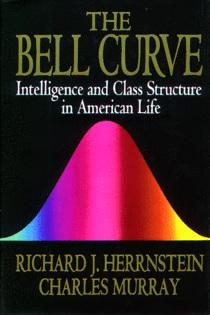
On December 13th 1994, Professor Linda S Gottfredson published a statement in the Wall Street Journal which was signed by a further 51 of the most eminent psychologists from Europe and the US. This statement, entitled “Mainstream Science On Intelligence”, made clear that all of these scientists fully supported the arguments put forward by Charles Murray and Richard Herrnstein in their book ‘The Bell Curve’, arguments making it clear that intelligence is mainly genetically determined and that furthermore, there are race differences in intelligence.
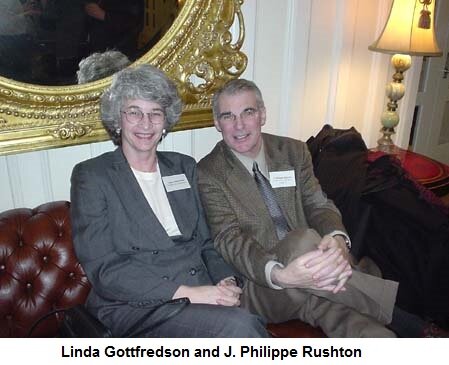
The signatories to Linda S Gottfredson’s statement were:
Richard D Arvey – University of Minnesota
Thomas J Bouchard – University of Minnesota
John B Carroll – University of North Carolina
Raymond B Cattell – University of Hawaii
David B Cohen – University of Texas
Rene V Dawis – University of Minnesota
Douglas K Detterman – Case Western Reserve University
Marvin Dunnette – University of Minnesota
Hans Eysenck – University of London
Jack M Feldman – Georgia Institute of Technology
Edward A Fleishman – George Mason University
Grover C Gilmore – Case Western Reserve University
Robert A. Gordon – Johns Hopkins University
Linda S. Gottfredson – University of Delaware
Robert L. Greene – Case Western Reserve University
Richard J. Haier – University of California
Garrett Hardin – University of California
Robert Hogan – University of Tulsa
Joseph M. Horn – University of Texas
Lloyd G. Humphreys – University of Illinois
John E. Hunter – Michigan State University
Seymour W. Itzkoff – Smith College
Douglas N. Jackson – University of Western Ontario
James J. Jenkins – University of South Florida
Arthur R. Jensen – University of California, Berkeley
Alan S. Kaufman – University of Alabama
Nadeen L. Kaufman – California School of Professional Psychology at San Diego
Timothy Z. Keith – Alfred University
Nadine Lambert – University of California
John C. Loehlin – University of Texas
David Lubinski – Iowa State University
David T. Lykken – University of Minnesota
Richard Lynn – University of Ulster
Paul E. Meehl – University of Minnesota
R. Travis Osborne – University of Georgia
Robert Perloff – University of Pittsburgh
Robert Plomin – Institute of Psychiatry, London
Cecil R. Reynolds – Texas A & M University
David C. Rowe – University of Arizona
J. Philippe Rushton – University of Western Ontario
Vincent Sarich – University of California
Sandra Scarr – University of Virginia
Frank L. Schmidt – University of Iowa
Lyle F. Schoenfeldt – Texas A & M University
James C. Sharf – George Washington University
Herman Spitz – former director E.R. Johnstone Training and Research Center, Bordentown, N.J.
Julian C. Stanley – Johns Hopkins University
Del Thiessen – University of Texas
Lee A. Thompson – Case Western Reserve University
Robert M. Thorndike – Western Washington University
Philip Anthony Vernon – University of Western Ontario
Lee Willerman – University of Texas
All these professors wanted it to be known that they think genetics are the major component in determining an individual’s intelligence and that there are race differences in intelligence. Their views were not determined solely by reading The Bell Curve, they were stating that the results of their own research support the findings outlined in The Bell Curve and that these scientists wanted America and the world to know that their beliefs constituted the MAINSTREAM SCIENTIFIC beliefs in this area.
The letter to the Wall Street Journal set out 25 conclusions:
1 ) “Intelligence is a very general mental capability … it reflects a broader and deeper capability for comprehending our surroundings …”
2 ) “Intelligence, so defined, can be measured, and intelligence tests measure it well. They are among the most accurate (in technical terms, reliable and valid) of all psychological tests and assessments.”
3 ) “While there are different types of intelligence tests, they all measure the same intelligence.”
4 ) “The spread of people along the IQ continuum … can be represented well by the … ‘normal curve’.”
5 ) “Intelligence tests are not culturally biased”
6 ) “The brain processes underlying intelligence are still little understood”
7 ) “Members of all racial-ethnic groups can be found at every IQ level”
8 ) “The bell curve for whites is centered roughly around IQ 100; the bell curve for American blacks roughly around 85; and those for different subgroups of Hispanics roughly midway between those for whites and blacks. The evidence is less definitive for exactly where above IQ 100 the bell curves for Jews and Asians are centered”
9 ) “IQ is strongly related, probably more so than any other single measurable human trait, to many important educational, occupational, economic, and social outcomes … Whatever IQ tests measure, it is of great practical and social importance”
10) “A high IQ is an advantage because virtually all activities require some reasoning and decision-making”
11) “The practical advantages of having a higher IQ increase as life’s settings become more complex”
12) “Differences in intelligence certainly are not the only factor affecting performance in education, training, and complex jobs … but intelligence is often the most important”
13) “Certain personality traits, special talents, [etc] are important … in many jobs, but they have narrower (or unknown) applicability or ‘transferability’ across tasks and settings compared with general intelligence”
14) “Heritability estimates range from 0.4 to 0.8 … indicating genetics plays a bigger role than environment in creating IQ differences”
15) “Members of the same family also tend to differ substantially in intelligence”
16) “That IQ may be highly heritable does not mean that it is not affected by the environment … IQs do gradually stabilize during childhood, however, and generally change little thereafter”
17) “Although the environment is important in creating IQ differences, we do not know yet how to manipulate it”
18) “Genetically caused differences are not necessarily irremediable”
19) “There is no persuasive evidence that the IQ bell curves for different racial-ethnic groups are converging”
20) “Racial-ethnic differences in IQ bell curves are essentially the same when youngsters leave high school as when they enter first grade … black 17-year-olds perform, on the average, more like white 13-year-olds”
21) “The reasons that blacks differ among themselves in intelligence appear to be the same as those for why whites … differ among themselves”
22) “There is no definitive answer as to why bell curves differ across racial-ethnic groups. The reasons for these IQ differences between groups may be markedly different from the reasons for why individuals differ among themselves within any particular group”
23) “Racial-ethnic differences are somewhat smaller but still substantial for individuals from the same socio-economic backgrounds”
24) “Almost all Americans who identify themselves as black have white ancestors – the white admixture is about 20% … research on intelligence relies on self-classification into distinct racial categories”
25) “The research findings neither dictate nor preclude any particular social policy, because they can never determine our goals. They can, however, help us estimate the likely success and side-effects of pursuing those goals via different means.”
As for Linda S Gottfredson’s credentials; she holds a PH.D. in Sociology, a B.A. in Psychology, is Professor in the School of Education at the University of Delaware. She holds the Mensa Research Foundation Award for Excellence in Research, 1999-2000, and the Mensa Award for Excellence in Research, 2005.
Richard Lynn, Professor in Psychology at the Universities of Exeter and Ulster, and Tatu Vanhanen, Professor Emeritus of Political Science at the University of Tampere in Finland, more recently co-authored books entitled ‘IQ And The Wealth of Nations’ and ‘IQ And Global Inequality’. These books present the results of IQ testing throughout most of the globe and they show that average IQs vary from highs of over 100 in parts of Europe and the Far East, to a lows of between 60 and 70 in much of Africa and just 59 in Equatorial Guinea.

The conclusions that Lynn and Vanhanen draw are that the vast differences in the per capital incomes and wealth of the various nations around the world are a direct reflection of the differences in average IQ between nations and races.
The reality of course is that there are very significant differences both between individuals of the same race/ethnicity and on average between different racial groups. All of the features, characteristics and qualities that we exhibit are genetically determined and this is true also of intelligence.
By Max Musson © 2013
# # # #
MsBridgit
- Edit
Without wanting to appear rude these difference in IQ’s are stating the ‘bleeding obvious’
Walter Greenway
- Edit
That doesn’t surprise me. When selecting a bull to breed from, I always checked for temperament traits obtained from his progeny, recorded using a bell curve. If the daughters were likely to turn out flighty, aggressive or temperamental they would be difficult to work with.
The more progeny that are recorded the higher the reliability of results.
These are not trivial things because the grand daughters would also inherit a flighty, temperamental or aggressive trait if the wrong bull was chosen and a whole herd could then be disturbed.
It is no more difficult to record particular traits across breeds.
Why make life more difficult that necessary?
rizla
- Edit
When research is so obviously reflected in the societies and communities people of different ethnic groups live in it has got to be right. White Northern Europeans have created the first World and everything worth while in it. The African ethnic group are our barnacles.
The weak seeds will love that!
Franklin Ryckaert
- Edit
Jews are very often at the forefront of the battle for equality and the idea that intelligence is mainly environmentally determined. They do this because, in-so-far as they act as an organised minority, they think it will help them to undermine their main competitors within the White ethnic majority. They have disproportionately contributed to the general acceptance of the idea of equality and the insane idea that “races don’t exist, however individual Jews can also be found defending the idea of racial differences in intelligence, possibly because research in this area often identifies a high average intelligence for certain Jewish groups.
ConnalOakesHolt
- Edit
My knowledge of genetics is next to zero, my questions may therefor appear elementary.
If all of our features, characteristics and qualities are genetically predetermined, along with intelligence, what effect then, does learning have upon an individual, or experience have upon character or upbringing upon qualities?
Clearly there are genetic differenced between the races, our own race must be preserved by our kind breeding with our kind.
My questions though are not disputing the evidence found through the investigations of the eminent scientists, but instead enquire into the unique position humans have of all animal life on earth, that of having cognition, and the effect that that has upon character.
A bull that is flighty, does not know, is not aware of that fact, and so can do nothing to change that. A human on the other hand, can become aware of the fact and through sublimation of these characteristics change them, or not. The potential is there though with the human and not with the bull.
I may have misunderstood, though you seem to be suggesting that our genes can influence our decision making and behaviour beyond that of our will.