On the 20th April 1968 the Conservative statesman Enoch Powell spoke in Birmingham on the subject of non-White immigration from the Commonwealth, and although the current transformation of our country had at that time barely begun, this was already the subject of great public concern. He spoke of the rapid increase in the numbers of immigrants, of the soaring immigrant birth rate, of the harassment of White people in the inner cities, of the conspiracy of silence and the Home Office’s concealment of the true figures. He spoke of his fear for the future in which immigrants and their descendants would dominate the inner cities bringing civil strife in their wake, and above all he demanded the introduction of a scheme for the voluntary and subsidised repatriation of immigrants and their descendants.
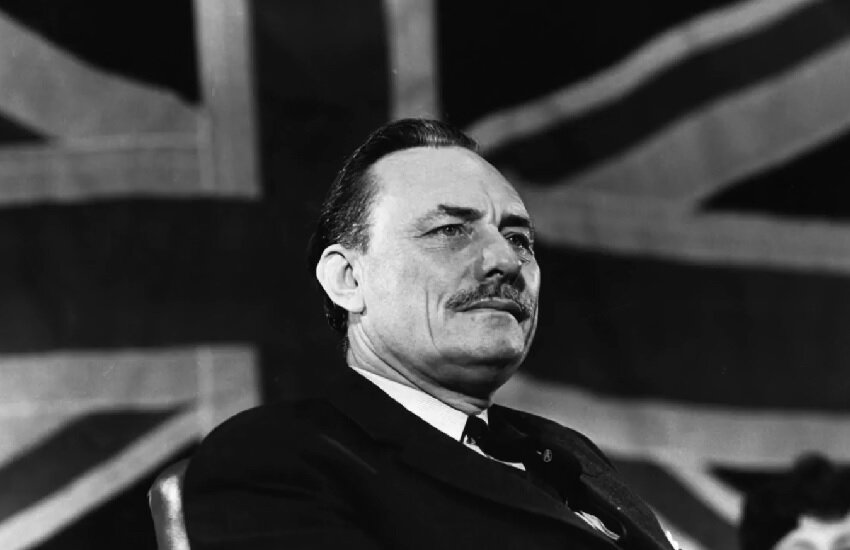
Here are some extracts from the speech:-
(speaking of an encounter with a constituent) “here is a decent, ordinary fellow Englishman, who in broad daylight in my own town says to me, his Member of Parliament, that his country will not be worth living in for his children”
“We must be mad, literally mad, as a nation to be permitting the annual inflow of some fifty thousand dependants who are for the most part the material of the future growth of the immigrant descended population. It is like watching a nation busily engaged in heaping up its own funeral pyre. So insane are we that we actually permit unmarried persons to immigrate for the purpose of founding a family with spouses or fiancés whom they have never seen.”
“But while, to the immigrant, entry to this country was admission to privileges and opportunities eagerly sought, the impact upon the existing population was very different. For reasons which they could not comprehend, and in pursuance of a decision by default, on which they were never consulted, they found themselves made strangers in their own country.”
The country was electrified to hear truths seldom articulated by any mainstream politician, and never by one so close to power as the Opposition Defence spokesman. When the Leader of the Opposition, Edward Heath, dismissed Powell from his position, the public reaction was immediate and intense with strikes and marches by dockers and building workers throughout England, and in London by Smithfield, Billingsgate and Covent Garden porters. It was a working class uprising, but of a kind rather different from that expected by those left-wing ideologues who adore the working class from a safe distance.
Nor was it only a working class reaction: opinion polls conducted in the aftermath showed that Powell enjoyed the support of three quarters of the population.
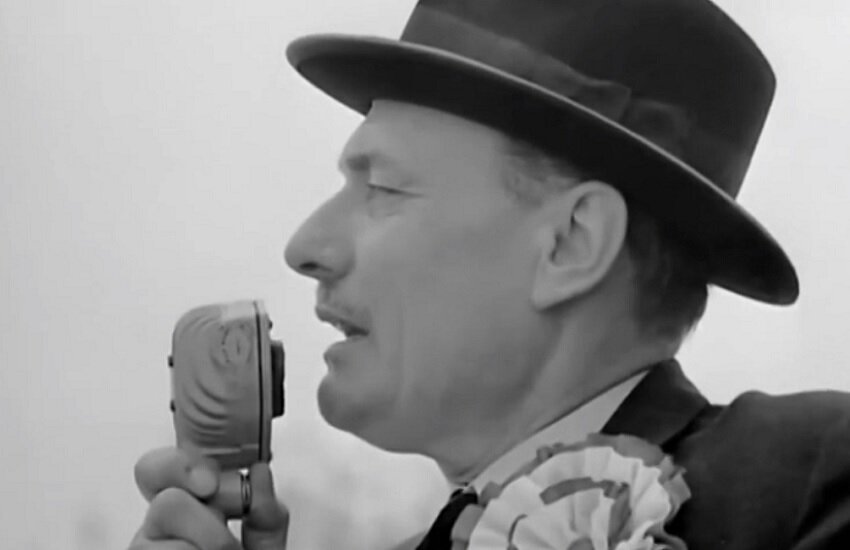
Over the next decade Powell’s influence worked itself out in several ways. The unexpected victory of the Conservatives in the 1970 General Election was certainly due to his urging while, conversely, the partial victories of Labour in the two General Elections of 1974 (neither yielded an overall majority but they did unseat the Conservatives) were also due to his prompting. Powell wanted a Labour government because the Labour leader, Harold Wilson, had promised that his government would hold a referendum on Britain’s continued membership of the European Economic Community. We had joined that community in 1973 against the bitter opposition of Powell but in the event, when the referendum was held in 1975, the electorate voted to remain by a margin of two to one.
So where did that leave Powell? His urging of a vote for Labour at the 1974 general elections disqualified him from any further role in the Conservative party and his last years in Parliament were spent as an Ulster Unionist MP . It was argued then, and it has been argued ever since, that such was his popularity that he should have started his own party. The problem is that it is extremely difficult for a third party to break through, and to sustain any breakthrough it might make, against the big parties with their established support bases and sources of funds; it is not impossible – as we know from the emergence of the Labour party itself a century ago, and more recently the Scottish National Party – but as the story of UKIP should tell us, it is very difficult. Perhaps a Powellite party might have succeeded, but the failure of the “Out” campaign in the 1975 referendum in which he had played such a prominent role, indicates that even his popularity had its limits.
It is an accepted “what if” that if he had not urged a vote for Labour in 1974, the Conservative Party leadership would have been his for the asking when Heath was forced out in 1975. It would then have been Powell, not Margaret Thatcher, who took the Conservatives to power in the general election of 1979. But what then? Mrs Thatcher was from the Powellite wing of the party and her manifesto for the election included a pledge to introduce the very scheme for voluntary repatriation which Powell had urged eleven years before. It never happened – no doubt at least in part because of the continued dominance of liberal elements in the Cabinet.
There can be little doubt that had Powell, and not Thatcher, been Prime Minister such a scheme would indeed have been enacted and the controls introduced by the 1971 Immigration Act would have been tighter. Because of the still recent result of the 1975 referendum it is unlikely that he would have been able to be any tougher on the EEC than Mrs. Thatcher.
Anyway, there was no new party, no Prime Minister Powell. There was the rise throughout the 1970s of the National Front which unquestionably received a great boost from the Great Speech – until Mrs. Thatcher brought its progress to a juddering halt in 1979. Perhaps the Front was that new party? But it was one in which Powell – a racial integrationist and free marketeer would have found himself in uncomfortable company. Moreover it is often argued, even by commentators on the Right, that such were the emotions aroused by the speech that immigration became an untouchable subject for decades.
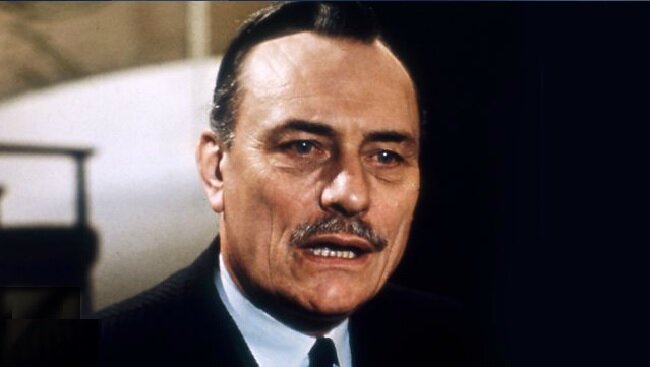
In time, of course, even had he become Prime Minister all of his work to reduce immigration and partially reverse it would have been undone by Blair. It is perhaps fortunate that he is not able to witness what has become of his England – an England where English people are not permitted to apply for traineeships with English Heritage (of all organisations!) because they are reserved for ethnic minorities; an England where Conservative supporting newspapers gush over the “Windrush children”, the very people of whom Powell spoke in his speech; an England where the BBC devotes three hours of prime time viewing to the murder of Stephen Lawrence but has never mentioned the murder of fifteen year old white boy, Richard Everett, which occurred at about the same time.
I could go on and on with countless examples of the same kind, and no doubt readers could add many more – but the fact remains that Enoch Powell was the greatest Prime Minister our country never had. And there is one great consolation in all of this – the Euroscepticism of which he was the prime begetter has at last, after so long, borne fruit. How he would have relished Brexit – it wouldn’t have happened without him!
By Frederick Dixon © 2018
# # # #
JOIN WESTERN SPRING
Western Spring is not just a website. We are a community of people dedicated to achieving the Six Prerequisites and thereby acquiring the wherewithal needed to win political power and through that secure the future survival, proliferation and advancement of the British people and other White peoples of European descent, wherever they may live. Please join us:
[contact-form-7 404 "Not Found"]# # # #
Richard Edmonds
- Edit
Enoch Powell’s River of Blood speech: the man who warned us:
Fifty years ago today, 20th. April 1968, the true and brave Enoch Powell, Member of Parliament for Wolverhampton South West, stood up and spoke for Britain and warned the nation:
“We must be mad, literally mad to be letting such vast numbers of Third-worlders pour into Britain. The nation is piling up its own funeral-pyre.” Powell, the former university professor of Classics, quoted the Roman poet, Virgil, “Like the Roman I see ‘the River Tiber foaming with much blood.’”
Powell’s speech electrified the nation and totally divided it. On the one side millions of patriotic, responsible Britons recognised instantly the truth of Powell’s warning, and on the opposing side was the heartless political Establishment, who then and now hold the the British people in contempt. Powell, the champion of the British people, was thrown into the political wilderness.
Powell gave his warning that Rivers of Blood would flow. And we witness now, fifty years later, the rivers of our people’s blood flowing … victims of the multi-racial, multi-criminal nightmare that has been forced onto us by the wicked and heartless establishment.
[Editor’s Note: There is a seemingly endless and depressing catalogue of the names of those of our people who have died at the hands of racist immigrant gangs and Islamic terrorists, which can be found at various Internet sites; the thousands of young White girls who have been victims of rape and forced prostitution at the hands of Asian grooming gangs; and the many men, women and children who have been victims of individual immigrant rapists and sex offenders.
And we should not forget the almost daily murders by stabbing that are taking place in our nations capital alone, stabbings of predominantly young black men by other young black men.
There are not yet the literal ‘rivers of blood’ suggested in the colloquial name given to Powell’s speech, but few people seeing the declining standards and effectiveness our police service, coupled with the rising tide of terrorism, violent crime, sexual crime and crimes against the person that are evident today can fail to foresee such a time arriving.]
Richard Edmonds
- Edit
Dear editor, you have edited and abbreviated my original statement, which is your absolute right, and I for one appreciate very much this web-site that you have created and manage.
That said, let me add that I for one do not find, as per your Editor’s Note, the “seemingly endless …catalogue of the names of those of our people who have died at the hands of racist immigrant gangs and Islamic terrorists to be depressing ” as you write. Yes the list of those who have been murdered, humiliated and ruined by the criminal foreigners let into this country is endless, but I for one am not “depressed”, on the contrary the injustice and wickedness done to these British victims fires me up, as I am sure it does you too.
P.S. my full article can be found on the National Front web-site.
John Stephens
- Edit
I often ponder on whether Enoch Powell, was genuine in his role as MP. For one, he was Minister in charge of the original act to bring them here.
He only got “valuable to his constituents”, when he spoke to a constituent, who said much of what was in his eventual speech.
What concerned me, was/is, that he refused the offer to lead the National Front, at a time before street marches and violence.
As soon as the second world war ended, any prospect of a return to “Nation first”, was destroyed. In fact, we may have been on a losing streak as far back as the Norman Invasion. He brought with him, the “Money-Lenders” of old.
Max Musson
- Edit
I share your reservations regarding Enoch Powell, while his Rivers of Blood speech did give voice to the fears and concerns of the majority of our nation, he did inexplicably fail to capitalise on the upswell of public support for him, and as you say, he did refuse to throw in his lot with the National Front, a move that would have transformed British politics at that time.
Frederick Dixon
- Edit
I remember that at one of the 1974 elections a candidate for the NF offered to stand aside for Enoch who wished the man good luck but, of course, refused. Had he joined the Front he would have made it something very different from what it actually was; it would have been very like Mrs. Thatcher’s Conservative Party (although without the “wets”) and it is impossible to imagine John Tyndall – to name but one – as a member.
swarthemp
- Edit
We live in murderous and genocidal times. I hope that one day I will see Nelson Mandela’s statue toppled in Westminster and Powell’s replace it .. perhaps it will stand opposite John Tyndall’s.
Alec Suchi
- Edit
It is significant that both “liberal” opinion and the views of the non-white members of our society consider Enoch Powell’s famous speech made 50 years ago today as having been proven false. According to them the social unrest he had predicted had not come to pass and moreover Britain has now become the multicultural and multiracial country that we all esteem!
However the above is not a view shared by many White Britons who have been forced to flee the inner cities or those who are trapped in de facto ghettos.The extent of gun related crimes, stabbings, drug trafficking, and grooming are disproportionately high in multicultural ghettos, in addition to the existence of “no-go” areas.
In addition, there had occurred inner city riots in Brixton in 1980, riots throughout the north of England in 1981, also 1985 and then major riots in Bradford in 1995 and 2001.
In addition there has been the London Bombings of 2005 and also at the Manchester Arena in 2017 perpetrated by adherents of the Muslim faith who were either sons of immigrants or asylum seekers allowed entry into the UK.
Vast sums have been expended promoting the supposed benefits of diversity and multiculturalism, underpinned by draconian legislation which limits and deters legitimate criticism of them.
Other than those upholding the Progressive Agenda, namely a proportion from the middle classes, the vast majority of White Britons vehemently oppose multiculturalism and a multiracial society. The conceited Progressive has little affinity with his country and arrogantly presumes that the common people lack education and sophistication to appreciate cultural enrichment.
However it is the Progressive who has lost a vital connection to his people and country, values which are upheld by those who have not lost their sense of identity. The many people who do retain an awareness of their heritage, culture and ancestry would seek to retain their distinct British/ European identity and live in a country which continues to reflect those customs and values.
Frederick Dixon
- Edit
Entirely agree Alec. I would only add to your catalogue of woe the current epidemic of knife murders in London – black on black though they may be. And that of course is without mentioning the defilement of countless thousands of White girls with the passive connivance of the Authorities, that passive connivance itself being a good example of the “whip hand” in action.
Stefan
- Edit
What happened to him was a lesson to any other outspoken politician that didn’t toe the line.
Albert
- Edit
Two ships one in the news at the moment..The Windrush..and Four Hundred years ago The Mayflower both brought Genocide for the indigenous population’s, but where the Native American Indian fought till the end, Here in Britain they indigenous population are allowing their eventual genocide without a fight..We will be the first Civilisation to fall not by War, Famine or Disease, But apathy.
Wolf of the Sun
- Edit
As I read it, the message of Powell’s ‘Rivers of Blood’ speech was one of racial integration. His Prestatyn speech of 1969 described nationhood as “baffling” and “wholly subjective” and stated that race and nation could not be matched. There is nothing in Powell’s legacy for racial nationalists and he should be forgotten as we look to the future.
Max Musson
- Edit
Actually there is recorded video footage of Powell stating that national identity and race are inextricably linked. Powell did tend to tip-toe around the issue of race and split hairs over varying definitions of ‘racialism’, and he proved in the end to have feet of clay where rallying the support of the nation is concerned, but we should not be too quick to condemn him outright. He was also an advocate of free-trade and laissez faire economics, but the mere fact we are having this debate a half-century after his famous speech and the fact that he is so hated by our enemies tells us that there is value for us in his memory.
Wolf of the Sun
- Edit
As far as our many enemies are concerned, Powell is something of a lightning rod, but I’m not convinced that this shows his value today. I think our time would be better spent studying and discussing the leaders, strategies and doctrines of insurgent movements who more or less successfully resisted enemy occupation.