By Max Musson:
Sometimes murders take place in circumstances where, as a casual observer, the evidence used to convict the killer does not always appear compelling, and on such occasions it seems right to us that a long jail sentence is the most appropriate remedy so that should additional evidence come to light casting doubt on the original conviction, the case can be re-examined and the convicted person set free if the conviction is subsequently overturned.
Often however there are cases in which there can be no doubt that the accused person did in fact commit the crime and in these cases there are invariably calls for capital punishment to be reintroduced as a more appropriate and satisfactory punishment for what is a heinous crime. Indeed, public opinion has always been firmly in favour of the availability of capital punishment as a remedy in such cases of proven premeditated murder and it is one of the clearest indications that true democracy no longer exists in Western societies, that in the face of overwhelming public support for the capital punishment, liberal campaigners have succeeded in abolishing it in almost every Western country.
When we consider the convictions of Myra Hindley and Ian Brady for the ‘Moors Murders’, we find two killers where the evidence against them was overwhelming and where the two murderers both subsequently admitted their crimes.
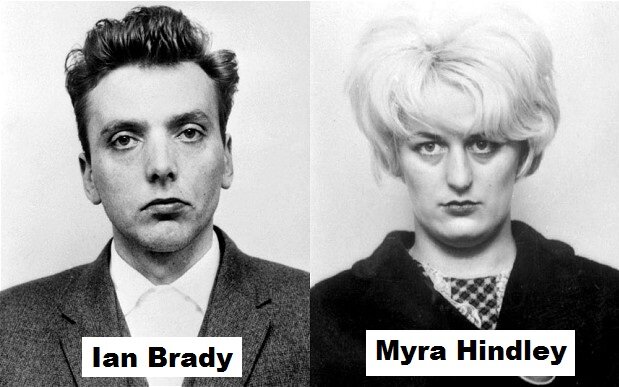
Hindley and Brady were the first multiple murderers to be convicted following the abolition of the death penalty in Britain and they were sentenced in May 1966, and while Hindley died in prison in 2002 after 36 years, Brady still remains incarcerated 47 years later.
The cost of keeping criminals in jail amounts to approximately £40,000 per person per annum. This means therefore, that in addition to causing the cruel and ghastly deaths of five children, Hindley and Brady between them have so far cost the British taxpayers a total of £3,320,000 in prison costs alone.
When someone is convicted of murder and sentenced to life in prison, many members of the public, conscious of the fact that capital punishment no longer exists as a remedy in these situations, understandably insist that ‘life should mean life’ hoping that the murderer(s) will spend the rest of their days in prison. This has been the case with the relatives of some of the Moors Murder victims, who have campaigned in this way and while one sympathises with their feelings, it is obviously not in the public interest to keep large numbers of murderers in prison for years on end, costing the taxpayer £40,000 per annum each.
Our liberal justice system therefore generally chooses to let the murderers go free early, particularly in situations where they have behaved themselves in prison, but this is not a satisfactory outcome either. It is not satisfactory for the relatives and loved ones of their victims, who rightly demand a fitting punishment, and it is not satisfactory from the point of view of the threat convicted murderers pose to the general public.
In situations where there are significant mitigating factors where a murder has taken place, for example; where a wife or a child has been brutally mistreated over an extended period and resorts in desperation to the murder of a violent and domineering husband/father; or where a man of otherwise good character returns home one evening and is so enraged at finding his wife in bed with another man that he momentarily loses control and kills one of them, the death penalty may not be appropriate, but in other situations of deliberate murder by evil people, where there is every danger the individual concerned may kill again, it clearly is.
Keeping large numbers of convicted murderers in prison at £40,000 per person, per annum, is not an acceptable prospect either, not in a world of diminishing resources and limited budgets it is not, in which many people in desperate need of medical treatment die for lack of health service funding.
A life saving heart bypass operation costs approximately £20,000 and this means that keeping just Myra Hindley and Ian Brady alive in prison has already unnecessarily costs the lives of potentially 166 victims of heart disease. Can anyone credibly argue that the lives of Hindley and Brady and the vanishingly slim prospect that they might one day be miraculously transformed into good people capable of retaking their place in society, has been worth the lives of 166 good and honest citizens? I don’t think so!
So let us now consider a case that featured in the news earlier this year; the case of Jeremy McLaughlin who has been convicted in New Zealand of the murder of 13 year old Jade Bayliss and who has been sentenced to serve a minimum of 23 years in prison.

Firstly, we need to focus on the fact that he is 35 years old and if not considered suitable for release after 23 years, could serve another 50 years in prison. This means that his incarceration will cost the New Zealand taxpayers between £920,000 and £2,000,000 depending upon whether he is released after 23 years or dies in prison at the age of 85.
‘But Jeremy McLaughlin might become a reformed person after decades in prison’, I can hear some liberal pundit arguing, ‘surely I can’t be advocating capital punishment for someone for whom there is a slight glimmer of hope?’
However, Jeremy McLaughlin strangled Jade Bayliss when he was discovered by her robbing her mother’s home.

McLaughlin had a brief affair with Jade’s mother in 2011 and after they broke up, he went back to her house to rob her while she was out at work. McLaughlin was unexpectedly discovered by Jade who had been ill and had not gone to school that day and McLaughlin strangled her with a length of flex after stuffing a sock in her mouth.
McLaughlin then dowsed the home with inflammable liquid and set it on fire in the hope of hiding what he had done.
After his conviction for the murder of Jade Bayliss, the judicial authorities revealed that this was not the first child killing that McLaughlin had been involved in.
Sixteen years earlier, McLaughlin and two of his friends had attacked two boys who were walking home from a nearby shopping mall in Perth, Australia.
The boys, Phillip Vidot and Tyrone Williams, aged 14 and 17 respectively, were beaten unconscious by McLaughlin with a cricket bat, and after robbing them of the shoes and clothing they had just purchased, McLaughlin and his two accomplices ran over them in their get away car several times before making their escape.
Phillip Vidot died of his injuries and Tyrone Williams was in a coma for eight days and suffered permanent brain damage as a result of the attack, but amazingly McLaughlin and his two accomplices were not convicted of murder. They were found guilty of the lesser charges of manslaughter and causing grievous bodily harm and McLaughlin was sentenced to just 12 years imprisonment in 1997. Even more amazing was the fact that he was released after serving just four years!

McLaughlin was deported from Australia back to his native New Zealand, where he later met and had the brief affair with Jade Bayliss’ mother following her separation from Jade’s father in 2008.
Shortly before Jade’s murder, her mother Tina had become alarmed by aspects of McLaughlin’s behaviour and had gone to the police in the hope of getting a injunction to bar McLaughlin from further contact with her and her family. The New Zealand police however did not warn Tina Bayliss about McLaughlin’s criminal record even though they had been briefed by the Australian police, they felt it was more appropriate to protect his privacy, and young Jade paid the ultimate price for that mistake.
There are a number of aspects of this case that raise questions regarding the liberal nature of our criminal justice system;
Firstly, that a group of three men who beat two boys unconscious with a cricket bat and then run them over in a car were not found guilty of murder, but of the lesser charge of manslaughter. How could the men responsible argue with any credibility that their killing of Phillip Vidot was unintended?
When you beat someone around the head with a cricket bat, there is every possibility that they might die from their injuries and when you run someone over with a car several times, one would normally expect them to be dead afterwards and if not, one would regard it as a near miracle.
Secondly, when someone has committed such a violent crime simply in order to rob two boys of their newly bought shoes and clothing, one would expect the culprit to face the death penalty, or in the case of a custodial sentence to at least serve the entirety of their prison sentence, not be set free after just four years!
Thirdly, upon release and deportation, one would have expected the New Zealand authorities to have at least implemented some sort of probationary supervision, but apparently they did not; and
Lastly, when contacted by a vulnerable woman, in this case a single mother who is concerned about the menacing behaviour of a man with a conviction for violent manslaughter involving the killing of a child and causing grievous bodily harm to another, one would have expected the New Zealand police to have taken decisive action to protect that woman and her family, even if the right to privacy of the man was infringed.
The reintroduction of the death penalty is urgently needed; not just for the purposes of vengeance; not just to punish and deter those who might resort to murder; not just to save the taxpayer the enormous sums wasted keeping alive people who will never be safe to release back into society; not just so that the money saved can be spent providing life saving treatment for innocent people with life threatening illnesses; but so that homicidal psychopaths are not released to kill again.
By Max Musson © 2013
# # # #
SerpentSlayer
- Edit
We dont need a tougher legal system, we need a return to the time before written laws where justice was assured by strong communities of men and women who would not allow criminals to live.
Invictus
- Edit
I agree with the article.
In addition to the reasons given for capital punishment in such cases, I would add that it would be beneficial for public morale.
SerpentSlayer: I think it’s important to maintain a system of due process in order to avoid, as far as possible, miscarriages of justice; and to ensure consistency.
Simon Lote
- Edit
Capital Punishment is the keystone of any effective criminal justice system, when you remove it, it impacts not just on murderers but on the entire system.
Back at the turn of the 20th century prisons were tough and austere houses of punishment. The average prison sentence was not long as prison authorities knew that to confine a man to such punitive conditions longer than say 10 years would break a man psycologically.
Murder was never for life, a murderer was either executed or he was typically released after a tarrif of about 10 years. Those who were given 10 years were those with mitigating circumstances like lack of pre-meditation.
When capital punishment was replaced by life imprisonment, the tarrif for all murder went up and since life imprisonment under the old regime would end up destroying the mind of the convict, the prison regime had to be relaxed.
Since it wouldn’t be fair to give murderers special treatment all convicts enjoyed the new relaxed prison regime. Prison became less to be feared and more an occupational hazzard worth the risk to a career criminal.
The consequence of this was that the prison population exploded due to the ‘lifers’ never being released and the other criminals habitually re-offending on release as their prison experience taught them THEY had nothing to fear from prison. (The harmless and the innocent on the other hand had a great deal to fear from their fellow cons).
Today judges under pressure to keep prison numbers low now routinely refuse to incarcerate criminals handing them suspended sentences or community service, which of course tells the novice criminal that the law is feeble and he will only be incarcerated if he has done something especially heinous or if he already has a string of criminal convictions in his belt.
Max Musson
- Edit
Some excellent points there Simon. Thank you.
AAA
- Edit
This is a difficult subject for two of many reasons:
.
(1) Most Nationalists that I have encountered believe Capital Punishment to be the default policy for those who commit crimes such as rape, drug running, murder and paedophilia. While, of course, this an an understandable perspective in light of our wanting to protect our womenfolk, a weighty question remains:
.
Can we trust the State to administer Justice?
.
At this present time I will say resolutely, “no”. The State is nothing more than an administrative wing –a mercenary, if you will– of the government in power. The government in power is the antithesis of our righteous struggle. Therefore, if the said government wanted to ‘liquidise’ its enemy (us) then what better way than to concoct a charge sheet against us and see us in the gallows?
.
And of these “drug runners”, “rapists”, “murderers”, and “paedophies” –are we ever sure? How do we determine absolute guilt? Supposed “rapists” especially fall into this category –when is sex a rape? Her word against yours? You’re proven guilty –the gallows a righteous Justice? I think not.
..
And so, I used to be in favour of Capital Punishment but now I am unsure due to my understandable distrust of the State. “Yeah, but when Nationalists come to power it will be different,” is the refrain I so often hear. That may be so –but Justice is Justice and Truth is Truth [purposefully capitalised] –and unless well can ascertain one’s guilt 100% then I am not in favour of hanging anyone. (Serial offenders is another matter.)
.
The internment of supposed “fascists” in the U.K. and the American Japs during WW2 ought to have set a precedent: “it could have happened to you,” is a familiar refrain.
.
This subject is –as I hope I have elucidated– not so easily dictated. Let us Nationalists not so easily demand blood.
jackdaw
- Edit
The only problem with re-instating the death penalty in this country is the woefully corrupt judicial system,
Steve
- Edit
Exactly. The corrupt judges, police and politicians could stitch up anybody they thought was a problem to them. False evidence placed at the scene etc, etc. I think the only way to proceed is for life to mean life. Then at least if a convicted person is later proven innocent they can at least be recompensed. It would not bring back their time served but at least they would be in a position to get on with their lives.
Michael Woodbridge
- Edit
It can’t be said too often that the main weapon used by the enemy of the Aryan race is to instil paranoia throughout our society. In this way the Main Stream Media (MSM), from “Searchlight” up to the multi-million pound conglomerates, are able to set friend against friend and break down any trust we may still harbour in the shared decency of our own folk To that extent, by getting some of our correspondents to cast doubt on the fairness by which Capital Punishment might be applied our enemy has succeeded. Naturally the whole question of Capital Punishment is dependent on our nation returning to sanity of which the restoration of the Death Penalty would be a welcome sign.
Western Spring must never become defeatist. There’s a world of difference between reasonable caution and muddled thinking as a result of funk. There are a number of respectable arguments against Capital Punishment but, “They’re all out to get you”, isn’t one of them.
Enoch Powell was against Capital Punishment as was the unabashed, racialist commentator, Michael Wharton, who wrote the ‘Peter Simple’ column in the Daily Telegraph. Therefore it would be wrong for us to think of Capital Punishment as a kind of litmus test as to whether an individual thinker is sound in other respects. However, on the purely practical side, nowadays DNA testing has been able to establish certain evidence as to a person’s guilt beyond all reasonable doubt. This wasn’t possible before, when Capital Punishment was first abolished.
Mister Vikingaxe
- Edit
Sir, I have to disagree – DNA evidence cannot prove intent as such, it proves only that so and so was in such a place, or held such and such an item. It is not infallible. Imagine a knife is found which was used to stab someone, there may be several DNA traces upon it, but who is the guilty party?
Personally I feel that true Aryan justice must by definition include qualities of mercy and compassion, not that I mean to say offenders should go unpunished, quite the contrary! As it stands, although people such as Ian Brady or Peter Sutcliffe are beyond sickening in their criminality, we must also keep in mind cases such as that of Derek Bentley, and many others who were subsequently found to be innocent after execution. Thankfully in more recent years the opportunity has existed to overturn a verdict and allow an innocent person to get on with their lives.
In my view the trouble with the current judicial system, which causes people to start “baying for blood” is that the courts are too unwilling to issue proper sentences, and then all too often the convicted does not serve the full term anyway.
I note also with worry the excessive sentencing of “white nationalists”, way beyond the normal sentences for such crimes.