In 1902 the English writer Robert Blatchford coined the term ‘Britain For The British’ as the title of a book he published that year. An earlier work entitled ‘Merrie England’ had been first published in 1894 and these two books established Blatchford’s credentials both as one of the foremost socialist writers of his time and a founding father of the British Labour movement, but also as one of the founding fathers of British nationalism.
Blatchford, the son of travelling actors, started worked as a journalist on the Sunday Chronicle, in Manchester, in 1887. Under the pen name Nunquam he gained a large readership, writing passionately about the appalling living conditions endured by poor people in Manchester.
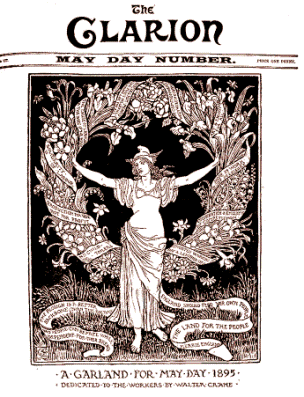
On the 12th December 1891 Blatchford together with a number of sympathisers resigned from their jobs and produced the first issue of a penny Socialist weekly, ‘The Clarion’ (fondly referred to as the ‘Perisher’) from a tiny office in Corporation Street, Manchester. There were many early difficulties but 40,000 copies were sold, largely on the strength of Nunquam’s already-established popularity with working-class readers of the Sunday Chronicle.
Blatchford was a socialist but he was not a Marxist as he espoused a patriotic form of socialism, devoid of the internationalism that came to characterise the Labour movement in the decades following the World War I and in the wake of the Russian revolution.
Blatchford advocated a patriotic socialism which he believed should serve the needs of our nation, protecting the independence and self-determination of our people, and he can rightly be described therefore as a national socialist. Furthermore, Blatchford’s brand of national socialism, formulated at the turn of the 20th Century, demonstrates the fallacy of the common assumption that all forms of national socialism have a foreign origin and are therefore, by implication, ‘un-British’.
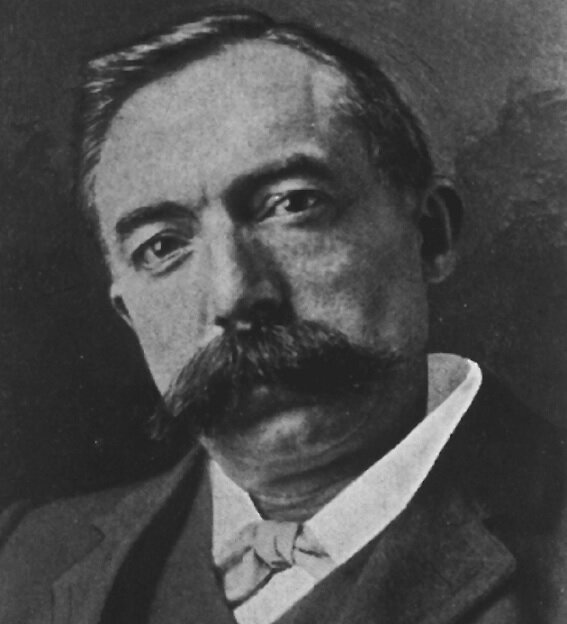
In a series of articles starting with this one, I will reproduce and comment upon substantial sections of Blatchford’s books, which I feel have relevance to our modern day situation and which have importance in placing nationalist ideology and Blatchford’s brand of national socialism in its proper context.
-o0o-
Merrie England
Chapter One – The Problem of Life
The background to the formulation of Blatchford’s ideas is Victorian Britain, a land in which the life of the working classes was characterized by long working hours in dirty, smoky and polluted environments for wages that were barely enough to survive on. Working class families in the industrial cities of Britain often lived in inadequate housing that was often damp, crowded and infested, with no little or access to healthcare or schooling for their children.
In rural areas, farm workers and their families were rather better off, simply because of the cleaner more natural environment in which they lived, with plenty of exercise in the fresh air. However, conditions of pay and housing were just as bad and both farm workers and factory workers spent their entire wages on often poor quality staple foodstuffs for their families and on rent for housing, which was paid to the wealthy landowners of that time.
Life for the majority of the working classes was therefore one of drudgery and substance if not outright poverty and one of Blatchford’s primary concerns therefore is a quest for social justice.
In ‘Merry England’ Blatchford writes as if addressing a fictional ‘Mr Smith’, who he describes as a “staunch liberal” and flatters as “a shrewd, hard-headed, practical man.”
Page 10: “I assume, Mr. Smith, that you, as a hard-headed, practical man, would rather be well of than badly off, and that, with regard to your own earnings, you would rather be paid twenty shillings in the pound than four shillings in the pound. And I assume that, as a humane man, you would rather that others should not suffer, if their suffering can be prevented.
“If then, I assert that you are being defrauded, and that others, especially weak women and young children, are enduring much misery and wrong, and if I assert, further, that I know a means whereby you may obtain justice, and they may secure peace, you will surely, as a kind and sensible man, consent to hear me.”
Blatchford goes on:
“To reject an idea because it is new is not a proof of shrewd sense, it is a proof of bigoted ignorance.”
“To say that an idea is new is not to prove that it is untrue. The oldest idea was new once; and some of my ideas – as, for instance, the idea that justice and health are precious things – are considerably older than the House of Commons or Adam Smith’s ‘Wealth of Nations’”.
Page 11: “If you wish for an instance of the value of new ideas, Mr. Smith, get a good life of Charles Darwin, and another of George Stephenson, and read them.”
“Now then, what is the problem? I call it the problem of life. We have here a country and a people. The problem is – given a country and a people, to find how the people may make the best of the country and of themselves.
“First, then, as to the capacities of the country and the people.
“The country is fertile and fruitful, and well stored with nearly all the things that the people need. The people are intelligent, industrious, strong, and famous for their perseverance, their inventiveness and resource.
“It looks, then, as if such a people in such a country must certainly succeed in securing health, and happiness, and plenty for all.
“But we know very well that our people, or at least the bulk of them, have neither health, nor pleasure, nor plenty.”
“Now I assert that if the labour of the British people were properly organised and wisely applied, this country would, in return for very little toil, yield abundance for all.
“I assert that the labour of the British people is not properly organised, nor wisely applied ; and I undertake to show how it might and should be organised and applied, and what would be the results if it were organised and applied in accordance with my suggestions.
“The ideal of British Society today is the ideal of individual effort, or competition. That is to say, every man for himself. Each citizen is to try as hard as he can to get for himself as much money as he can, and to use it for his own pleasure, and leave it for his own children.
“That is the present personal ideal. The present national ideal is to become “The Workshop of the World.” That is to say, the British people are to manufacture goods for sale to foreign countries, and in return for those goods are to get more money than they could obtain by developing the resources of their own country for their own use.
“My ideal is that each individual should seek his advantage in co-operation with his fellows, and that the people should make the best of their own country before attempting to trade with other people’s.
“I propose, Mr. Smith, and I submit the proposal to you, who are a sensible and practical man, as a sensible and practical proposal, that we should first of all ascertain what things are desirable for our health and happiness of body and mind, and that we should then organise our people with the object of producing those things in the best and easiest way.”
As we can see, Blatchford was not primarily concerned with the impact of immigration and with foreign affairs as we are today, because immigration was in the late 1800s was not the problem that it is for us today. An influx of poor Jews from Eastern Europe was just beginning to be felt in the East End of London and some other city ports and would give rise to the British Brothers League, but that was not Blatchford’s immediate concern in ‘Merrie England’.
Instead, Blatchford was concerned with the way in which British industry and British agriculture were owned and controlled by a small social elite who were distant from and increasingly indifferent to the welfare of the broad mass of the population, and who were beginning to develop an unhealthy focus on internationalism in trade and commerce, i.e. the seeds of our current ‘globalism’ were just beginning to pervert the use of our national resources.
Chapter Two – The Practical School
Blatchford continues:
Page 13: “Before we can solve this problem, we must understand the country and the people. We must find out their capacities; that is to say, what can be got from the country; what it will yield; and what can be got from ourselves; what we can do and be.”
“On these points I differ from the so-called practical people of the Manchester School, for I believe that this country will yield a great deal more of the good things of life than the people need; and that the people can be much happier, healthier, richer, and better than they now are.
“But the Manchester School would have us believe that our own country is too barren to feed us, and that our people are too base and foolish to lead pure, wise, and honest lives.”
The ‘Manchester School’ to which Blatchford refers is a school of thought which grew up in Manchester during the 19th Century advocating free trade and that market forces should be allowed to determine economic progress.
Page 14: “Now, to our problem. How are we to make the best of our country, and of our lives? What things do we need in order to secure a happy, healthy, and worthy human life?”
Page 16: “A life which consists of nothing but eating, and drinking, and sleeping, and working is not a human life – it is the life of a beast. Such a life is not worth living. If we are to spend all our days and nights in a kind of penal servitude, continually toiling and suffering in order to live, we had better break at once the chains of our bitter slavery, and die.”
“To ensure good health we must lead a ‘natural’ life. The further we get from nature, – the more artificial our lives become, – the worse is our health.
“The chief ends to health are pure air, pure water, pure and sufficient food, cleanliness, exercise, rest, warmth, and ease of mind.
“The chief obstacles to health are impure air, impure water, bad or insufficient food, gluttony, drunkenness, vice, dirt, heavy labour, want of rest, exposure, and anxiety of mind.
“The sure marks of good health are physical strength and beauty.
“Look at the statue of an ancient Greek athlete, and then at the form of a modern sweater’s slave, and you will see how true this is.”
A ‘sweater’ is a reference to a sweat-shop owner, a factory owner who exploits people desperate for work by employing them in conditions comparable to slave labour.
Page 17: “Now, I shall show you, later, that hardly any of our people lead natural and healthy lives. I shall show you that the average Briton might be very much healthier, handsomer, and stronger than he is; and I shall show you that the average duration of life might easily be doubled.”
“… I shall show you, later, that our people are badly clothed, and badly fed, and badly housed. That some have more, but most have less, than is good for them; and that with a quarter of the labour now expended in getting improper sustenance we might produce proper sustenance, and plenty of it, for all.”
Page 18: “In the average lot of the average British workman how much knowledge and culture, and science and art, and music and the drama, and literature and poetry, and field sports and exercise, and travel and change of scene?
“You know very well that our working people get little of these things, and you know that such as they get are of inferior quality.
“Now I say to you that the people do not get enough of the things needful for body and mind, that they do not get them of the best, and that they do not get them because they have neither money to pay for them nor leisure to enjoy them.
“I say, farther, that they ought to have and might have abundance of these things, and I undertake to show you how they can obtain them”.
Chapter Three – Town v. Country
Page 20: “The Manchester School is the Commercial School. The supporters of that school will tell you that you cannot prosper, that is to say you cannot “get a living,” without the capitalist, without open competition, and without a great foreign trade.
“They will tell you that you would be very foolish to raise your own food stuffs here in England so long as you can buy them more cheaply from foreign nations. They will tell you that this country is incapable of producing enough food for her present population, and that therefore
your very existence depends upon keeping the foreign trade in your hands.”
Page 21: “We hear a great deal about the value and extent of our foreign trade, and are always being reminded how much we owe to our factory system, and how proud of it we ought to be.
“I despise the factory system, and denounce it as a hideous, futile, and false thing.”
“The Manchester School will tell you that the destiny of this country is to become “The Workshop of the World.”
“I say that is not true; and that it would be a thing to deplore if it were true. The idea that this country is to be the “Workshop of the World” is a wilder dream than any that the wildest Socialist ever cherished. But if this country did become the “Workshop of the World” it would at the same time become the most horrible and the most miserable country the world has ever known.
“Let us be practical, and look at the facts. First, as to the question of beauty and pleasantness.
“You know the factory districts of Lancashire. I ask you is it not true that they are ugly, and dirty, and smoky, and disagreeable? Compare the busy towns of Lancashire, of Staffordshire, of Durham, and of South Wales, with the country towns of Surrey, Suffolk, and Hants.
“In the latter counties you will get pure air, bright skies, clear rivers, clean streets, and beautiful fields, woods, and gardens; you will get cattle and streams, and birds and flowers, and you know that all these things are well worth having, and that none of them can exist side by side with the factory system.”
Page 22: “Do you find the champions of the factory system despising nature, and beauty, and art, and health – except in their speeches and lectures to you?
“No. You will find these people living as far from the factories as they can get; and you will find them spending their long holidays in the most beautiful parts of England, Scotland, Ireland, or the Continent.
“The pleasures they enjoy are denied to you. They preach the advantages of the factory system because they reap the benefits while you bear the evils.
“To make wealth for themselves they destroy the beauty and the health of your dwelling-places; and then they sit in their suburban villas, or on the hills and terraces of the lovely southern counties, and sneer at the “sentimentality” of the men who ask you to cherish beauty and to prize health.”
“As a practical man, would you of your own choice convert a healthy and beautiful county like Surrey into an unhealthy and hideous county like Wigan or Cradley, just for the sake of being able once a year to go to Blackpool, and once a night to listen to a cracked piano?”
Page 23: “Now I tell you, my practical friend, that you ought to have, and may have, good music, and good homes, and a fair and healthy country, and more of all the things that make life sweet; that you may have them at less cost of labour than you now pay for the privilege of existing in Oldham; and that you can never have them if England becomes the “Workshop of the World.”
Page 23: “But the relative beauty and pleasantness of the factory and country districts do not need demonstration. The ugliness of Widnes and Sheffield and the beauty of Dorking and Monsal Dale are not matters of sentiment nor of argument – they are matters of fact. The value of beauty is not a matter of sentiment: it is a fact. You would rather see a squirrel than a sewer rat. You would rather bathe in the Avon than in the Irwell. You would prefer the fragrance of a rose-garden to the stench of a sewage works. You would prefer Bolton Woods to Ancoata slums.
“As for those who sneer at beauty, as they spend fortunes on pictures, on architecture, and on foreign tours, they put themselves out of court.
“Sentiment or no sentiment, beauty is better than ugliness, and health is better than disease.
“Now under the factory system you must sacrifice both health and beauty.
“As to my second objection – the evil effect of the factory system on the public health. What are the chief means to health?
“Pure air, pure water, pure and sufficient food, cleanliness, exercise, rest, warmth, and ease of mind.
“What are the invariable accompaniments of the factory system?
“Foul air, foul water, adulterated foods, dirt, long hours of sedentary labour, and continual anxiety as to wages and employment in the present, added to a terrible uncertainty as to existence in the future.
“Look through any great industrial town in the colliery, the iron, the silk, the cotton, or the woollen industries, and you will find hard work, unhealthy work, vile air, overcrowding, disease, ugliness, drunkenness, and a high death rate. These are facts.”
Page 25: “The average death-rate for England and Wales from 1881 to 1890 was 19.1 in the thousand. The death-rate of Lancashire for the same period was 22.5 per thousand. But to get a fair idea of the difference between town and country we must contrast Lancashire with the agricultural counties.”
“Here are eight county death-rates from 1381 to 1890:-
Surrey 16.1 Kent 16.6 Sussex 15.7 Hants 16.8 Berks 16.2 Wilts 16.9 Dorset 16.2 Lancashire 22.5“In 1887, the latest year for which I have the figures, the death-rates in some of the principal Lancashire towns were :-
Bolton 21.31 Oldham 23.84 Salford 23.95 Preston 27.0 Blackburn 25.48 Manchester 28.67 And in that year the average death-rate in Surrey and Sussex was 16.3.Chapter Four – Can England Feed Herself?
Page 28: “We come now to the third objection to the factory system – that it is unnecessary. It is often asserted that this country could not feed all her present population. I will try to show you that this is absurd.”
“We have to prove that the British Islands can grow wheat enough to feed 36 millions of people.
The population of the UK was 36 million at that time.
“In Hoyle’s “Sources of Wealth” it is stated that Great Britain and Ireland contain about 50 millions of acres of good land, unbuilt upon and available for agriculture.”
Page 29: “Lord Lauderdale estimates that 500 acres will feed 2,000 people, that is four to the acre. Therefore if we used all our available land we could feed 200 millions of people.”
Page 30: “Agriculture has been neglected because all the mechanical and chemical skill, and all the capital and energy of man, have been thrown into the struggle for trade profits and manufacturing pre-eminence. We want a few Faradays, Watts, Stephensons, and Cobdens to devote their genius and industry to the great food question.
“Once let the public interest and the public genius be concentrated upon the agriculture of England, and we shall soon get silenced the croakers who talk about the impossibility of the country feeding her people.”
Page 31: “Depend upon it, what I have told you is true, and that England can feed her people as she has fed them in times gone by, with never a factory flue to vomit foulness into the air, and never a greedy money-grasper to poison her streams with filth, or wither her woods and glades with soot and sulphur.
“We will next proceed to consider my fourth objection to the factory system, when I think I shall be able to show you, beyond all question, that besides being hideous, unpleasant, unhealthy, and unnecessary, the factories are a serious danger to the existence of the Empire.”
“Why do we weave cloth and cotton? For two purposes :
1. To clothe ourselves. 2. To exchange for foreign produce.“To provide for our own needs we must make cotton or linen fabrics. True. But we need not make them by steam power. We could make them by water power, and so abolish the smoke nuisance.
“Will you have the goodness, Mr. Smith, to cast your eyes over the following statements, made, a few years ago, by Prof. Thompson:
“The average rise and fall of the tide at the city of Bristol, five miles from its mouth, is 23 feet. According to calculations I have made from the average volume of water displaced up and down each tide, there are no fewer than 20 billions foot-pounds of energy wasted each year, or enough to charge 10 million Fauro cells. At the mouth of the river the total annual energy thus running to utter waste cannot be less than 60 billions footpounds, and in the rapid currents of the river Severn, with their enormous tides of great volume, the tidal energy must be practically unlimited, A tenth part of the tidal energy in the gorge of the Avon would light the city of Bristol ; a tenth part of the tidal energy in the channel of the Severn would light every city; and another tenth part v/ould turn every loom and spindle and axle in Great Britain.”Page 32: “The power of water is tremendous; the beauty of water is sublime. Perhaps, when our practical men learn a little common sense, we shall be able to grind an axe or throw a shuttle without blackening the sky above or choking the unhappy creatures who crawl upon the earth beneath. Besides, the less coal needed, the fewer colliers needed, and in the Clarion Tito has told us that ninety thousand men and boys are killed and injured every year in the mines.
Here we see the early glimmerings of environmental politics an integral part of our nationalist roots.
“Now, Mr. Smith, why should we make cotton goods for foreign countries?
“The Manchester School will tell you that we must do it to buy corn. In 1885 we exported cotton goods to the value of £66,000,000; and we imported corn and flour, in the same year, to the value of £53,000,000.
“Why? The Manchester School will tell you that we cannot grow our own corn. That is not true. They will tell you that as foreigners can grow corn more cheaply than we can, and as we can make cotton goods more cheaply than they can, it is to the interest of both parties to exchange.
“I do not believe that any nation can sell corn more cheaply than we could produce it; and I am sure that even if it cost a little more to grow our corn than to buy it, yet it would be to our interest to grow it.”
Page 33: “I know it has been said, and is said, that an English farmer owning his land cannot compete with foreign dealers; but I think that is doubtful, and I am sure that if the land were owned by the State, and farmed systematically by the best methods, we might grow our corn more cheaply than we could buy it.
“But suppose we could not. The logical result of the free-trade argument would be that British agriculture must perish.”
“What do we lose? We lose the beauty and health of. our factory towns; we lose annually some twenty thousand lives in Lancashire alone; we are in constant danger of great strikes, like that which recently so crushed our cotton-operatives; we are reduced to the meanest shifts and the most violent acts of piracy and slaughter to ‘open up markets’ for our goods ; we lose the stamina of our people; and – we lose our agriculture.
“Did you ever consider what it involves, this ruin of British agriculture?”
Autarky, or self-sufficiency has always been a hallmark of nationalism as no nation can maintain it’s independence and therefore the self-determination of it’s people without autarky.
Page 34: “Now, suppose we get at last to a state of things under which thirty-six millions live on foreign-grown wheat and none on wheat of home growth. Suppose our agriculture is dead; and we depend entirely upon foreigners for our daily bread. What will be our position then?
“Our position will be this. We shall be unable to produce our own food, and can only get it by selling to foreign countries our manufactured goods. We must buy wheat from America with cotton goods; but first of all we must buy raw cotton with which to make those goods.
“We are therefore entirely dependent upon foreigners for our existence.
“Very well. Suppose we go to war with America. What happens? Do you remember the cotton famine? That was bad; but a mere trifle to what an Anglo-American war would be. We should, in fact, be beaten without firing a shot. America need only close her ports to corn and cotton and we should be starved into surrender, and acceptance of her terms.
“Or suppose a European war; say with France, or Russia. All our goods and all our food have to be brought over sea. What would it cost us to keep command of the seas? What would the effect of the panic be here? And suppose we found our communications cut. We should be starved into surrender at once.
“Or suppose France at war with America. Our sufferings would be something terrible.”
“Don’t you see that if we destroy our agriculture we destroy our independence at a blow, and become a defenceless nation?”
Page 35: “Don’t you see that the people who depend on foreigners for their food are at the mercy of any ambitious statesman who chooses to make war upon them? And don’t you think that is a rather stiff price to pay to get a farthing off the loaf?
“Well, Mr. Smith, thanks to the Manchester School, to the factory system, and to the grasping landlord – who is generally a Tory and fond of barging about the security of the Empire – we are almost helpless now. Another twenty years of prosperous trade and cheap bread, and we are done for.
“Again, how shall we look if, after we have killed our agriculture, we lose our trade? Do you think that impossible? Your cotton-lords seem to think it possible enough, and are now telling you that the only means of keeping the trade which is to kill your agriculture and destroy your national independence, is to lower your wages.
“That farthing off the loaf is going to cost you dear, John Smith, before you have done with it.
“Your trade union leaders tell you that you have beaten all foreign competition except that of India.
“Do you think that you can fight India, John? I don’t. Because in India labour is so cheap, and because your cotton-lords, John, some of whom are Liberals, and friends of the people, John, and others of whom are Tories, who would die for the safety of the Empire, John, will take precious good care to use that cheap Indian labour to bring down your wages, John, by means of competition. Oh, John, John, you silly fellow, have you no eyes?
“These are some of the reasons why I don’t love the factory system. Consider them; and read the history of that system, and how its first successes were bought by the murder and torture of little children, and spent in buying the freedom of West Indian slaves and in waging war against the French Republic.
“The thing is evil. It is evil in its origin, in its progress, in its methods, in its motives, and in its effects. No nation can be sound whose motive power is greed. No nation can be secure unless it is independent, no nation can be independent unless it is based upon agriculture.
-o0o-
The modern observer can immediately see that while social conditions in the UK have improved dramatically for the working classes, since Robert Blatchford’s time, the same internationalist arguments are still being used by those who support political and economic globalism.
The circumstances of our people have improved greatly since the time of Blatchford, not because of the efficacy of free trade economics, but largely because the material benefits that we now currently enjoy have been purchased through borrowing and the subjugation of our nation to massive debt.
Now that both British agriculture and British industry have been decimated by free trade and free market economics, economic hardship is again on the rise. The technological advantages that enabled British workers to out-compete all other nations workers with the exception of India during the 19th Century, have now been gifted to the nations of the Orient and the Indian sub-continent and in future, British people will either have to accept living standards on a par with those in Asia, or the global politico-economic elite, if they have their way, will continue to insist that we vacate our homelands to accomodate Third World immigrants who will.
Elements of Blatchford’s message are still as relevant today therefore, as they were in 1894.
By Max Musson © 2013
# # # #
Steve
- Edit
“…we used all our available land we could feed 200 millions of people.”
I hope we don’t try that!
Michael Woodbridget
- Edit
Blatchford also wrote some children’s books full of references to little niggers and so forth, deliciiously naughty. I was very lucky to find one in an antique bookshop. It cost about £100 but I bought it for my younger daughter.
Steve
- Edit
I understand certain Enid Blyton books & other classics like Biggles have been altered when republished because of certain sensibilities.
Also Agatha Christie & my childhood comics wouldn’t go down too well now, plenty of Kraut bashing in those.
I think at some point people will look back at the strange sensibilities of the PC age & wonder why we took it seriously.
Will Mossop
- Edit
Page 34 – Or suppose a Far East war with China and Japan the belligerents spreading out to other far eastern economies. America sides with Japan, Britain does what the USA tells it to do as usual and then where do we get all our goods from?
Our manufacturing industry has been all but destroyed by Conservatives and Labour alike (despite Cameron’s attempt today to blame Labour). in pursuit of cheap products made by cheap labour.
The general public really have no comprehension whatsoever of how bad things would become or just how quickly when China finally finishes the USA off economically.
frederickdixon
- Edit
I love The Clarion’s “Garland for May Day 1895”; a beautiful nordic goddess welcoming the first day of summer and reminding us of the glories of nature, not the grim regimented masses of militant atheists that we used to see parading in Moscow and other eastern bloc capitals – I wouldn’t be altogether surprised if the SWP and UAF didn’t still stage their own mini version (very mini) in the back yard of a left wing bookshop in Hampstead.
In your introduction, Max, you describe Bob Blatchford as a “national socialist”. I don’t need to tell anyone how difficult that description has become, or why. Yet we should always remember that while all Nazis were national socialists, not all national socialists were Nazis. Blatchford is a splendid example of the non-Nazi national socialist who, had he been alive at the time, would almost certainly have hated that hideous German distortion of the noble ideal. An anti-Nazi national socialist, there’s a thought.
heechee
- Edit
Page 22
Substitute “factory system” with “multiculturalism and mixed ethnic areas” and you have a modern truism of our masters real thoughts on that issue.
A Great Britain used, cherished and protected by British people for British people. That is utopia.
shaunantijihad
- Edit
Great article. You can be sure that our elite will ally with the Muslims if they conquer us, happily taking our children for wives and labour slaves.
Atlantid
- Edit
There’s an article here that has more information on Blatchford and his views:
https://www.ihr.org/jhr/v01/v01p355_Lawson.html
Nick Griffin has referenced Blatchford before as one of his influences, as a “patriotic labourite”. The BNP basically regard themselves as this, or Old Labour before they embraced multiracialism. I personally don’t like socialism, and this was another reason I lost interest in politics – since all the ethno-nationalist parties in UK are radically left socialists in regards to economy (even NF). That alienates middle/upper classes.
Max Musson
- Edit
You are right that others have referenced Blatchford before, however my belief is that none have previously had direct access to his books and they have merely requoted the sparse material taken from liberal/leftist establishment sources.
Nationalism is by definition concerned with one’s community, race and nation, i.e. the collective interests of the ‘in-group’ with whom one identifies and this ‘social’ concern defines what is meant by the term ‘socialism’. By the same token, most political ideologies with the exception of liberalism and libertarianism, should rightly be regarded as ‘socialist’ to some degree or another.
The ‘alienation’ that you speak of stems from a confusion between the term ‘socialism’ in its broadest sense and ‘Marxism’, which asserts that all men are equal when they obviously are not and which attempts to level down social outcomes in an attempt to create a false and forced ‘equality’.
Racial nationalism recognises human inequality as a fundamental ideological premise and so there is no reason why someone from the ‘middle/upper classes’ should feel alienated by such a form of socialism. Only when accumulated wealth is employed recklessly or indifferently by self-centered individuals for their own personal gratification and in such a way as is detrimental to the interests of the nation is there any conflict between the interests of the nation and the interests of the wealthy.
We must all realise, is that money can only hold back the tide of non-White genes for so long and all ‘elites’ eventually decline and fall who are not supported by a resolute and healthy people.
Steven
- Edit
Yes, this is where the fruitcakes of UKIP get their knickers in a twist. To those libertarian nutters nationalists are ‘socialists’ because we view ourselves not just as individuals but as part of a society and in our case that society is defined by ethnic ties. After all, what is a nation? One way you can describe a nation is as a large extended family and so this obviously includes many people and not just individuals. Of course, that makes us nationalists to normal people! Viewing society in this way is not ‘socialist’ but nationalist. The word socialism is misunderstood by many people. I would say I am ‘social’ not ‘socialist’. The word ‘socialist’ nowdays has negative connatations due to having been perverted by class warfare advocates ext and thus it is better if we nationalists avoid using the term.
Steven
- Edit
We should be aiming for a society based-upon equality of opportunity and not equality of outcome. Surely it is this view that makes us nationalists ‘social’ and NOT ‘socialists’ as socialists want equality of outcome which due to mankind’s inherent INEQUALITY (ie different levels of IQ etc) is an unrealistic utopia.
Max Musson
- Edit
Here you have hit the nail on the head Steven. As I have already explained, ‘socialism’ is simpy a recognition that as individuals we are morally obliged to acknowledge our responsibilities to the social group to which we belong and to which we owe our existence, i.e. our ethnic group, our nation and our race. ‘Socialism’ however does not necessarily imply a belief that all people are born equal nor that we should regulate our lives in such a way that ther will be enforced equality of outcomes. These beliefs are ‘Marxist’.
Marxism is a form of socialism. It is the ‘left-wing’ form of socialism, but not all forms of socialism are Marxist and not all forms of socialism are ‘left-wing’.
You have rightly identified that nationalism is a form of socialism in which one’s ‘group’ is defined by kinship, and it is a form of socialism that recognises human inequality and the natural order of life in which outcomes differ according to the abilities and the effort exerted by individuals and by ethnic groups, nations and races.
Steven
- Edit
Tories and UKIP in particular love calling nationalists socialists but I do wonder if they truely understand what they are saying. Personally, I am all in favour of free enterprise PROVIDED it operates within the national interest. I am not a corporatist and neither am I in favour of mass nationalisation. My ideal kind of economy could be summed-up by saying it should be an economy that the nation is the master of rather than the other way around and I would be looking towards Japan and South Korea as a model rather than the globalist ultra free market of the USA.
Sam Cash
- Edit
A very educational posting,thank you and well done Max.
Walsingham
- Edit
Thanks very much for this Max – much to consider..
mark barthorpe
- Edit
very good article
thanks to cc and ga for linking this site